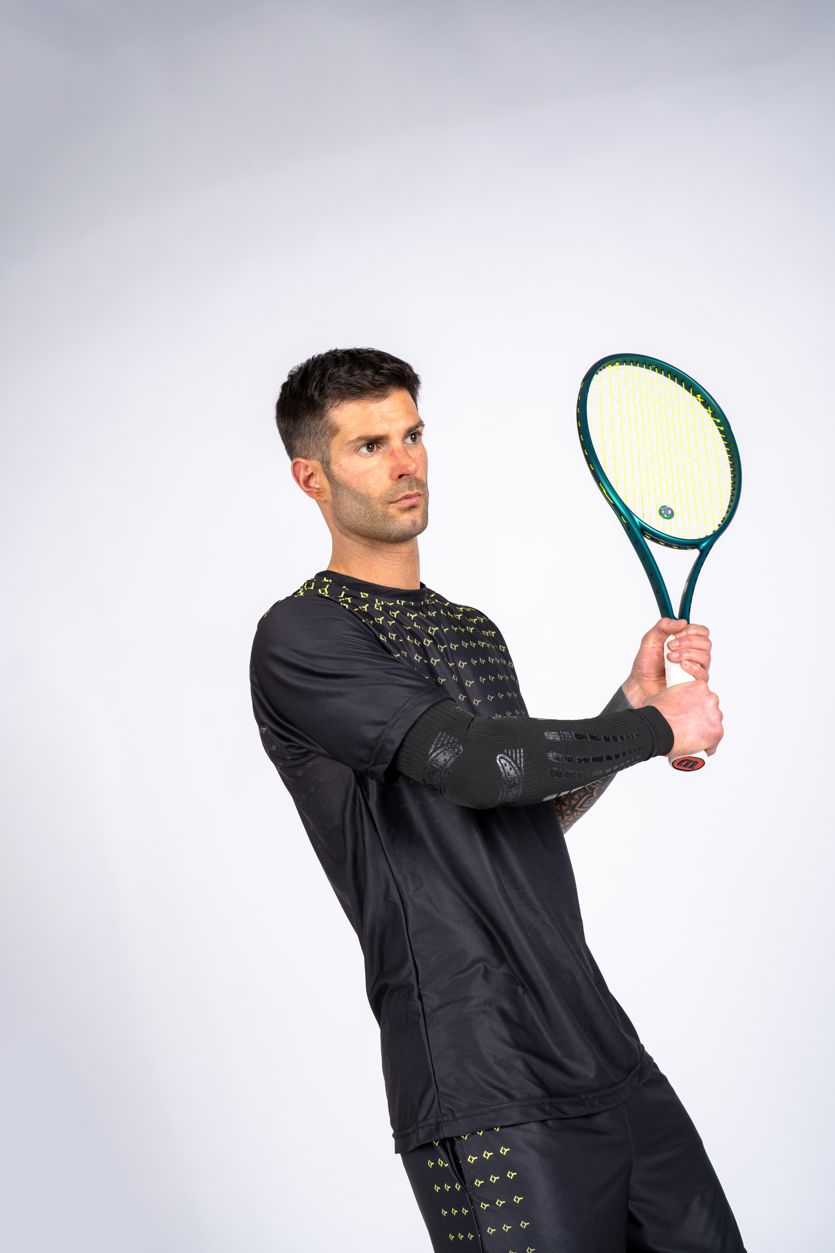
Floky introduces technology to the padel world with the aim of reducing injuries and vibrations
A technology that transforms the fabric into an active device capable of intervening in prevention, recovery and performance

Padel continues to gain ground among the most practised and dynamic sports on the international scene: according to some data, there are approximately 1.5 million players in Italia, 20 million in Europe and over 35 million worldwide. However, such a rapid growth in the number of players is accompanied by a good increase in cases of physical problems related to the practice of this sport and overload injuries of the upper limb: in fact, an average of 2.75 injuries per 1,000 hours of play is recorded, while the areas most affected are the wrist, elbow and shoulder with disorders such as epicondylitis and various forms of tendinopathy.
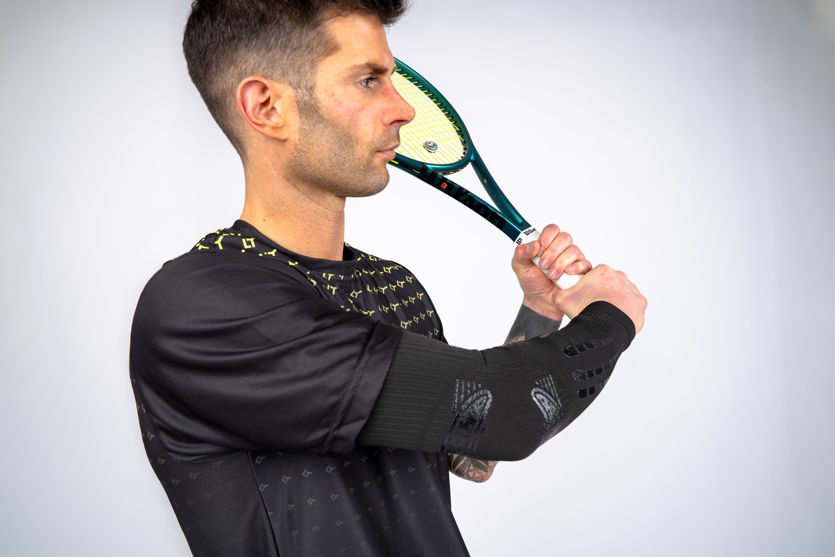
Investigating the most common causes of this problem, however, it emerges that the vibrations generated by the impact between the ball and the racket propagate along the upper limb, entering from the wrist and transmitting up to the shoulder: the more rigid the system, the greater the transmission of vibrations and therefore the greater the potential negative consequences on the player's well-being. And it is precisely from these considerations that the research project developed by Floky, an innovative SME based in Brescia, begins, in collaboration with Biomoove Lab, who have developed and published the world's first biomechanical study dedicated to padel, with the aim of analysing on a scientific basis the stresses to which the player's upper limb is subjected during practice.
"Through this methodology we observed what actually happens during the technical gesture. The data show a significant reduction in vibrations between wrist and shoulder, measured directly on the court. This is the first time that a private company is funding a scientific study applied to padel with this level of rigour,' explains Dr Mauro Testa, Biomoove Lab's scientific manager.
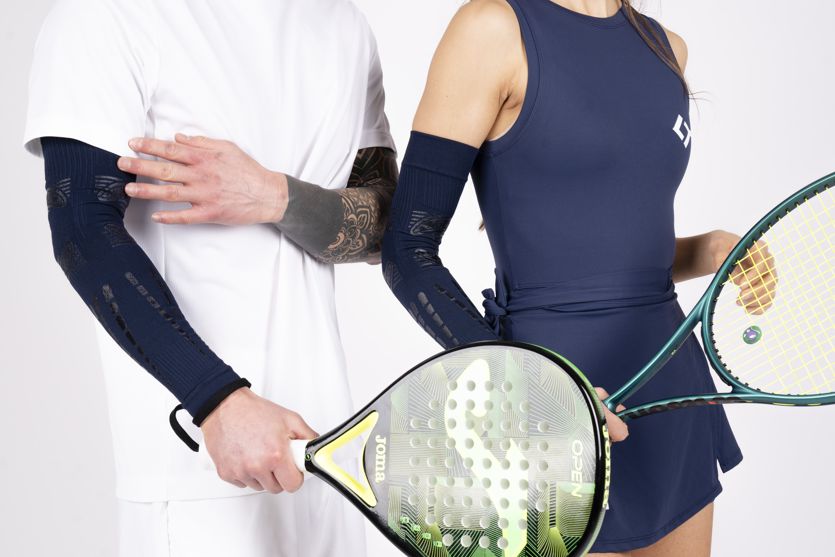
Applying sensors on the wrist and shoulder to record triaxial vibrations and accelerations alongside slow-motion video footage, the research involved ten amateur players of medium-high level and aged between 23 and 48 years, who were asked to perform the main padel strokes such as forehand, backhand and smash, under controlled test conditions; in this way, it was possible to precisely analyse how vibrations propagate along the arm.
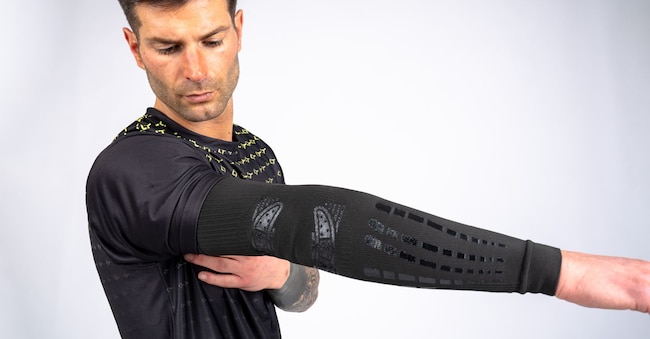
An interesting result emerged from the analysis, namely that the use of the No Strain Evolution biomechanical sleeve produces an average reduction in vibrations of 30.62% compared to the bare arm condition, with the most evident benefits in the smash, the shot that generates the highest stress: in this case, without reducing the force expressed during the body and therefore not affecting the playing performance, the patent would be able to halve the intensity of the vibrations transmitted along the arm.