The Mattei Plan

Misurata focuses on the Italia-Africa axis: businesses, ports and investment take centre stage at the forum

Around 60 Italian and 250 Libyan companies are involved in the initiative in the Free Trade Zone. Links with Sicily, infrastructure connecting to the Sahel and industrial training are among the priorities for cooperation

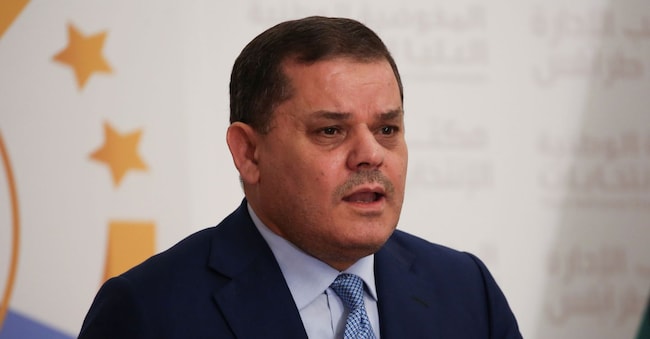
Il primo ministro libico Abdulhamid al-Dbeibah REUTERS/Hazem Ahmed

4' min read

Translated by AI
Versione italiana

4' min read

Translated by AI
Versione italiana

To turn Misurata into a connecting platform between the Italian manufacturing sector and African markets. This was the outlook that emerged yesterday from the Libyan-Italian Business and Investment Forum, which brought together businesses, institutions and economic operators from both countries in the city’s Free Zone. The discussions centred on the development of logistics, the integration of ports and land transport networks and opportunities for investment in a market that looks beyond Libya’s domestic demand.

The initiative involved around 60 Italian and 250 Libyan companies, according to the figures cited in the official statements. This participation builds on the process launched on 9 July in Rome with the presentation of opportunities offered by the Free Trade Zone and follows on from previous business initiatives organised in Tripoli and Benghazi.

Loading...

The Italian mission, organised by the Italian-Libyan Chamber of Commerce in conjunction with the Italian Embassy in Tripoli and Unioncamere, with the support of the Misurata Free Zone, will continue until 4 November. The forum was the highlight of the mission, combining institutional discussions with business-to-business meetings and the presentation of development projects for the area.

The port as a gateway to African markets

The vision outlined by the Libyan authorities is to integrate the port and the Misrata Free Zone with a transport network capable of reaching landlocked African countries . This plan aims to turn Libya’s geographical position into a commercial advantage by linking Mediterranean routes to the markets of the Sahel.

The Minister for Transport, Mohammed Ashahoubi, identified the Southern Road as one of the strategic pillars of this approach. The aim, he explained, is not only to improve travel between Libyan cities and regions, but also to build a safe and efficient trade corridor for goods bound for the interior of the continent, in particular Chad, Niger, Mali and Burkina Faso.

However, the implementation of this system requires coordinated action: road infrastructure, integration between land and sea transport, the development of border crossings and greater efficiency in logistics services. The minister also highlighted the need for partnerships with the private sector and with specialist international firms, pointing to Italy’s experience as a possible contribution to the sector’s development.

For the chairman of the Misurata Free Zone, Mohsen al-Suqutri, the city’s location and the presence of maritime transport operators form the basis for strengthening the port’s role in links between Europe and Africa. He emphasised that the forum stems precisely from the desire to attract Italian businesses to the region, foster contact with local partners and turn interest in the Libyan market into economic partnerships.

The axis linking Sicily’s ports

Among the mission’s agenda items is a cooperation agreement between the Free Zone and the Port System Authority of the Western Sicilian Sea, led by Annalisa Tardino. The proposed agreement aims to strengthen relations with Sicilian ports, including Palermo, Termini Imerese and Trapani, and to develop new commercial and logistical links between the two shores of the Mediterranean.

In a message posted on the forum, the Italian Ambassador to Tripoli, Gianluca Alberini, welcomed this prospect, noting that Misrata has the potential to become a ‘trans-continental logistics hub’ linking Italia, Europe and Africa, within the framework of the Mattei Plan.

Alberini also reaffirmed the commitment of the Italian diplomatic network to facilitate the issuance of visas to Libyan businesspeople and to encourage the extension of direct flight connections to Misrata as well. These are two key operational conditions for supporting investment and ensuring more sustained relations between businesses.

Loading...

From infrastructure to industrial training

The Italian delegation comprises companies operating in the construction, energy, agri-food, transport, engineering and healthcare sectors. Participants include Fincantieri, Conpat, Renco, the Grimaldi shipping group and CY4GATE. Confindustria Assafrica e Mediterraneo is also taking part in the mission, accompanied by three member companies, following the memorandum signed in July with the Free Zone.

The scope of the opportunities presented at the forum covers eight sectors: metalworking and light engineering, pharmaceuticals and medical devices, food, the maritime industry, logistics and warehousing, industrial processing, waste and oil recycling and recovery, and trade and distribution.

Alongside infrastructure, the issue of skills took centre stage. Enrico della Gatta, Vice President of Fincantieri’s Defence Market, highlighted the need for highly specialised personnel to support the transformation of production activities. Artificial intelligence and robotisation, he noted, will also change the nature of work on shipyards: a development that requires investment in training staff, as well as in plant and equipment.

A reliable partner to support businesses

“We can grow together,” said the president of the Italian-Libyan Chamber of Commerce, Nicola Colicchi, linking the prospects for Libyan business with opportunities for Italian business. The key, in his view, is to build a stable network of relationships capable of ensuring continuity for the contacts established during the forum.

A step in this direction is the planned opening of a permanent office of the Italian-Libyan Chamber of Commerce in Misrata, designed to support Italian companies and facilitate their relations with local partners. Senator Scurria , chair of the Italia-Libya parliamentary friendship group, also emphasised in his video message the need to complement political dialogue with concrete economic relations and investment in each other’s territories.

Imports and exchange rates: the operating environment

The prospects for development are set against an economic backdrop in which conditions governing access to goods and international payments remain central. On the eve of the forum, the Free Zone hosted a meeting chaired by the head of the Government of National Unity, Abdulhamid Dbeibah, focusing on domestic market prices and the regulation of imports.

The discussions centred on letters of credit, the dollar exchange rate, the exchange rate applied for customs purposes, and import procedures. Dbeibah emphasised the need to coordinate between institutions and the private sector to ensure the continuity of trade flows and safeguard purchasing power.

It is on this two-fold level that the forum’s impact will be measured: on the one hand, the infrastructure and industrial projects designed to strengthen the regional role of Misurata; on the other, the operational conditions necessary to turn business contacts into contracts, investments and ongoing trade.

Sign up to the NextMed newsletter so you don’t miss out on previews and in-depth features

Copyright reserved ©
Loading...

Brand connect

Loading...

Newsletter

Notizie e approfondimenti sugli avvenimenti politici, economici e finanziari.

Iscriviti