The event at the House of Commons

After Hormuz, the challenge of Eurasian routes: in Rome, the Customs authorities are charting new courses

On Friday, an international conference will bring together institutions, experts and business representatives. The focus will be on alternative trade routes – from IMEC to Iraq’s Development Road – and the need to make trade between Europe, the Gulf and Asia faster and more secure.

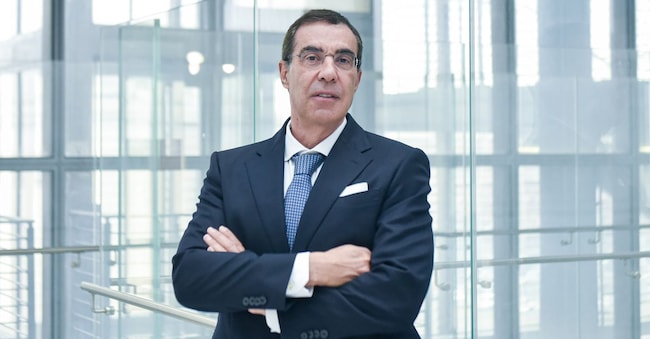
Roberto Alesse, direttore dell’Agenzia delle Dogane e dei Monopoli Imagoeconomica

4' min read

Translated by AI
Versione italiana

4' min read

Translated by AI
Versione italiana

The crisis in the Strait of Hormuz has transformed the geography of international trade into a matter of economic security. With shipping routes exposed to military tensions and transport and insurance costs under pressure, governments and businesses are being forced to reconsider routes, suppliers and infrastructure. This transformation also directly affects Italia, which is called upon to defend the competitiveness of its manufacturing sector and to strengthen the role of its ports in connections between Europe, the Mediterranean and Asia.

The international conference ‘The Hormuz Crisis and the New Eurasian Trade Routes. Challenges and Opportunities for Customs Policies’, scheduled for Friday 30 October in Rome. The initiative, organised by the Italian Customs and Monopolies Agency with technical and scientific support from the Institute for International Political Studies (ISPI), will bring together institutional representatives, customs authorities, research centres and the business community to discuss the consequences of the crisis and possible responses in terms of logistics and regulation.

Loading...

From Imec to the Middle Corridor

The Hormuz crisis was merely the culmination of a period of profound restructuring of trade flows. The war in Ukraine had reduced economic relations between the European Union and Russia, whilst tensions in the Red Sea had highlighted just how much the security of maritime traffic depends on a few strategic chokepoints. The diversion of ships towards the Cape of Good Hope, with the resulting increase in journey times, confirmed the economic costs of such disruptions and the need for alternatives.

Among the projects set to attract attention are the India-Middle East-Europe Economic Corridor (IMEC), the Middle Corridor through the Caucasus and Central Asia, the Iraqi Development Road and the Saudi Landbridge. These are different initiatives united by the common goal of strengthening links between markets and reducing dependence on the most vulnerable routes.

For Italia, the key issue is the opportunity to establish a firm foothold in these new trade flows, capitalising on its position in the Mediterranean and its port and rail infrastructure. Trieste and the Adriatic corridor could serve as key access points for traffic heading towards Central Europe, provided that this geographical location is matched by competitive logistics services, connections to the hinterland and efficient procedures.

Customs as a tool for competitiveness

This is where the specific contribution of customs authorities comes into play. Digitalisation can reduce bureaucratic hurdles along routes that cross several countries. Authorised Economic Operators (AEOs) also have an important role to play; for them, mutual recognition and simplified procedures can facilitate the smoother movement of consignments deemed reliable.

International cooperation therefore becomes an essential element of logistical competitiveness. Along the new corridors, in fact, the speed of a single port or border crossing is not enough if the next stage involves duplicate checks, incompatible information systems or rules that are difficult to predict.

The Rome summit will also address prospects for cooperation between the European Union and the Gulf States, Turkey and other partners involved in the Eurasian corridors. On the European side, the reform of the customs union and the strengthening of coordination between national administrations raise issues concerning both the organisation of controls and the management of trade data. For businesses, the expected outcome is greater predictability in terms of timescales and costs; for the authorities, the opportunity to focus resources on the highest-risk consignments.

Presentations and speakers

The proceedings will be opened by Roberto Alesse, Director of the Customs and Monopolies Agency. The programme will be divided into four panel discussions. The first will analyse the impact of the Hormuz crisis on trade routes and investment. Filippo Fasulo, research coordinator and head of ISPI’s Asia and Geoeconomics Observatories, will address economic security, Afaq Hussain, director of the Bureau of Research on Industry and Economic Fundamentals in India, will focus on the prospects for connections between the Gulf, Asia and Europe, from the Saudi Landbridge to IMEC, from the Middle Corridor to the Iraqi Development Road. Olaf Merk, head of ports and maritime transport at the OECD International Transport Forum, will address the competitiveness of shipping routes and the constraints affecting ports and land transport links. Massimo Deandreis, Managing Director of SMR – Intesa Sanpaolo, will, for his part, examine the role of Italia and its ports in the new Mediterranean trade landscape

The second panel will focus on customs cooperation, featuring representatives from European, Mediterranean and Gulf institutions. The discussion will centre on digitalisation, data exchange and the simplification of procedures.

Loading...

This afternoon, Angela Stefania Bergantino, lecturer in Applied Economics at the University of Bari, will discuss with Marco Felisati, Director of International Affairs at Confindustria, and Ambassador Francesco Maria Talò on the conditions necessary for infrastructure investment to result in genuinely competitive transport links.

The final session will be devoted to developments in customs policy. Gerassimos Thomas, Director-General of the European Commission’s Directorate-General for Taxation and Customs Union, will discuss the reform of the customs union and coordination between European and national authorities. Judson W. Murdock, Deputy Assistant Commissioner of the Office of Field Operations at US Customs and Border Protection, will speak on the organisation of controls, risk analysis and supply chain security.

Subscribe to the Sole 24 Ore NextMed newsletter so you don’t miss out on previews and the latest news in newsagents and online

Copyright reserved ©
Loading...

Brand connect

Loading...

Newsletter

Notizie e approfondimenti sugli avvenimenti politici, economici e finanziari.

Iscriviti