Food economy

Food and wine tourism tops foreigners' travel motivations

According to the new edition of Roberta Garibaldi's industry report, Germans and Americans put wine and food ahead of historical monuments among Italy's most attractive features. To compete central professionalisation and Ai

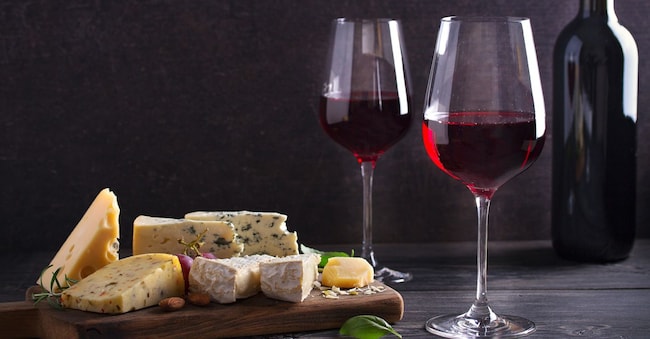
by Emiliano Sgambato

(AdobeStock)

4' min read

Translated by AI
Versione italiana

4' min read

Translated by AI
Versione italiana

First the table, then art and monuments. That it is the cultural and gastronomic heritage that attracts foreign tourists to Italy there was no doubt, but it may be surprising what the priorities are. At least according to what has been revealed by the new edition of the Report on Italian Food and Wine Tourism edited by Roberta Garibaldi, according to which Italy is mainly associated with taste and food and wine: by 55% of Germans, Swiss and Austrians and 54% of Americans, while only among the French do historical monuments prevail (50%).

The report, presented at the Bto - Be Travel Onlife in Florence, with the support of Visit Emilia and Valdichina Living, analyses the six most important foreign markets for Italy in this sector - Germany, the United Kingdom, the United States, Austria, Switzerland and France - and allows us to understand not only the interest in wine and food tourism, but also the expectations and experiences of foreign tourists in Italy.
"Understanding how they see us and how they experience us is the first step to governing change," comments editor Garibaldi, president of the Italian Wine and Food Tourism Association (Aite) and lecturer at the University of Bergamo, "in a sector that continues to grow at a sustained pace, establishing itself as one of the most dynamic segments of the global tourism economy.

Loading...

In the last three years, between domestic and international travel, the share of tourists who have travelled for food and wine varies from 60% in the UK to 74% in France, an increase from 15 to 28 percentage points since 2016. And Italy is mainly associated, as a travel destination, with 'food and wine'.

In their choice of destination, the beauty of the countryside (over 80% in all markets, with a high of 88% in France) and the presence of local restaurants (81% in France, 79% in the USA) count above all. Americans in particular place more value on thematic experiences (69%) and gourmet restaurants (59%).

The main motivations for discovering food and wine are to try new experiences (52% in the UK and US) and to enrich one's cultural background (34% in France). The French stand out for seeing food and wine as an opportunity to treat themselves to a luxury (36%), while Germans and Swiss/Austrians for immersing themselves in rural landscapes.

The most attractive regions for international tourists are Tuscany, Sicily, Sardinia and Apulia (63% FR). Among wine tourism destinations, Chianti and Etna prevail, followed by Montepulciano, Montalcino and Bolgheri. Good preferences also for Cinque Terre and Food Valley of Emilia-Romagna.

The Report goes on to consider "inspirational sources", with a large role for the traditional - recommendations from friends and relatives come to account for 60% in Germany, the UK and the US - and the means chosen for booking experiences, with "digital channels assuming relevance especially among the French and Americans, while Germans and Britons show a greater propensity to decide on the spot". The use of artificial intelligence is growing in particular.

Local restaurants prevail among gastronomic experiences (68% for the French), then visits to wineries, followed by dairies and breweries.
The spending for a typical meal is between 21 euros and 60 euros (more than 50% of cases in each country), for the wine cellar tours with tasting prevail in the 21-40 euro range, while the experiences in vinegar cellars and in taste museums are for more than half of the respondents under 20 euro.

The Report also analyses foreign tourists' intention to travel to Italy in the next three years: 'the "very likely + probable" share ranges from 55% in Germany to 81% in Austria and Switzerland (Uk 59%, USA 57%, France 70%); the "very likely" share reaches 50% in Austria and Switzerland and 34% in France'.

"The research clearly shows how food and wine tourism is entering a new phase. Today's traveller is not just looking for the 'iconic dish', but a deeper relationship with the territories, people and stories that inhabit them. There is - the Report points out - a return to the essential, made up of simple experiences rooted in the landscape, where the value lies in the gestures of hospitality and the everyday life of agricultural production. At the same time, there is a growing interest in forms of gastronomic intimacy, such as dedicated tables, direct encounters with chefs and producers, and tastings for small groups that are personally organised".

On the other hand, "real communities of taste are developing, from wine clubs to shared gardens, up to participatory kitchens: spaces where food once again becomes an opportunity for relationships and belonging". Furthermore, "the already present trend of well-being and longevity is being reinforced, leading travellers to choose places where the quality of life, environment and food is perceived as an integral part of the experience".

Roberta Garibaldi then identifies the key levers to strengthen this trend even more, so that the expectations of foreign tourists are not disappointed:

-'territorial stewardship', i.e. moving from promotion alone to the shared care of the territory and its communities;

-"measuring impacts": assessing not only flows, but the social, cultural and environmental effects of tourism;

- "digitisation and artificial intelligence" are then indispensable tools to improve visibility, personalisation and attendance management;

- "Professionalisation of skills": a necessary step, especially in the agricultural, craft and small enterprises, which are the backbone of the sector.

"For this potential to translate into concrete results," Garibaldi emphasises, "a systemic approach is needed that integrates cohesion policies, adequate infrastructure, targeted tax measures and a strengthening of professional skills.
A crucial point concerns communication aimed at the new generations: "Wine and food tourism must change language: traditional brochures and storytelling are no longer needed, we need an authentic, visual, viral digital presence. And yet, only a very small percentage of Italian agricultural businesses are present on platforms such as TikTok or YouTube, while these are precisely the spaces where the perception of Made in Italy is formed among young people all over the world"
And "those who do not appear, do not exist for artificial intelligence

Copyright reserved ©
Loading...

Brand connect

Loading...

Newsletter

Notizie e approfondimenti sugli avvenimenti politici, economici e finanziari.

Iscriviti