
Food innovation: Enea’s three approaches to developing new foods and reducing food waste
From the utilisation of soft wheat bran to the cultivation of mushrooms on a substrate made from agri-food by-products. New research at the fifth edition of the FAO’s Science and Innovation event

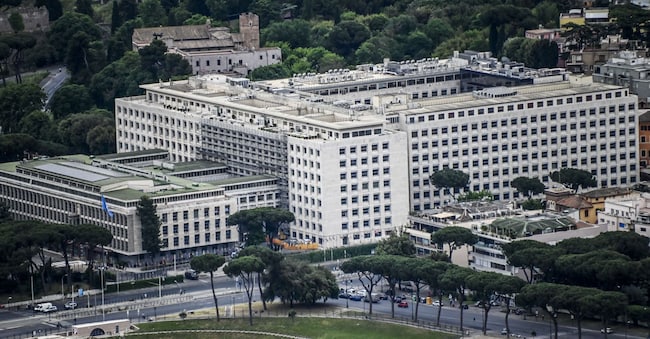
Three approaches to sustainable food and supply chains that minimise waste. These were presented during the fifth edition of the FAO Science and Innovation Forum as part of the exhibition ‘From agrifood by-products to New Resources’
It is Enea’s Sustainability Department. An initiative aimed at illustrating how agri-food residues and by-products can be transformed into new foods, ingredients and resources.
Solutions for new products
In this context, researchers at ENEA have identified three ‘potential research and innovation solutions’. These range from the ‘valorisation of soft wheat bran and other by-products of the cereal supply chain through a digitalised solid-state fermentation process’, to the ‘cultivation of edible mushrooms on substrates derived from agri-food by-products’, and finally “the production of biomaterials for food packaging from by-products of agro-industrial processing”. During the exhibition, which will take place at the FAO headquarters, through samples, prototypes and interactive digital content, visitors, as highlighted by ENEA, “will be able to follow, step by step, the transformation from waste to a new resource and discover how biotechnology and digitalisation can help reduce waste and make agri-food supply chains more circular and sustainable”.
Research infrastructure
The exhibition will also showcase the Metrofood-it research infrastructure, which promotes innovation and sustainability in agri-food systems by providing integrated services, accelerating the digitalisation of agri-food systems and enhancing their efficiency, traceability and sustainability, whilst promoting the reliability of products, processes and the information provided to the public, local authorities and all stakeholders in agri-food systems.
Visitors will be able to follow each transformation through samples of raw materials, intermediate materials and end products. Images and short videos will illustrate the processes and experimental set-ups, whilst an interactive digital component will provide examples of how scientific data can be visualised and interpreted. Together, these exhibitions demonstrate how biotechnology, process technologies, analytical expertise and digitalisation can support more circular agri-food systems. The Forum forms part of the FAO’s initiatives for World Food Day, which is celebrated every year on 16 October. The initiative aims to ‘demonstrate in practice’ how science, innovation and collaboration between research and the agri-food sectors can help transform food losses and waste into new resources, promoting more circular and sustainable production models.

