Circular economy

Food recovery: here’s how the impact of donations is measured

Three examples of surplus and waste recovery. Tonnes of food transformed into meals for distribution. And ultimately, there is an environmental and social report

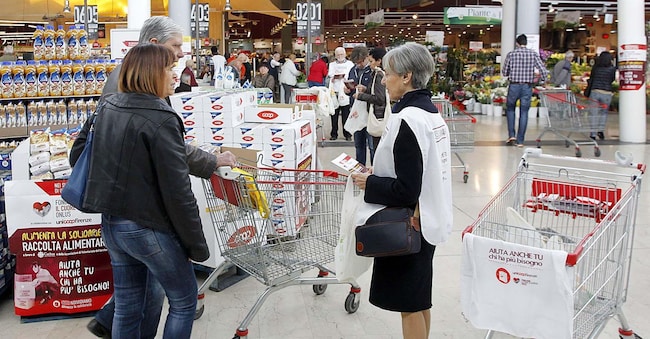
Un momento della giornata per la raccolta del Banco Alimentare. (Ansa)

3' min read

Translated by AI
Versione italiana

3' min read

Translated by AI
Versione italiana

Making the most of surplus materials from various sectors by seeking to recover waste and materials, in full accordance with the principles of the circular economy. In Italia, there are a number of organisations dedicated to this, and the figures relating to this major circularity initiative are constantly rising.

The Food Bank

The work carried out by Banco Alimentare is fascinating; every day, it collects food for those most in need. The Foundation is based in Milan and coordinates 21 areas spread across the whole country (except Molise and Basilicata). The fight against food waste is all-encompassing. There are several levels of activity.

Loading...

The first, as explained by Vittore Mescia, Head of Operations at the Banco Alimentare Foundation, “relates to the primary sector. By 2025, we had managed to recover over 3,000 tonnes of produce. The second area involves working with the processing industry: in this case, the amount recovered is over 18,000 tonnes.” Another area involves large-scale retail, where work takes place on a daily basis: “Small but frequent quantities,” said Mescia. “We recover 20,000 tonnes from this supply channel.”

If we do the maths and also include the 6,000 tonnes of produce recovered from wholesalers’ platforms, we arrive at a total of 45,000 tonnes, and there is a platform capable of monitoring all these quantities in real time: ‘We have a single management system,’ concluded Mescia. ‘Incoming data is recorded; we validate and monitor it. Of course, the recovery process cannot be planned; no company is able to plan for surplus stock.” However, Italia is making progress in terms of the circular economy, and “the number of companies that have decided to donate has increased.”

The Resense platform

Another example is Resense, Italia’s first ESG blockchain platform, which makes the most of surplus produce by measuring and validating the environmental impact of its recovery. It stems from the experience of Regusto – which has been active in the food sector for 10 years – and extends that know-how to every sector: the two founders are Paolo Rellini and Flavio Barcaccia. The platform, it was explained, digitally connects a circular ecosystem comprising 700 company profiles and 2,000 non-profit organisations, whilst also mapping the local impacts on local authorities, regions and public administrations.

In numerical terms, over the course of a decade, Regusto has put 30,000 tonnes of surplus food to good use, resulting in a total of 50 million equivalent meals distributed and €200 million in value recovered, thereby preventing the release of over 107,000 tonnes of CO₂ into the environment. With Resense, the aim is to minimise waste as much as possible, re-use surplus products and stock, and promote circular processes.

“Resense,” said Rellini and Barcaccia, “was created to restore value and breathe new life into products and materials at risk of being wasted, whilst recognising their environmental, economic and social impact. We are applying the experience we have gained in the food sector with Regusto to all sectors, meeting the needs of businesses, non-profit organisations, public authorities and the recycling sector. It is a concept of balance that we draw from nature, where nothing is wasted, and which we translate into measurable value.”

The Acli platform

The ACLI has developed the “The Avanzers” platform to enable certifiable, transparent and measurable donation processes, not only in terms of the weight of food donated, but also in terms of the sustainability impacts generated, using specially developed indicators. It is described as “a genuine infrastructure for local and national cooperation”, with a single management system for food recovery.

There are around 20 provincial offices and local branches involved across Italia at various levels: every year, over 2,000 tonnes of food are salvaged, which is enough to provide a full million meals. More than 25,000 people living in poverty are reached thanks to the local solidarity networks set up by the regional offices fully integrated into the model.

With over 2,000 tonnes of food salvaged, thanks to The Avanzers, it is worth noting that, for example, 5,340 tonnes of CO₂ and 384,000 cubic metres of water are saved as a result of this food not being disposed of. “Recovering surplus food,” commented Italo Sandrini, national vice-president of Acli, “means giving value to food, protecting the environment and upholding people’s dignity, whilst ensuring access to good, safe food. “At ACLI, we are working to build stable networks between businesses, associations and institutions, capable of responding to the needs of local communities.”

Copyright reserved ©

Brand connect

Loading...

Newsletter

Notizie e approfondimenti sugli avvenimenti politici, economici e finanziari.

Iscriviti