
Food waste: a European call for proposals to fund the fight against this problem
Every year, 58 million tonnes of food are thrown away in the EU. Funding (4 million) to reduce waste throughout the agri-food supply chain

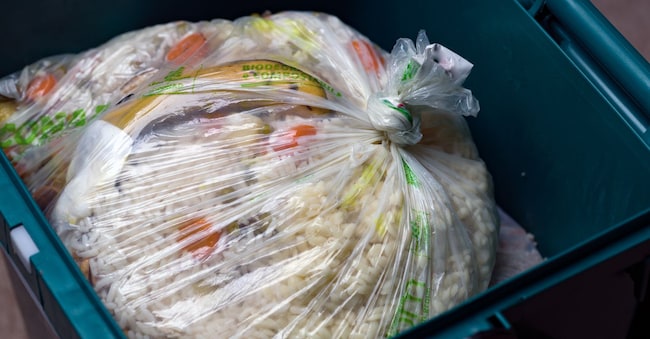
A €4 million scheme to support initiatives aimed at reducing food waste. These funds are being allocated by the European Commission, through the Executive Agency for Health and Digital (Hadea), via the call for proposals EU support to stakeholders to improve the measurement of food waste and help implement food waste prevention in their operations and organisations (SMP-FOOD-2026-FW-STAKEHOLDERS-PJ).
Starting point
The starting point is the fact that, within the EU, over 58 million tonnes of food waste are generated every year, with associated costs estimated at 132 billion euros.
‘Since 2016, the EU has been implementing a specific action plan to reduce food loss and waste, which includes both regulatory and non-regulatory measures,’ reads the introduction to the call for proposals. ‘In 2016, the Commission established [the platform] with the aim of supporting all stakeholders in defining the necessary measures to prevent food waste, sharing best practices and assessing progress made over time.’
The Platform has drawn up key recommendations for action to prevent food waste, “which address the measures required of public and private stakeholders at every stage of the food supply chain”. The sharing of best practices continues within the Platform, now in its second term, with a third term scheduled for the period 2027–2031. On 19 February 2025, the Commission presented its Vision for Agriculture and Food, which included measures to prevent food waste. ‘Under the amended Waste Framework Directive, Member States must reduce food waste by 10 per cent in processing and production and by 30 per cent (per capita) in retail and consumption (restaurants, catering services and households) by 2030 – as stated in the introduction to the call for proposals –. To achieve these targets, Member States must adopt appropriate measures to prevent food waste from being generated throughout the entire food supply chain. Consequently, food business operators – whether producers, processors or manufacturers, wholesalers, or those who make food available for consumption (the hospitality sector, retailers) – as well as consumers, play an important role in contributing to the Member States’ efforts’.
The call for applications
This call for proposals therefore forms part of this framework; its aim is to support initiatives undertaken by both the public and private sectors with a view to the ‘tangible reduction of food waste throughout the agri-food supply chain’. Projects must cover the entire process, from production through to domestic consumption.

