Innovation

Foodseed, here are the most innovative start-ups that will make agrifood sustainable and green

Anti-drought algae, biocompatible packaging and systems that recognise food toxicity among the initiatives selected by the acceleration project managed by Eatable Adventure: 15 million over three years from Cdp venture capital, Unicredit and Cariverona

by Emiliano Sgambato

Carrube al posto del cacao: Foreverland ha raccolto fondi per 3,4 milioni

5' min read

5' min read

From biomaterials replacing plastic for food packaging to a system that detects harmful toxins in cereals in real time. From an antimicrobial made from liquorice waste that extends the shelf life of food to the development of an alternative to caffeine without the typical side effects of caffeine. These are the foodtech projects that characterise some of the seven start-ups selected by Foodseed, the business acceleration programme now in its second edition and born thanks to the support of Cdp Venture Capital Sgr, Fondazione Cariverona and UniCredit.

Operations are managed by Eatable Adventures, one of the leading foodtech accelerators on a global scale, which is also a co-investor. Other partners are Amadori, Cattolica Business Unit of Generali Italia, Veronafiere, Accelerate for impact platform of the Cgiar and University of Verona.
"FoodSeed fosters strategic connections with companies, investors and key players in the agrifood sector from an open innovation perspective, an approach," say the promoters, "that aims to strengthen the national entrepreneurial fabric and foster new synergies to promote technological and ethical development in the sector.

Loading...

"We received about two hundred applications (15% from abroad) and evaluated the 165 that met the starting requirements. In order to enter the programme and receive funds,' explains Alberto Barbari, Eatable Adventure's regional VP Italy, 'you need to be a limited company or be ready to become one. The trait d'union that unites the start-ups is not so much a particular field of innovation but an approach that starts from the real problems of agribusiness, proposing solutions that can be implemented in a reasonable timeframe. In other words, the approach must be business driven, not at the level of pure academic research. In short, we do not do deep tech, but work on scalable and concrete solutions.In Italy we are still a bit behind in the field of open innovation, companies still struggle to work by pooling their resources to solve common problems, but things are changing. It takes audacity to take a step forward in this direction, moving away from the idea that 'it has always been done this way'. Made in Italy must be enhanced but it must remain competitive. With FoodSeed we aim to create new synergies between emerging realities and consolidated companies, favouring collaborations that can transform the entire supply chain in a sustainable and even more competitive way'.

The programme's budget is EUR 15 million over three years. "Initially, each start-up receives an average of EUR 170,000 to develop its project, which we support with the classic business acceleration work, from training to one-to-one meetings and all the useful actions to fine-tune the business model. Then,' continues Barbari, 'the best star-ups in terms of performance, i.e., both on the basis of the degree of technological advancement and the number of letters of interest received from companies or any contracts signed, receive funds of up to EUR 500,000 for follow-up, and perhaps in the meantime other resources arrive from outside investors.

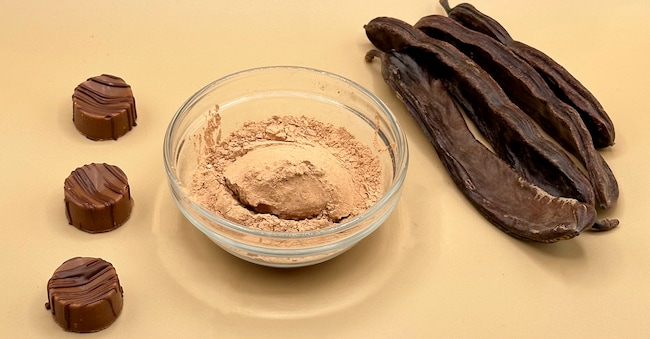
For example Foreverland, selected in the first edition of FoodSeed, recently closed a EUR 3.4 million investment round for its sustainable alternative to carob-based chocolate. "It is an important funding obtained in less than a year," comments Barbari, "but spent start-up projects need more time to be fully developed. And some have physical limitations, such as projects related to agriculture, which perhaps have to wait until the new harvest to see the first results'.

But let's take a closer look at the seven start-ups selected this year.

Vortex transforms agro-food waste

.

Vortex is a biotech company that transforms agro-food by-products into high value-added ingredients. Their circular model aims to solve the problem of economic devaluation and environmental sustainability linked to the tonnes of waste generated by agro-food industries, which are often destined for disposal or used for biomass. Thanks to a technology that stabilises and standardises the by-products - thus avoiding their deterioration caused by their high moisture content - Vortex is able to process both soft agro-food industry waste, such as apples, and dry agro-food industry waste, such as hazelnuts. This process gives rise to flours, pastes and extracts, which can be applied in various areas of the food, pet food and cosmetics industries.

Nous, healthy alternative to caffeine

.

Nous Energy was created with the aim of developing a new generation of ingredients in the nutraceutical field. The first is an alternative to caffeine that improves cognitive and physical performance, enhancing memory, concentration and reflexes without the typical side effects of caffeine, such as blood pressure spikes or tachycardia, and promoting gastrointestinal well-being. According to its creators, this ingredient allows a 60% reduction in water waste and 65% reduction in Co2 emissions at full production, compared to the extraction of caffeine from green coffee beans.

Aflabox: the Ai for food safety

.

Aflabox has devised a system that can detect in real time the presence of aflatoxins, mycotoxins produced by two species of Aspergillus, a fungus found mainly in hot and humid climate zones, in cereals, nuts and oilseeds. Using UV sensors and AI-developed technology, Aflabox offers fast, accurate and cost-effective detection of these toxins, which can cause serious health problems for consumers.

Asteasier: the new frontier of Astaxanthin

Asteasier, a spin-off of the University of Verona, specialises in the production of high-quality ingredients for human and animal nutrition. Their proprietary technology has enabled the development of new microalgae strains capable of producing natural astaxanthin (Ax) - a carotenoid with strong antioxidant properties and benefits for cardiovascular, brain and eye health. Asteasier manages to reduce costs by up to 80 per cent compared to traditional methods, making natural astaxanthin affordable, which can also be used in nutraceuticals. In addition to astaxanthin, the microalgae used by the start-up are also able to produce blue pigments, proteins and omega-3, making the company a benchmark in nutraceutics and aquaculture.

Mama Science: sustainable food packaging

.

At a time when plastic reduction is a global priority, Bologna-based Mama Science specialises in the development of 100% bio-based biomimetic materials that replicate the properties of plastic without causing the same harmful environmental impacts, offering a sustainable and effective alternative to traditional plastic packaging. Their innovative products, made from plant-based raw materials, increase the shelf life of foods such as vegetables, meat and dairy products. Depending on the application, they can impart properties such as water repellency and mechanical resistance when used on paper substrates.

BeadRoots: biodegradable hydrogels against drought

.

To combat drought and improve agricultural productivity, BeadRoots, from Lecce, Italy, has developed hydrogels from natural, algae-derived superabsorbent polymers: applied during transplanting, they absorb large quantities of water and gradually release it to the roots when needed, reducing surface evaporation and optimising the use of water resources. This 100% biodegradable solution not only conserves water, but also nourishes plants and improves soil quality by increasing beneficial bacteria that also have a positive effect on productivity. Currently, BeadRoots is testing the hydrogels on crops such as vegetables, vines and pulses, with the aim of extending the application to all water-intensive crops, especially in drought-prone areas.

Alkelux: natural additives against food waste

.

To combat food waste, Alkelux proposes the use of natural antimicrobial additives derived from liquorice waste: these are integrated into packaging materials to extend the shelf life of food, as already demonstrated in tests on strawberries and other products. Completely metal-free, water-soluble and environmentally friendly, the additive requires no changes to existing production facilities. This allows packaging companies to adopt this technology without costly structural changes.

Copyright reserved ©
Loading...

Brand connect

Loading...

Newsletter

Notizie e approfondimenti sugli avvenimenti politici, economici e finanziari.

Iscriviti