National

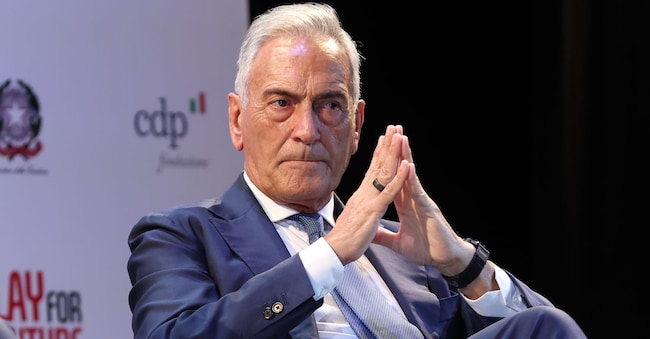
Football, Figc president Gravina has resigned. Buffon also leaves

Elections for the new offices will be held on 22 June

by Andrea Biondi

Il presidente della Figc Gabriel Gravina si è dimesso  7146

3' min read

Translated by AI
Versione italiana

3' min read

Translated by AI
Versione italiana

Gabriele Gravina leaves the leadership of the FIGC and formally opens a transition phase that will lead to the elective assembly on 22 June. A choice matured under increasing pressure - institutional, media and internal - after the third consecutive failure to qualify for the World Cup.

What happened on the 'day after' of the knockout with Bosnia hastened the epilogue: the explicit request for resignation by the Minister for Sport Andrea Abodi, the hypothesis of commission by the Italian Olympic Committee, the rift between politics and the federation, the climate of widespread mistrust.

Loading...

Gravina's backward step

The formal move to resign, accompanied by the calling of elections, now puts a double track on the table: emergency management and structural redefinition. The government, through Abodi, has made it explicit that the issue is not only 'who' will lead the FIGC, but 'how' Italian football will be reorganised. Even the hypothesis of a commissioner - a solution that has already been used in the past - should be read in this key: a tool to intervene on knots that ordinary governance has failed to unravel.

The Figc Communiqué

This is the tense of the statement released by the FIGC: "At the start of the proceedings, Gravina informed the highest representatives of the Lega Calcio Serie A Ezio Simonelli, Lega B Paolo Bedin, Lega Pro Matteo Marani, Lega Nazionale Dilettanti Giancarlo Abete, Associazione Italiana Calciatori Umberto Calcagno and Associazione Italiana Allenatori di Calcio Renzo Ulivieri, that he had resigned from the position entrusted to him in February 2025 and that he had arranged for the Extraordinary Elective Meeting of the FIGC to be held in Rome on 22 June next."

During the meeting Gabriele Gravina then informed the presidents that he had made himself 'available to speak at a hearing on 8 April (11:00 am) in the Culture, Science and Education Commission of the Chamber of Deputies to report on the state of health of Italia football. There he will give a report on the strengths and weaknesses of the movement in the most complete and exhaustive manner possible'. In the afternoon, however, news was received that the hearing had been cancelled.

The sporting debacle

Thus we have reached the epilogue of a situation algebraically rendered by numbers that, more than statements, tell the extent of the crisis. The repeated absence from the final phase of the World Cup implies a loss of direct revenue (Fifa awards, sponsorship, media rights) and indirect revenue (value of the national brand, attractiveness of the football system) estimated at around 100 million considering the sports system and the media system according to the reconstructions of the Sole 24 Ore. But above all, it signals a loss of competitiveness of the entire chain: from the nurseries to Serie A.

In the debate that has resurfaced in the last few hours, well-known structural elements return: limited use of Italian players, rigidity of championship formats, difficulty in combining economic sustainability and technical development, fragmentation of decision-making between leagues and federations.

Gravina's 'parable', 2018 to the present

As for Gravina, his parabola is significant. Elected in 2018 with an almost plebiscitary consensus (97.2%), reconfirmed in 2021 and then again in 2025 with bulgar percentages, the now former FIGC president represented a figure of political stability in a historically fragmented system. A stability that, however, did not translate into lasting sporting results.

The high point remains the 2021 European Championship, won at Wembley. A success that temporarily masked already present fragilities: structure of the championships, development of the nurseries, balance between economic sustainability and technical competitiveness. After that peak, the trajectory became downward: failure to qualify for the 2022 World Cup and, today, the third consecutive failure, an unprecedented event for a four-time world champion national team.

Buffon resigns

Gigi Buffon, head coach of the national team, also announced his resignation on social media: 'Resigning one minute after the end of the match against Bosnia, was an impelling act that came out of my heart. Spontaneous as the tears and that ache in my heart that I know I share with all of you. I was asked to stall so that everyone could do the right thinking. Now that President Gravina has chosen to take a step back, I feel free to do what I feel is an act of responsibility'

Gravina: 'A convinced and considered choice'

Leaving the headquarters of the Federation, Gravina did not shrink from a warm comment: 'After so many years there is great bitterness but also serenity, I thank the components that still today have shown me great closeness, esteem, support and also great insistence in continuing. But my choice was already convinced and pondered'.

Copyright reserved ©
Loading...

Brand connect

Loading...

Newsletter

Notizie e approfondimenti sugli avvenimenti politici, economici e finanziari.

Iscriviti