

‘To evolve, companies should integrate start-ups into their day-to-day operations’
Interview with Itai Green: ‘The most common mistake managers make is falling into the trap of so-called “innovation theatre”, as if it were a public relations campaign rather than a discipline’

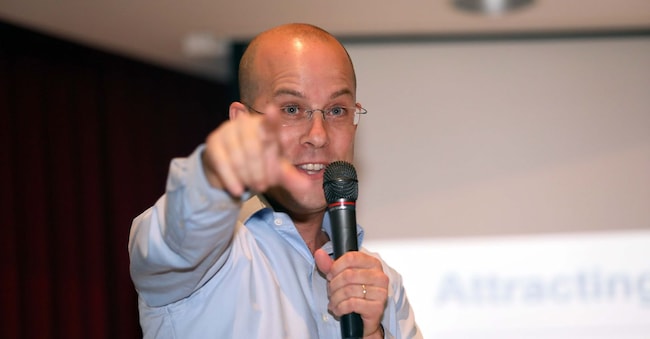
Itai Green is one of the leading experts and advocates of open innovation – the system for integrating innovative development models between large companies and start-ups. In his recent book *i* *Innovation or Elimination: Winning in a World of Constant Change* , Green has tackled thorny issues surrounding the evolution of new technologies. He explained why some giants evolve whilst others do not. Above all, however, he has described the compression of project and platform development times and outlined a framework for hyper-acceleration. He explores the limitations of the entirely in-house research and development model, the impact of artificial intelligence on corporate strategies, and the most common mistakes in the innovation programmes of large corporations. These are the two key themes.
We asked Green to elaborate on these two suggestions.
‘Artificial intelligence, and generative AI in particular, is radically transforming traditional business strategies and operating models. From a strategic perspective, AI is driving companies to move away from slow, multi-year linear planning cycles and adopt a dynamic, real-time approach. Thanks to its ability to continuously analyse and synthesise vast streams of data from global markets, AI drastically reduces strategic blind spots. This enables executives to identify emerging technologies developed by start-ups and changes in consumer behaviour at an early stage, transforming a static business roadmap into a dynamic and highly adaptable action plan. In the past, one of the main operational hurdles was the high technical and financial cost of integrating legacy enterprise software with new applications developed by start-ups. Generative AI revolutionises this process by automating code translation, instantly connecting different software systems and generating customised APIs in real time. This leads to a much more fluid and modular business architecture, whilst also enabling non-technical business units to rapidly prototype and implement new solutions independently. ‘The most common mistake executives make in corporate innovation is falling into the trap of so-called “innovation theatre”, treating innovation as a public relations campaign rather than a fundamental operational discipline.’
How can a start-up mindset coexist with a more traditional managerial mindset?
‘To successfully integrate these two approaches, organisations must adopt an “ambidextrous” structure, which separates operational environments whilst keeping strategic objectives aligned. The traditional managerial mindset is geared towards optimising the existing business, maximising efficiency and reducing risks, in order to ensure stable revenue streams. By contrast, the mindset typical of start-ups finds its place within agile, multidisciplinary teams or internal incubators, which are granted the operational freedom needed to rapidly develop prototypes, test innovative ideas and change the direction of projects without being stifled by corporate bureaucracy.”

