
Ruffini, Revenue Agency: less tax evasion with proportionality
"It is as if feeling represented pushes people more to vote but also to contribute to the community". In his speech at the Rimini meeting, the director of the Agenzia delle Entrate, Ernesto Maria Ruffini, emphasised the importance of the public administration as an ally of the government and parliament. He also highlighted how the proportional electoral system can help reduce abstentionism and tax evasion. Ruffini also emphasised the need for investment and training of Revenue Agency staff to combat tax evasion more effectively.

4' min read
4' min read
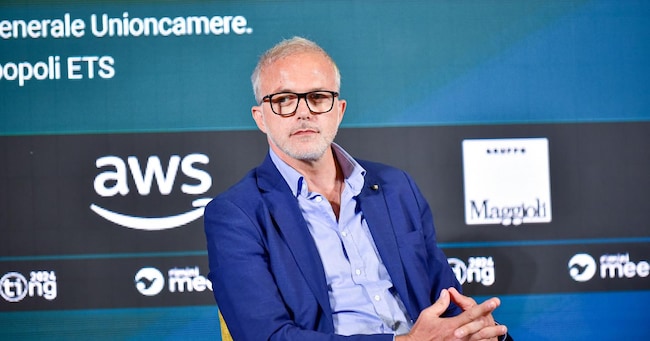
Public administration must be the best ally of any government and parliament. The director of the Agenzia delle Entrate, Ernesto Maria Ruffini , talks about this at the Rimini meeting during a panel entitled "what is the good face of public administration?". "The PA should be the best ally of any government or parliament. Because it must implement choices destined to change our lives. The public administration must ensure that choices are translated into actions for citizens. We can write in the gazette that a certain reimbursement must arrive on that date but it doesn't happen if the administration doesn't take care of it. It is a kind of two-step between institution and administration to choreograph services, rights. It cannot happen if there is no school, no civil defence, no fire brigade. It is a way to realise the democratic process that is otherwise interrupted'.
"Feeling represented pushed people more to vote but also to contribute to the community"
.And speaking of the democratic process, Ruffini offers his view on abstentionism: 'it was lower with the proportional electoral system, but tax evasion was also lower. It is as if, but this is a datum that has yet to be proven, feeling represented pushed people more to vote but also to contribute to the community'. Ruffini also returns to the demands of the financial administration: more dedicated staff (also for the recovery of evasion) and, crucially, more trained staff: 'Thank you for the brave invitation,' he jokes with the moderator referring to the title of the panel, 'but I would not associate the good face of the administration with the Revenue Agency. But the Agency, from the viewpoint that I have had the honour of enjoying for some years now, is an important part of public administration. Paying taxes,' he reiterates, 'is not pleasant for anyone, but making them pay is equally not pleasant. It is a role that is not understood but that we should be aware of. Why are there those who make people pay taxes? The financial administration is the most important public infrastructure in the country because it guarantees resources to all the country's infrastructures. Without resources, choices cannot be made or realised. It is an infrastructure that must be known: a bridge to join two shores. Like all infrastructure, like a bridge, it needs investment, care, attention, training of people'.
Investing in the personnel of the Pa
"At the end of 2021, when the competitions started again, we had an organic plant reduced by about 30 per cent: we were 30,000 out of an organic plant of 45,000,' Ruffini further explains. There was a lack of resources and this also affected the recovery of tax evasion'. But there is also 'the problem of handover: there is the issue of training. We are bringing in 11,000 new colleagues; they need the training of more experienced colleagues who can accompany them. The human element is needed: but if they have left, if they have retired, there is a greater difficulty in integrating the new recruits. So investment and open competitions are needed. Last year we had 100,000 participants for 4,000 positions. But that is only one of the issues for the reintegration of the workforce. The second is the ability to retain resources. There is a need for special figures in the financial administration, not just tax officials, think of computer analysts. How many offers can a young person receive on the private market? How to retain them? Not only economically (it is a game that cannot be played). But with greater flexibility in office presence. We must look at the new generations with different eyes: we cannot deplete the public system. We must include them and have the ability to retain them'.
He is echoed by Roberto Garofoli, President of the Council of State: 'Today, amidst the woes of public finance and the EU's tightening of fiscal constraints, the vulnerability of the Italian production system calls for action. Globalisation that had given us the peace dividend is also loosening up: among these things importing cheap gas and energy. This is no longer a given. So the institutional system must work better. Also for a political reason: there are studies showing a relationship between economic performance and democratic participation. There are worrying rates of abstentionism among those who do not live in a prosperous situation and no longer trust the institutional system'.
"It is essential for the public sector to function well for companies as well," emphasises Giuseppe Tripoli, secretary general of Unioncamere. "There has been a strong disinvestment in the personnel of the PA, to which, however, 14-15% of GDP is attributable. And above all, diversity has not been taken into account: there are 2,200 public administrations at the national level and 19,600 at the territorial level. The mistake is wanting to provide unitary rules for completely different situations: a small company with one employee cannot be treated in the same way as one with thousands of employees. This leads to paradoxes. Instead, we must focus again on people and new skills and on rules that take into account the diversity of situations'.

