
Forests on the outskirts of towns to combat extreme temperatures and urban pollution
Key points
This is down to trees and green spaces. This is because the forests surrounding the city, depending on the tree species, can help reduce urban mortality – particularly that linked to extreme temperatures, both hot and cold – and also, albeit to a lesser extent, the effects of air pollution. This is highlighted by research carried out by researchers at ENEA in collaboration with the University of Milan-Bicocca, the National Research Council (CNR) and the Acri-ST Institute, Sophia-Antipolis, and published in *Communications Earth & Environment*, part of the Nature group.
The scenarios examined
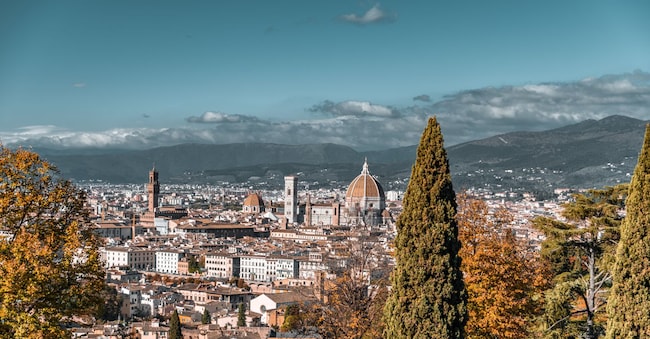
The study examined various tree-planting scenarios in the areas around Florence, Zagreb and Aix-en-Provence. The researchers assessed the impact on heat islands, air quality and mortality, and quantified the associated healthcare costs.
“Urban greenery,” comments Alessandro Anav of ENEA’s Climate Models and Services Laboratory and co-author of the study alongside his colleagues from the Sustainability Department, Alessandra De Marco, Ilaria D’Elia and Beatrice Sorrentino – “is only effective if carefully designed and if the species best suited to the urban environment are chosen, bearing in mind that some trees emit numerous volatile organic compounds that contribute to the formation of secondary air pollutants, thereby worsening air quality.”
Two strategies
In the study, two strategies were simulated to assess the positive effects of the presence of trees. In the first, English oak was planted, ‘a species with high emissions of biogenic volatile organic compounds’, whilst in the second, low-emission species such as Scots pine and black pine were examined. ‘Biogenic volatile organic compounds are substances commonly emitted by plants as a defence mechanism, for example, against insects or pathogens or in response to environmental stress,’ Enea points out. ‘They are not toxic in themselves, but in the atmosphere they react with other compounds, contributing to the formation of tropospheric ozone and fine particulate matter (PM2.5). These pollutants worsen air quality and can cause respiratory and cardiovascular problems in people, leading to increased mortality and hospital admissions.’
PM2.5
The study shows that planting species with high emissions of biogenic volatile organic compounds ‘generally leads to an increase in PM2.5 concentrations: on average, at an urban scale, the increase is 0.80% in Florence and Aix-en-Provence and 0.12% in Zagreb’. Conversely, ‘the use of species with low emissions of biogenic VOCs results in more modest changes in PM2.5 levels, with an increase of 0.35% in Florence and 0.30% in Aix-en-Provence, and a slight decrease in Zagreb (-0.07%)’. Then there is the issue of heat islands, where the impact on high maximum temperatures is limited precisely by peri-urban forests.

