
Former Ilva, Gozzi: companies interested in forming an Italian consortium
The Federacciai Executive Committee. Gozzi: ‘We are open to discussion’ – ‘Expression of interest subject to a number of enabling conditions’

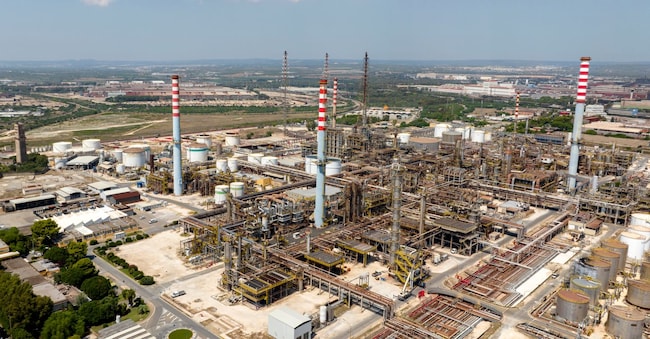
The Italian steel industry is responding to the call to revive the former Ilva. According to Federacciai’s president, Antonio Gozzi, ‘almost all’ of the key players in the supply chain are interested in launching an initiative for the future of the steelworks. Yesterday, he added: ‘we have made ourselves immediately available for discussions’. The issue at stake is the formation of a consortium of entrepreneurs to take over the plants – the sole condition – in the eyes of the Meloni government and the industrial sector – to ensure that what little remains of Italy’s leading steelworks does not fall into the hands of Jindal, which would turn it into a tiny production base in the heart of the Mediterranean and a major gateway to the European market for its steel operations in Oman.
Yesterday morning, the Federacciai Executive Committee met. The statement issued just a few minutes after the meeting ended was brief: ‘The Executive Committee,’ it reads, ‘has authorised President Antonio Gozzi to submit to the relevant authorities, in the name and on behalf of a group of companies that have already expressed an interest in participating in the initiative, and those that may join in the coming days, an expression of interest, subject to verification of a series of enabling conditions necessary to allow the industrial intervention to go ahead. The committee has also authorised the president to verify with the government whether these conditions exist.” Comments made by Gozzi himself on the sidelines of the meeting confirm that the situation is in a state of flux. According to Il Sole-24 Ore, which has consulted several sources, some of Italy’s leading groups have given their consent to participate – subject to verification that the conditions are met – including: in addition to the Gozzi family’s Duferco, these include the Marcegaglia group led by Emma and Antonio, the Arvedi family (founder Giovanni and his heir, his grandson Mario Caldonazzo), Alfa Acciai, owned by the Lonati and Stabiumi families; Dalmine, owned by the Rocca family; Feralpi, led by Beppe Pasini; Acciaierie Venete, owned by the incoming president of Federacciai, Alessandro Banzato; and the Eusider Group, owned by the Anghileri family. Each has its own distinctions and nuances. But the main framework – to which other elements may be added in the coming days, potentially with room for all players in the supply chain – should be this. According to *Il Sole-24 Ore*, only three major names from the Italian industrial landscape are missing: the Riva family, from whom the combined forces of the judiciary and politics stripped the company following the arrests and seizures 15 years ago; the Amenduni family (who, albeit in a less dramatic manner, are also involved in the Ilva affair as minority shareholders alongside the Riva family) and Cogne Acciai Speciali.
It emerged from yesterday morning’s meeting, which lasted just under an hour, that the mechanism through which a non-binding expression of interest – and subsequently a hypothetical bid – might be submitted has not yet been identified. In recent years, however, Federacciai has demonstrated its ability to act as a consortium, even at short notice, to achieve specific objectives: this was the case, for example, with the Metal Interconnector consortium, which operates in the energy sector. The discussion led to an important strategic conclusion: everyone is convinced that Ilva is capable of producing 6 million tonnes per year, thereby ensuring the slab-to-coil cycle with the dual benefit of making the currently ailing company profitable once again and reducing – a crucial positive externality – the Italian manufacturing sector’s dependence on imports. This is, moreover, welcomed by the Meloni government, as it would avoid the risk of an Indian ‘mini-mini-Ilva’. This approach would find fertile ground in the current market climate, with a plentiful supply of slabs in a context where, by contrast, finished coils from outside the EU are burdened by the charges imposed by the new EU safeguard measures, with rising tariffs imposed by Brussels.
Antonio Gozzi will now have to get the ball rolling. Specifically, on the issue of operational viability: energy costs, the level of public funding, and industrial timelines. With the thorny issue of the ‘hot zone’ now off the table, any potential system-wide operation can be implemented with greater clarity, although technical (assessing the state of the art of the facilities), legal, managerial and logistical aspects still need to be verified. According to Il Sole-24 Ore, the clock is ticking: Palazzo Chigi is reportedly expecting an initial response by the end of August regarding the concrete possibility of a national consortium or a polite refusal from the business community.


