
Former Ilva: the company is preparing to shut down operations
Technicians from Ispra and Arpa will initiate the shutdown. The trade unions are awaiting the Ministry’s notice regarding the new extraordinary redundancy scheme

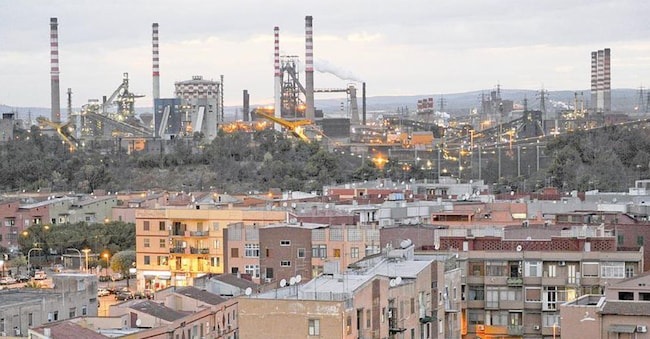
Acciaierie d’Italia is preparing to shut down the hot area in Taranto following the Court of Cassation’s ruling rejected the appeals lodged by Ilva and AdI against the decree of the Milan Court of Appeal ordering the shutdown on the grounds that it causes pollution. As early as Thursday evening, the company wrote to ISPRA and ARPA Puglia, the regulatory bodies responsible for overseeing the operation, stating that it was ready to comply with the judicial authority’s order. And on Thursday itself, technicians from ISPRA and ARPA were at the factory for one of their routine quarterly inspections to check the company’s compliance with the Hague environmental requirements; however, they confined themselves to carrying out these checks and did not deal with the start of the shutdown process. This will now be the next and final step, following the preheating of blast furnace 2 whilst awaiting the Supreme Court’s ruling.
‘Preheating’ refers to a situation where no cast iron is being produced and a technical minimum temperature is maintained by feeding gas into the plant’s Cowper stoves. This gas is purchased from external sources because, as there is no production taking place, the plant no longer recovers gas from the manufacturing process. The gas in the cowpers has so far enabled a temperature of just under 1,000 degrees to be maintained; this will, of course, drop as soon as the gas supply is cut off, thereby initiating the gradual cooling of the blast furnace.
Alongside the shutdown of blast furnace 2, which carried out its final cast of pig iron on 8 October in preparation for the deadlines imposed by the court order, a similar operation will take place for blast furnaces 1 and 4, which are also in the pre-heating phase but have been inactive for several months. Blast furnace 1, in fact, has been under seizure by the Taranto Public Prosecutor’s Office since May 2025, with no right of use, due to a fire that occurred outside the plant, a seizure which the Court of Cassation confirmed last June, whilst Blast Furnace 4 was shut down at the end of February 2026 for maintenance work, with plans to resume operations at the end of April alongside the coking plant batteries – something which, however, did not happen. Batteries 7, 8, 9 and 12, which produce coke for the blast furnaces, have been in the pre-heating phase almost since the start of the year and, as they have not been producing coke since then, the former Ilva has had to purchase it on the market. Technicians explain that it will take longer for the coke ovens to come to a complete standstill than for the blast furnaces. In the coke ovens, the temperature must first reach a minimum threshold, after which they will shut down gradually as they cool down. Ispra and Arpa Puglia were already present in the middle of the month when the preheating of blast furnace 2 began, and the day before yesterday they carried out a further inspection of the hot area.
As regards the impact on employment, the trade unions are awaiting a meeting to be convened by the Ministry of Labour for a joint review with the company of the new extraordinary redundancy fund procedure, which, compared to the current maximum limit of 4,450 employees – 3,800 of whom are in Taranto – will now have a limit of 8,622, 6,964 of whom are in Taranto. These higher figures are tailored to the new situation. Finally, as regards the supply chain and subcontractors, the exceptional redundancy scheme is already provided for in the new decree-law from October to June for 4,200 workers, but the business association Aigi has written to the Ministry of Labour requesting a change to the eligibility criteria. ‘Either recognise,’ explains Aigi’s president, Nicola Convertino, ‘the redundancy fund for all permanent staff who have entered the plant’, or recognise that the local production unit, whilst not having its own staff enter the factory, has nevertheless carried out work for the steelworks that has accounted for more than 50 per cent of the company’s turnover.

