
Forte Village Resort, 40 million investment kicks off
The plan also includes the creation of exclusive villas with swimming pools and premium services. Revenues 2025 to 93 million and operating profit of 38 million.
by Enrico Netti
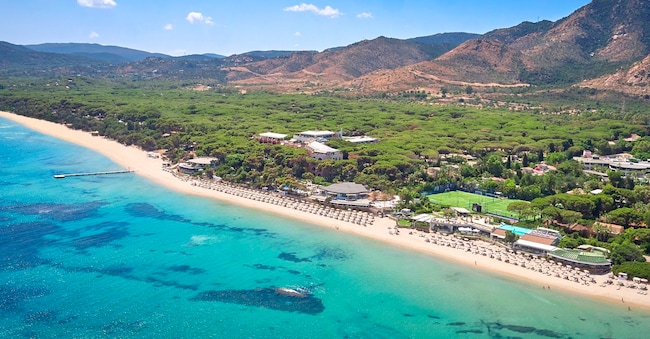
Exclusivity makes luxury even more sought-after. This is the path pursued by the business plan of the Forte Village Resort in Santa Margherita di Pula, in the province of Cagliari, to 2029. "Three more exclusive villas will be built, with an interior space of between 180 and 370 square metres, to bring the availability to 16, with private swimming pools and 24-hour premium services," Magno Cristiani, resident manager of the Forte Village Resort, anticipates to Il Sole 24 Ore. "The villas with four rooms are the best-selling and at the end of this redevelopment process the number of rooms and suites available in the various Village hotels will be 702 compared to the current 716, while in 1995 there were 900. In addition, another 150 rooms will be renovated over the next year. A strategy that drops the ace of the exclusivity of a five-star offer and privacy to intercept the growing share of high-spending international customers by offering hospitality and above all privacy in a renowned tourist destination surrounded by greenery.
"The investment plan envisages an allocation of around 40 million by 2030," Cristiani emphasises. Among the latest interventions for the 2026 season is the construction of a play area for families and something more adrenalin-pumping: a zip line flying over the resort's reservoir. The piazzetta of the Forte Village has also been redeveloped, not only from an architectural point of view, but also by intervening to allow better permeability to rainwater, while the food and wine offer, with 27 restaurants, sees the return of Michelin-starred chef Andrea Berton, who joins Heinz Beck and Carlo Cracco.
While the resort's core business is leisure customers, the Forte focuses on congress tourism and corporate events, because Mice tourism is a segment worth about a quarter of its turnover. "It helps us deseasonalise and at the same time we want to lengthen the season, but the problem is the air connections," explains the resident manager. "Those with London, for example, are operational from May to mid-October, while the Forte is open from the end of March to 1 November. Sardinia needs connections that are more in line with international tourist demand'. As far as the revenue trend is concerned, 2025 ended with 93 million euro in revenue and an operating profit of 38 million, "a little less than 2024, which was the best result ever with 95.3 million euro in revenue and an operating profit of 43 million," Cristiani points out. "Two Mice events contributed to this result, including the Dolce and Gabbana 'Alta Moda' collection fashion show.
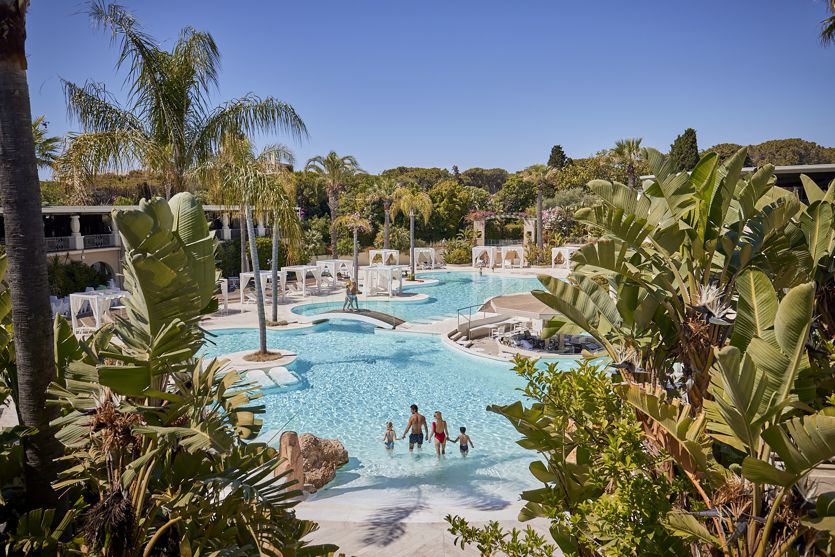
According to the business plan, this year's turnover is expected to be 95.8 million with an Ebit of 41 million, while for 2027 "we are aiming at 100 million with an operating result between 47 and 48 million". On the employment front, Forte is to all intents and purposes an industry that during the high season employs about a thousand people, to which the allied industries must be added. Co-owner of Forte Village is Lorenzo Giannuzzi, who took over the general management of the resort in 1995 and, under his leadership, has won some of the most prestigious international awards in the industry, including the title of 'World's Leading Resort' at the World Travel Awards for 28 consecutive years. Giannuzzi is also the owner of Palazzo Doglio, an urban resort in Cagliari affiliated with The Leading Hotels of the World, with 72 rooms and suites and 39 luxury flats, and Palazzo Fiuggi, a five-star hotel in a historic Art Nouveau building dating back to 1913 in the province of Frosinone, with a Wellness & Medical Spa of 6,000 square metres.

