
France v Morocco, four years on: football reflects the new global balance of power
The match in Boston reflects a changed world: from sporting success to Morocco’s new strategic position and France’s domestic challenges

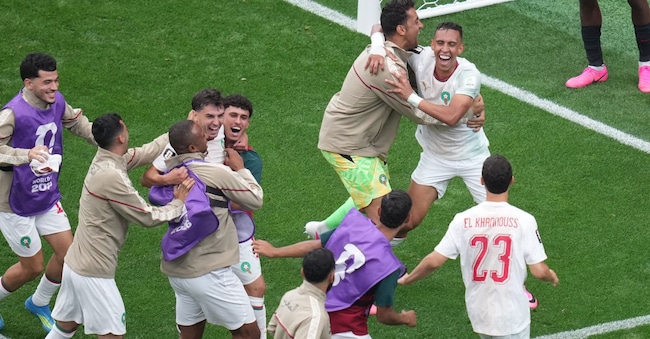
Four years on from that night in Doha, France and Morocco are set to face each other again on Thursday 9 July in Boston, in the first quarter-final of the 2026 World Cup. But the world around them is no longer the same.
In 2022, the semi-final in Qatar – which France won 2–0 before losing the final to Argentina – still felt like a fairy tale: the first African national team to reach the last four in the world. After thrashing Canada (one of the three host nations) 3–0, Morocco reached the quarter-finals for the second World Cup in a row – a feat never before achieved by a team from the African continent. It should come as no surprise now: all they need to do is build on this success. France, on the other hand, narrowly beat Paraguay thanks to a penalty and a bitter battle marked by foul play and provocation. The clash between the French and the North Africans symbolises something deeper than a mere football match.
The Kingdom of Morocco, led by Muhammad VI, has established a geopolitically independent position: a gateway to Africa, a strategic partner of the West, and a pioneer in the energy transition thanks to its phosphate resources and renewable energy. Europe no longer views it as a manufacturing outpost, but as a genuine industrial partner.
France, too, has changed. Les Bleus remain the country’s most successful experiment in multicultural integration, whilst the political establishment still struggles with banlieues and waning influence in Africa. If Le Pen and Bardella’s National Front prevails next year, tensions between its various factions could reach a head. The paradox is this: footballing France has turned diversity into strength and cohesion, whilst the political sphere is struggling to find the same formula for success.
In Qatar, the match was seen as a clash between the former colonial power and emerging African ambition. Today, it is a contest between two sides that are now both well-established in football: the old hierarchical structure between the centre and the periphery no longer exists. Between the World Cup runners-up and the African champions, the former remain the favourites. The most authoritative sports commentators believe that only France itself could lose the World Cup.

