
France without a 2026 budget: Lecornu prepares 'special law' to ensure continuity
After the failure of the compromise between deputies and senators, the French government resorts to a technical rule to keep tax levies active

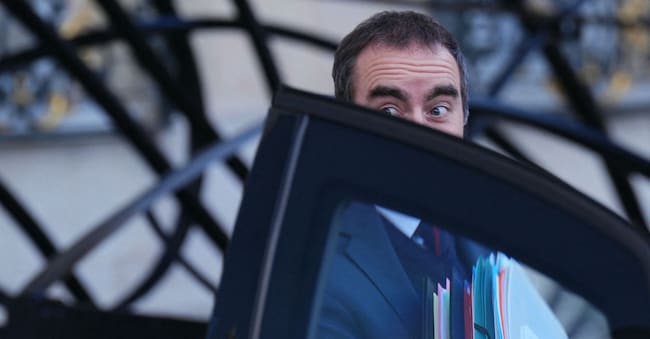
There is no more time. The Constitution's strict deadlines and the desire to approve the Sécurité nationale budget - which contained the suspension of the pension reform - have left the state budget in the strict sense behind. Yesterday, the mixed Joint Commission of seven deputies and seven senators, scheduled to avoid an endless shuttle between the two branches of parliament, met for less than half an hour: the aim was to work out a shared text, but the conditions were not even in place to start. Now we are heading towards what in Italy is called the provisional exercise. At an estimated cost of around 12 billion.
Verso la Loi spéciale
Unable to approve the budget by the end of the year, the government led by Sébastien Lecornu is preparing the Loi spéciale, the special law, to be voted on by Parliament, authorising it to levy taxes on the basis of the rules of the 2025 Finance Bill. A text will soon be presented to the Conseil d'État, for technical remarks, then it will be approved by the extraordinary council of ministers convened for Monday evening and then sent to the two chambers. The whole procedure could be concluded very quickly.
From a political point of view, the prime minister - he announced on X - will bring together "starting on Monday, the main political leaders to assess how to proceed, in order to protect the French people and find the conditions for a solution". After thanking the groups who had 'worked in good faith', Lecornu 'regretted the lack of will to reach a conclusion on the part of some parliamentarians, as we had unfortunately feared for several days'.
A cost of 12 billion
The lack of approval will have no immediate political effects. The key law was the other finance bill, the one concerning the Sécurité sociale, which provided for the suspension of the pension reform demanded by the socialists in order to be able to collaborate with the government from outside - together with some ecologists. Also in December 2024, the government had resorted to a Loi spéciale. However, that very experience shows that delay costs. The Ministry of the Economy did not provide any official figures, but the entourage of the Minister of Action and Public Accounts Amélie de Montchalin reminded French newspapers that last year, when the budget was approved on 5 February 2025, the provisional exercise 'had cost 12 billion'.
Bank of France: 'Deficit over 5% risky'
Some concern was also expressed by the governor of the Banque de France, François Villeroy de Galhau, on the very day the central institution raised its growth forecast for the economy from 0.9% to 1%. A special law, he said, 'would lead us to a deficit much higher than desirable'. France, he added in an interview with the Figaro, must bring its deficit below 5%: the Finance Bill envisaged, at least in the government's draft, a deficit of 4.7%, after this year's 5.3%.
Above that threshold, 'France would clearly put itself in danger. The apparent calm of the markets may, in our experience, be abruptly reversed in the light of a sequence of negative signals that could then occur: resumption of the European procedure against France, new downgrades of its rating and the withdrawal of certain volatile investors such as hedge funds... It is all the more necessary to avoid this increase in French rates, our 'spread', as it would also affect businesses, as well as households through their property mortgages. The French public debt, it was announced yesterday, reached 3,482 billion in the third quarter, or 117.4% of GDP. In three months it increased by 65.9 billion.


