
Rising US tariffs weigh on automotive in Frankfurt, down Bmw and Continental
Germany appears to be the main target of Trump's new offensive, which has announced plans to raise tariffs on cars and trucks to 25 per cent

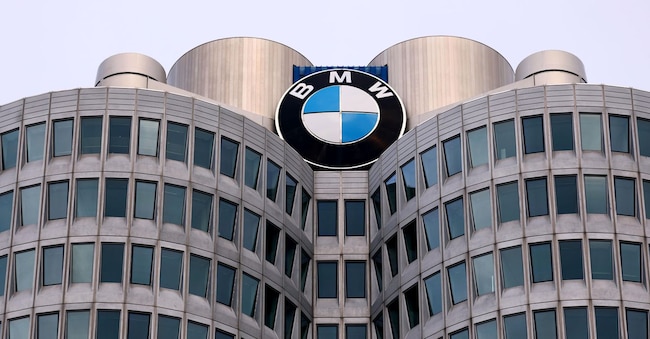
(Il Sole 24 Ore Radiocor) - Automotive in reverse on the Frankfurt Stock Exchange, after US President Donald Trump announced his intention toincrease tariffs to 25% on cars and trucks coming from the European Union. Thus, Mercedes-Benz, Bmw, Volkswagen and Porsche Ag are down. The tyre manufacturer Continental, which is the tail end of the Dax index and also of the Stoxx Europe 600, is also heavily penalised.
Escaping the US invective, by contrast, are other European car manufacturers such as Stellantis and Renault. Although Trump's new offensive is aimed at the European Union, Germany actually appears to be the main target, as Car (Center Automotive Research) director Ferdinand Dudenhöffer points out. "Since exports of foreign manufacturers to the US are negligible, Trump's new tariff threats can also be interpreted as the start of an economic war against Germany," the expert pointed out. Indeed, the tariffs increase comes at a time of strong tension between Washington and the German government, following Chancellor Merz's criticism of the war against Iran, so much so that Trump has also declared his intention to reduce the US military presence in Germany.
The US president announced on Friday that he would increase tariffs on cars and trucks from the EU to 25% from the previously agreed 15% as early as this week, citingBrussels' failure to comply with the trade agreement reached last summer. At the end of March, the European Parliament approved the text on the procedure for implementing the European part of the agreement, but representatives of the Parliament and EU governments still have to negotiate the final texts before the final vote, the date of which has not yet been set. According to the Kiel Institute for the World Economy (IfW) the increase in tariffs on the automotive sector could cost Germany almost EUR 15 billion in terms of overall production. For Car, tariffs of 25 per cent could impose an additional annual burden of around EUR 2.5 billion on German automotive production.
However, the exceptional costs would not fall entirely on the manufacturers, who 'will try to pass on some of the tariffs to US buyers through price increases'. Furthermore, according to Car, the tariff increase should have an uneven impact on car manufacturers. Mercedes and Bmw have major production plants in the US and thus benefit from some tariff protection. Their US plants produce SUVs, which account for the majority of their overseas sales. The situation is different for Porsche and Audi. "This should accelerate their plans to build plants in the US," said Dudenhoeffer. Overall, Trump's tariffs are expected to give a further boost to the relocation of the automotive industry out of Germany.

