

Are fresh sprouts among the foods most at risk of bacterial contamination?
The team of doctors and fact-checking experts from the National Medical Association addresses the main health concerns

Key points
We can find them in salads, garnishing soups and other ethnic dishes: we’re talking about fresh sprouts, foods often prized for their nutritional value, but which have also been at the centre of food safety alerts linked to bacterial contamination. In Europe, in 2011, a serious outbreak of Escherichia coli was traced back to sprouts, with dramatic consequences for public health. That incident prompted European health authorities to review safety measures for these foods. So let’s take a look at what the scientific evidence says about this risk.
Why are sprouts considered so risky?
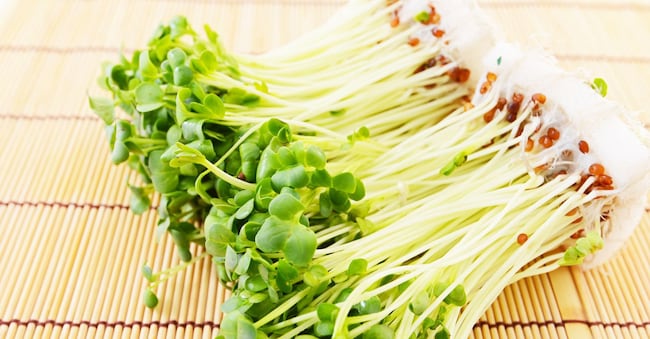
Sprouts are produced by germinating seeds soaked in water in warm, humid environments. These conditions are ideal for plant growth, but they are equally ideal for the growth of bacteria. The bacteria that cause experts the greatest concern are Salmonella, certain dangerous strains of Escherichia coli and Listeria (which we have already discussed in the fact sheet ‘Are many foods contaminated with Listeria?’)
The main problem is that contamination is often already present in the seeds even before germination begins. A study carried out by the US Food and Drug Administration (FDA) on over 800 samples found Salmonella in 2.35 per cent of the seeds analysed. What makes this risk so insidious is the minuscule amount of bacteria required to trigger an outbreak: the European Food Safety Authority (EFSA) has estimated that as few as 4 bacteria per kilogramme of seeds are enough to cause an outbreak. Once germination begins, these bacteria multiply explosively over the following days, reaching potentially very dangerous levels without the product showing any visible signs of spoilage. In other words, a contaminated sprout may appear, to the touch and to the eye, perfectly healthy – a problem that affects many other contaminated foods, as we explain in the factsheet ‘Can I trust my sense of smell to tell if food has gone off?’
It is precisely for this reason that the FAO and the WHO have classified sprouts as high-priority plant-based foods from a microbiological risk perspective. According to a scientific review published in 2021 in the *International Journal of Food Microbiology*, there have been at least 64 outbreaks of foodborne illness linked to sprouts worldwide since 1988. The bacteria most frequently involved were Salmonella and Escherichia coli.
Are home-grown sprouts safer than those bought at the supermarket?
Many people grow sprouts at home in the belief that they will end up with a fresher, more carefully controlled product. Unfortunately, the risk does not depend on where the seeds are germinated, but on the conditions under which germination takes place. The very temperatures and humidity levels required to germinate seeds are conducive to bacterial growth, regardless of the environment. In a 2011 scientific opinion, the EFSA emphasised that even those growing sprouts for personal use must be aware of the microbiological risk. It also acknowledged that, despite advances in research, no chemical, physical or biological decontamination method is currently capable of completely eliminating pathogenic bacteria from all types of seeds without compromising their ability to germinate.

