
From 3 July, an Italian anti-missile battery will be operational to defend the NATO summit in Ankara
The Joint Forces Operational Commander (COVI), Lieutenant General Giovanni Maria Iannucci, addressed a joint hearing of the Senate and Chamber of Deputies’ Foreign Affairs and Defence Committees as part of the examination of measures relating to international missions: ‘Dozens of explosive devices in the Strait of Hormuz; it will take two months to clear them’

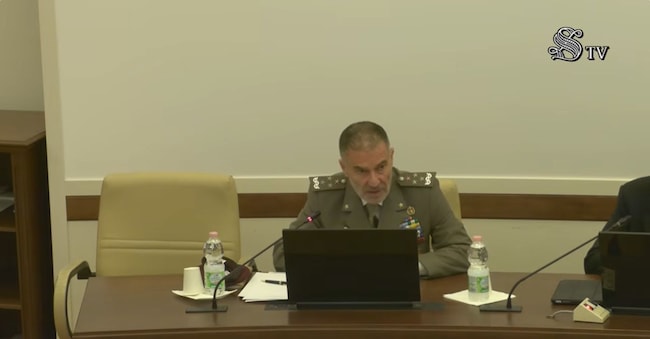
‘We supply the Samp/T air and missile defence system on request, as was the case, for example, in Slovakia in 2024, in Lithuania in 2025 and, more recently, in Estonia. Our Samp/T battery was deployed in Estonia until March 2026, and in Turkey, where the battery is due to become fully operational on 3 July. All of this is also linked to the heightened security that will be required for the summit of NATO Heads of State and Government, which is due to take place in just a few days’ time in Ankara.” This was explained by the Joint Forces Summit Operational Commander (COVI), Lieutenant General Giovanni Maria Iannucci, who appeared before the Joint Foreign Affairs and Defence Committees of the Senate and Chamber of Deputies on Wednesday 1 July as part of the examination of measures relating to international missions.
The Samp/T referred to by the general is the same one that, in early June, as part of NATO’s Standing Defence Plan, had been deployed at a military base in Konya, in Central Anatolia.
Ankara’s Defence Minister, Yasar Gule, recently stated that Turkey is considering ‘all options’ to meet its defence needs, including the potential purchase of the Franco-Italian Samp/T surface-to-air missile system and the US-made Patriot system, following the recent deployment of such systems in the country as part of NATO’s defence programme.
The Samp/T (an acronym for Sol-Air Moyenne-Portée/Terrestre) is a state-of-the-art medium- and long-range air defence and missile defence system. It was developed by the European consortium Eurosam, comprising MBDA (France and Italia) and Thales. In Italia, where it is known as ‘Mamba’ by the Italian Army, it forms the cornerstone of national airspace defence and that of the North Atlantic Treaty Organisation against sophisticated threats. Partner countries, including Italy, have begun development of the new generation, known as SAMP/T NG (New Generation). This version features significantly more powerful radars (such as Leonardo’s Kronos Grand Mobile High Power for Italia) and the new missile variant, the Aster 30 B1 NT (New Technology). This upgrade will enable the system to intercept and destroy faster ballistic missiles with a longer range (up to 600 km), as well as counter new hypersonic threats.
Iannucci: ‘Dozens of mines in Hormuz, two months to clear them’
General Iannucci’s speech also provided an opportunity to gain an insight into the sort of mission Italian minesweepers would be called upon to carry out should Parliament give the go-ahead for their involvement in a multi-nation operation in the region, once a stable truce has been reached between the US and Iran. “It is estimated that there are dozens of mines in the Strait of Hormuz,” he said, “which will require an operation lasting around a couple of months: these are sophisticated and advanced mines that demand capabilities and expertise not available to all countries.” According to Iannucci, “the prospect of a multinational mission to clear mines in the Strait of Hormuz is to allow non-European and regional actors to participate as well,” added the COVI commander, specifying that the Italian minesweepers are currently in Djibouti.


