
From autonomy to citizenship law, what is at stake behind the election of the constitutional judge
The game of appointing the missing judge of the Consulta for the majority must be closed before 12 November, the day on which the Court is called upon to decide on the centre-left regions' direct appeal against Calderoli's law on differentiated autonomy.

3' min read
3' min read
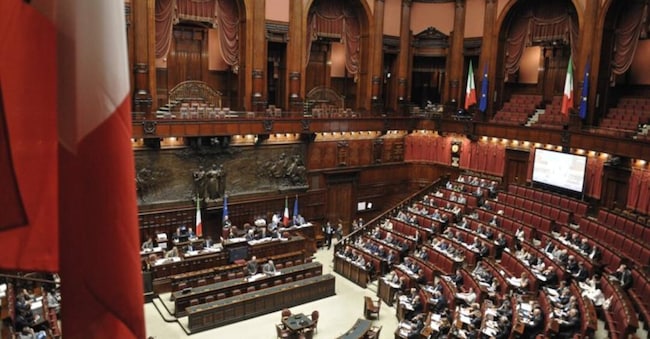
In the hemicycle of Montecitorio yesterday there was the eighth black smoke on the election of the missing judge of the Constitutional Court (which today works with 14 judges compared to the planned 15). Prime Minister Giorgia Meloni would have liked to close on Francesco Saverio Marini, legal advisor to Palazzo Chigi and 'father' of the premierate reform, but the wall of opposition - united in not taking part in the vote - and the low numbers for the go-ahead, in the end, suggested the prudence of the blank ballot so as not to 'burn' Marini's name. For the quorum, in fact, 363 preferences (three-fifths of the parliamentarians) would have been needed, that is, net of absentees and possible troublemakers, several more than the majority numbers. Meanwhile, time is running out: the box to be filled is that of the former president of the Consulta, Silvana Sciarra, whose mandate ended almost a year ago. Not only that. In mid-December another three judges will expire, bringing the Consulta to the minimum threshold of 11 members.
The stakes
.But what is at stake behind the election of the missing judge and in perspective of the other expiring judges of the Consulta? The game linked to Marini's name must be closed for the centre-right before 12 November, the day on which the Consulta is called upon to decide on the centre-left regions' direct appeal against Calderoli's law on differentiated autonomy. But above all, in January the judges of the Constitutional Court will be called upon to assess the admissibility of referendum questions on which the opposition (with the exception of those on the Jobs act) has been united. Seven referendums exceeded the 500,000 signatures required by law. Two against differentiated autonomy, one on the citizenship law (halving from 10 to 5 the years of residence in Italy required of foreigners of age applying for citizenship), four to cancel the Jobs act reform, or what remains of it. They now await the Constitutional Court's opinion on admissibility. The 'response' is expected in mid-January 2025.
The opposition's accusations
.The oppositions accuse the centre-right of having attempted the 'blitz' before these decisive appointments, shifting the balance of the Court 'to the right'. The Constitution provides that the five (out of a total of 15) parliamentary-appointed judges of the Consulta are elected by secret vote by the Chamber of Deputies sitting in common session. A two-thirds majority is required in the first three ballots (403 votes out of a total of 605 deputies and senators in office at the time) and a three-fifths majority from the fourth ballot (363 votes). High thresholds have been set so that the appointment is not the exclusive prerogative of the majority. And to push for bipartisan agreement for an office within a body that has a constitutional guarantee function.
Towards a bipartisan understanding
.Over the decades, the practice has been to reserve the appointment of the five judges for the parties according to the balance of power in Parliament. After yesterday's failed blitz there seems to be no room for forcing. And to get out of the impasse, the path seems to be that of bipartisan agreement. In fact, it is likely that at this point they will wait until three more judges expire by the end of the year (President Augusto Barbera himself, Franco Modugno and Giulio Prosperetti) to negotiate the whole 'package': one to Fratelli d'Italia, one to Forza Italia, one to the League and one to the opposition, which in turn will insist on asking for two


