
From cohesion to ports: the return of centralism in Italian economic policy
The bill currently under discussion in Parliament, which extends the special economic zone to the whole of the country, forms part of a comprehensive process to reorganise the governance of key aspects of Italian economic policy, marking a shift in approach: from a model based on local initiative and territorial autonomy, towards one characterised by centralised control and top-down decision-making

For several months now, a debate has been underway – including in *Il Sole 24 Ore* – on the future of European cohesion policy, against a backdrop of increasingly strong calls for its renationalisation. Italia has been at the forefront of this process. With the appointment of Raffaele Fitto as Minister for European Affairs, the South, cohesion policies and the PNRR, a series of reforms were introduced between 2023 and 2024 aimed at greater centralisation of this policy, which until now had been managed in Italia predominantly by the regions. The genuine reform of cohesion policy (Decree-Law 60/2024, converted into Law 95/2024) completed a process of gradually shifting the centre of gravity of policy governance towards greater national coordination, modelled on the National Recovery and Resilience Plan, of which the cohesion reform was one of the objectives. A key step in this process was the so-called ‘Southern Decree’ (Decree-Law 124/2023, converted into Law 162/2023), which set out a series of policies for regional development, supported in part by national funds. These included the Special Economic Zones (SEZs), a local development tool designed to promote investment by creating targeted incentives in specific geographical areas.
Special Economic Zones
The SEZs – eight in total – were introduced in 2017 in certain areas of Southern Italy with a distinctly bottom-up approach, as they were based on local sectoral specialisation. The SEZs, in fact, consisted of port areas, hinterland areas or logistics hubs, where businesses benefited from tax incentives laid down by law, such as investment tax credits and administrative simplifications, as well as other benefits that individual regions could introduce. Following the reform, from 2024, the eight regional SEZs have been merged into a single SEZ, an area covering the entire territory of Southern Italy, with the recent addition of the Marche and Umbria regions, and governance has been centralised under the Prime Minister’s Office. Businesses can access a tax credit for investments in capital goods (machinery, plant and equipment) and benefit from a simplified authorisation process that allows them to set up, expand or convert production facilities through a fast-track procedure.
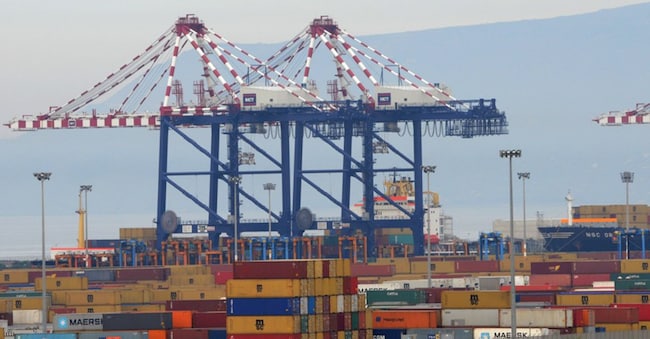
There is now discussion of extending the SEZ to cover the whole of the country. It is in line with this outlook that the recent Bill No. 2925 can be interpreted, marking one of the most significant turning points in Italian port governance over the last thirty years. The bill has been tabled in the Chamber of Deputies and is currently under discussion in the Chamber’s Transport Committee; the text aims to centralise maritime strategy and revitalise investment by restructuring the decision-making chain, shifting the financial centre of gravity and redefining the relationship between the State, the Port System Authority and local authorities. At the heart of the new framework lies Porti d’Italia S.p.A., a new public ‘super-company’ tasked with carrying out strategic infrastructure investments and major works at ports of national and international interest. The port authorities, meanwhile, will retain responsibility for administrative management, local regulation, concessions, services and routine maintenance. The reform does not merely strengthen national coordination; it introduces a genuine centralisation of powers and resources. From this perspective, Porti d’Italia can be seen as a single public concessionaire, similar to the models already tried and tested in rail and road infrastructure with RFI and ANAS: an entity tasked with planning and implementing investments in accordance with a coherent national plan. Consequently, decisions on projects that determine the competitive positioning of ports will shift from the port-local level to a central control centre. This centralisation will concern not only responsibilities but also finance. The draft bill establishes a Fund for Strategic Maritime Transport Infrastructure, financed by a share of port revenues, meaning that a portion of the resources generated locally by the ports will be withdrawn from the direct control of individual port authorities and channelled into a national fund.
A different approach
What is taking shape is a comprehensive process of reorganising the governance of key aspects of Italian economic policy, leading to a shift in approach: from a model based on local initiative and territorial autonomy towards one characterised by centralised control and top-down decision-making. The reforms implemented or planned to date are consistent in a number of respects: i) a re-centralisation of power and financial resources from the regions to the centre; ii) a shift from a bottom-up approach to a top-down approach; iii) a constant emphasis on the need for greater efficiency and coordination to address alleged excessive fragmentation; iv) a cross-cutting application encompassing local development policies, industrial policy and infrastructure policy.
The ZES unification
The resulting reorganisation of governance can be defined as a process of unification of economic policy: a move towards the re-centralisation of power, competences and financial resources from instruments hitherto designed for decentralised and cooperative management. The premise, cited as the basis for the various measures, is the need for greater national coordination and the need to overcome excessive fragmentation. However, whilst the need for greater coordination at central level may be widely accepted, the problem lies in the manner in which such coordination is achieved. Territory-based policies responded to a necessary need to move beyond a top-down model of intervention that failed to take account of local specificities and tended to be excessively uniform. The processes currently underway do not appear to signal a shift towards a new framework, but rather a return to a previous approach. It is a model that might respond better to emergencies and increase governments’ room for manoeuvre. However, it raises serious questions about the functioning of multi-level governance, at both national and European levels.

