
From Copilot to agent security, all the new features of Microsoft Ignite

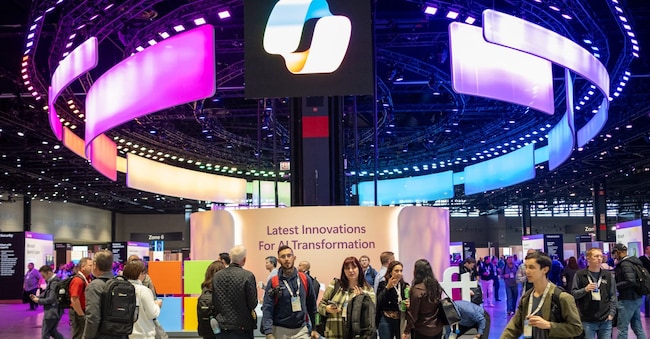
The 2025 edition of Microsoft Ignite, the international event that every year brings together thousands of insiders from the technology community to talk about digital transformation, is considered by many to be an important, if not crucial, moment in the Redmond company's strategy to consolidate artificial intelligence as the beating heart of its entire ecosystem. The speakers expected to take the stage at San Francisco's Moscone Center from 18-21 November will be those that Microsoft calls 'Frontier Firms', i.e. companies that want to go beyond the simple use of AI tools to create a new intelligent enterprise architecture and that want to govern innovation driven by algorithms and LLM models by putting accountability, control and security at the centre. The mantra of the Satya Nadella-led company regarding the role of Gen AI is well known and revolves around an end-to-end vision: it is no longer just a matter of integrating Copilot into individual products, but of making intelligent agents, applications and data talk to each other in a resilient platform that is fully dedicated to productivity and collaboration.
IA agents serving 'frontier enterprises'
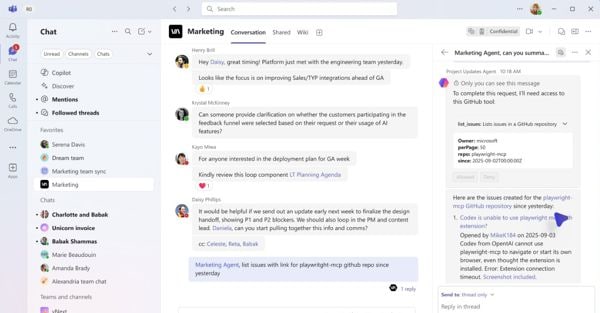
Copilot, in Microsoft's strategy, is confirmed as the central pivot of the company's AI transformation (more than 90% of Fortune 500 companies currently use it) and no longer just a support in the form of a conversational assistant. Its new 'dimension' is that of a set of intelligent agents capable of operating autonomously, built, as Microsoft points out, specifically to feed the 'Frontier Firm' model, a model to which an initiative launched in collaboration with Harvard's Digital Data Design Institute is dedicated to provide managers of large multinationals with the necessary skills to transform their organisations into 'frontier firms'. The concrete translation of this strategy takes place on several levels. Copilot Studio, for example, becomes the main laboratory in which companies can model their agents without the need for data scientist-style skills: thanks to low-code or no-code tools, in fact, it is possible to build assistants to whom they can entrust operational processes at the level of customer service, legal issues or financial reports. All agents are, of course, interconnected in a multi-agent orchestration logic, which allows them to collaborate on complex tasks and to record every interaction and decision to ensure full traceability. Another pillar of Copilot's evolution concerns security: each agent has a secure identity and operates with short-term credentials, reducing the risk of compromise. No less important is the leap forward that Microsoft promises companies in the area of productivity. Copilot, in this sense, becomes an active player in daily workflows because it can synthesise texts, plan tasks, generate documents and execute repetitive tasks on multiple systems. And all this is securely orchestrated against an ecosystem logic of intelligent agents that redefines the very concept of automation with artificial intelligence.
The announcements for Microsoft 365 Copilot: Work IQ arrives
Every company," said Jared Spataro, Chief Marketing Officer AI at Work at Microsoft, in a note, "is on a journey to become a human-driven, agent-operated frontier firm and in this transformation journey they are redefining the way they work, empowering every employee with an intelligent assistant and reinventing business processes with the help of these agents. During Ignite 2025, several new Microsoft 365 Copilot features designed to help every company become a 'Frontier Firm' will be announced and the main ones are Work IQ, the availability of Agent Mode in Office apps and Agent 365. The former, as Spataro defines it, is the level of intelligence that allows Copilot to know the user, their work and their company inside out: specifically, we are talking about all the information in emails, files, meetings and chats that encode how a given task is performed and the ability to store style, preferences, habits, workflows and relationships and combine all this data to make connections, unlock insights and predict the next best action. To simplify the concept, Copilot suggests the most suitable agent to use for the task at hand based on the defined prompt and intent. Work IQ is integrated into everyday apps (such as Word, Outlook and Teams) and through it Copilot continuously learns to offer increasingly personalised user experiences.
More intelligence and security in every Office app
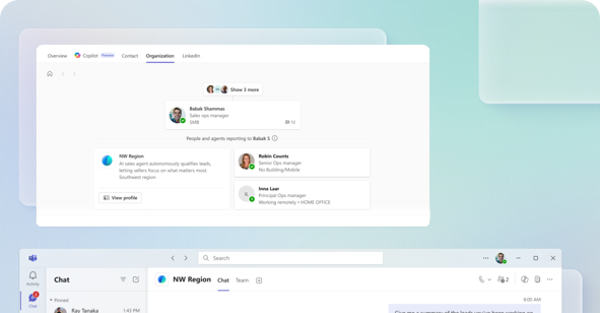
The introduction of new agents in the suite's apps, on the other hand, will make it possible to create content of various kinds from both Copilot chat and apps: in Excel, for example, it will be possible to choose between Anthropic and Open AI reasoning models, while in Outlook it will be easier to manage inboxes and calendars with voice commands, read and reply to e-mails through prompts such as 'summarise and reply' and schedule meetings, all directly from the smartphone. Finally, Agent 365 is the control plane for agents, allowing them to be managed with greater reliability and security. Microsoft assumes that these tools are already changing the way of working (Idc predicts 1.3 billion agents in operation on a global scale by 2028) and with this 'add on' goes to extend the orchestration infrastructure to be put in the hands of human employees. It will thus be possible to register all the organisation's agents in a single source, limit their access only to the necessary resources, visualise their connections with people by monitoring performance and behaviour in real time and, at the same time, protect these tools from threats and vulnerabilities. Microsoft's stated goal, further emphasised during Ignite, is in essence to overcome the reactive logic to incidents, transforming business teams into actors capable of anticipating risk and intervening with faster and more informed decisions. To do this, the step forward is the inclusion of Microsoft Security Copilot in Microsoft 365, an integration that allows agents to be natively available in Defender (completely revamped with respect to the idea of an 'agentic' SOC), Entra, Intune and Purview (which evolves into a unified data security platform designed for environments in which information and AI agents move without boundaries) and to be able to exploit their capabilities to accelerate investigation processes, optimise identity management and simplify device governance. On the security side, Microsoft is bringing twelve agents created 'in house' and more than 30 developed by partners to extend coverage across all operational tasks in its security portfolio, from threat intelligence to incident analysis. With a clear underlying objective: to shift the centre of gravity of security towards automated and predictive practices driven by AI.
The evolution of Windows: a platform for intelligent work
The 40th anniversary of Windows could not but be part of the roundup of new announcements, and the occasion of Ignite was indeed useful for Microsoft executives to reiterate how the operating system is now to be understood no longer just as a software environment hosting applications but as an all-round platform for intelligent work. Windows, simply put, is still evolving to become a 'canvas' for artificial intelligence, in which tools, models and automations coexist within an integrated security and governance architecture. The essence of this strategy is the introduction of a native agent infrastructure, a set of services that enables Copilot and third-party systems to operate securely on files, apps and system functions. New features, such as agent connectors based on the Model Context Protocol and the Agent Workspace, mark the transition from an application approach to a structural one: agents become Windows components, with their own identities, limited permissions and fully tracked flows. The Agent Workspace, in particular, creates an isolated and controlled environment in which the agent can perform parallel tasks without interfering with the user's session; each action is attributed to a distinct identity, guaranteeing visibility and operational responsibility. Microsoft sees this as a capability and a key element in ensuring the necessary levels of trust (and thus adoption) in enterprise-class contexts. This integration logic obviously also extends to the cloud via Windows 365 for Agents, which gives developers the choice between running locally or in the cloud without changing their agent logic. The overall vision of the new digital workplace frontier according to the Redmond giant is quite clear: the new Windows is not just an operating system that supports AI, but is intended to be a unified platform for running intelligent agents and developing AI-native applications.

