The investigation

From Denmark to Spain, here is the Europe of ghetto neighbourhoods

The EU Court of Justice challenges Copenhagen for 'integration' policies that end up having the opposite effect. A case already seen elsewhere

by Michele Pignatelli (Il Sole 24 Ore, Italy), Miguel Ángel Gavilanes, Ana Ruíz, Marta Ley (El Confidencial, Spain), Bianca Blei (Der Standard, Austria), Krassen Nikolov (Mediapool.bg)

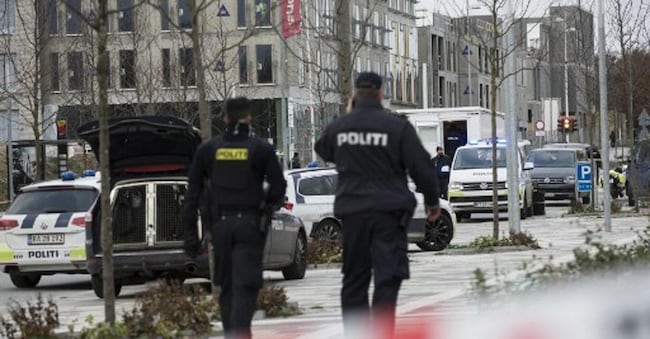
(Photo by Mikkel Berg Pedersen / Ritzau Scanpix / AFP)

8' min read

8' min read

They had called it an anti-ghetto law, then renamed it a package to regulate 'parallel societies'. The substance does not change: it is a regulation, introduced in 2018 by the Danish centre-right government and now implemented by the centre-left government of Mette Frederiksen, to promote integration, which, however, provides for drastic measures such as eviction or the demolition of housing and is now before the European Court of Justice on charges of violating European anti-discrimination legislation.

The original objective of the law was to address social challenges in certain low-income neighbourhoods, the so-called 'ghettos', by reducing the concentration of immigrant communities, lowering unemployment rates and improving educational standards. More specifically, each year areas with more than 1,000 residents are identified as ghettos if more than 50 per cent are 'immigrants and their descendants from non-Western countries' and if at least two other criteria relating to education, income, crime and labour force participation are met.

Loading...

Majken Felle, 50, lives in one of the neighbourhoods affected by the clampdown: Mjølnerparken. "I know that, as a white, blue-eyed Dane, I am not a target of the law, but my neighbours are," he explains, describing the debate triggered by the law as 'sad'. Felle, a teacher by profession, calls Mjølnerparken his home and describes the neighbourhood as great. He helped the neighbourhood children with their homework. They carried shopping bags to his flat and exchanged ideas at the neighbourhood's weekly café. "Our common language has always been Danish," says Felle.

The ethnic criteria of the so-called 'ghettos'

.

The crux, as Kristina Bakkær Simonsen, a political scientist at Aarhus University, explains, is the 'ethnic criteria that trumps everything: only if the inhabitants have a non-Western background does the area enter the list of parallel societies, ghettos'. And the neighbourhood is subject to harsher penalties for certain crimes, demands for higher standards of Danish language proficiency and, above all, policies to reduce the number of non-Western residents involving the demolition or conversion of public housing. It was from these measures that the case that went to the European Court of Justice originated.

There is also, apart from the risk of eviction or loss of housing, the social stigma that the residents of these neighbourhoods - often first- or second-generation immigrants of black or Muslim religion - have to endure, because as Bakkær Simonsen notes, 'it is as if the list says that being of non-Western origin equals being unemployed, criminal, less educated and so on'.

But really, without the drastic measures introduced, would these neighbourhoods risk becoming closed realities, not integrated into Danish society? "The image of the ghetto," Bakkær Simonsen explains, "has been constructed in the political discourse by stating that 'Danish values' are not shared in those areas, but in reality we have no scientific evidence to support this view. What we do know - from research on first- and second-generation immigrants but also from surveys that the Ministry of Integration conducts annually - is that they are strongly committed to liberal democracy and our welfare values (paying high taxes, working, contributing to society) that characterise the majority of the Danish population'.

However, the contradictions and paradoxes of the legislation do not seem to particularly affect Danish public opinion. Hence, according to Bakkær Simonsen, the importance of the ruling: 'If the Court decides that this is a violation of human rights and the principle of anti-discrimination,' he concludes, 'I believe that this would give a new perspective to these policies, which are no longer questioned, at least in the mainstream debate, but are accepted as necessary or legitimate.

From France to Spain, the prevention of 'ghetto risk'

.

The debate on this topic is not exclusive to Denmark, with similar cases and policies tried and tested in the rest of Europe. The common denominator remains that of avoiding the creation of urban bubbles that are classified as ghettos on the basis of ethnicity, income or both. Already in 2022, the Swedish Minister of Immigration, Anders Ygeman, had spoken out against areas populated by residents without 'Nordic origins', envisaging a 50% cap on the concentration of citizens of immigrant origin in so-called 'problem areas'. In France, policies to counter the excessive social (and ethnic) homogeneity of certain neighbourhoods have been debated for years, a battle also espoused by former Macronian prime minister Elisabeth Borne with her proposal to relocate low-income families in wealthier neighbourhoods. In Germany, in 2020, a request by the radical right-wing force Alternative für Deutschland had forced the authorities of North Rhine-Westphalia to publish a list of 44 'high-risk' zones in the state. Almost all of these were areas with a high density of immigrant residents, contributing to the ethnic classification that has been challenged by the EU Court of Justice.

A case in point is the Bulgarian authorities' crackdown on the Roma community. Over the past decade, the authorities in Sofia have carried out the demolition of Roma houses in dozens of towns and villages, and in some cases there has been a mass demolition of Roma ghetto neighbourhoods with the justification that the houses are illegal. Human rights activists claim that these demolitions violate the European Convention on Human Rights, because the Roma are deprived of their only home. Three cases have been filed in the European Court of Human Rights against Bulgaria for these cases, as well as many others in national courts.

In most cases, the Roma are defended free of charge by the non-governmental organisation Bulgarian Helsinki Committee, one of the oldest NGOs in Bulgaria.There are no precise figures on how many Roma have been forcibly evicted from their only home, destroyed by the state or the municipality, but it is estimated to be at least several thousand people.The last case dates back to 2023, when 160 people were left homeless in the Roma area of the Orlandovtsi district in the Bulgarian capital of Sofia. A few years earlier, most of the large Roma neighbourhood of Maksuda in Varna, Bulgaria's largest city on the Black Sea coast, was razed to the ground. The demolition of the Roma settlement in the mountain town of Garmen, in the Rhodope Mountains, nine years ago, and the demolition of the Roma settlement in the Plovac village of Vojvodinovo in 2019 caused public outrage.

The state does not keep precise statistics on homeless people, because there is little public interest in the problems of the Roma ethnic group, which, according to various estimates, constitutes up to 10 per cent of the country's population.'Before the demolition of the houses in the Orlandovtsi district, we tried to stop it with a court decision, but we did not succeed. The Bulgarian courts refuse to apply clear legal standards. In one case, the case is dismissed because the demolition has not yet started, and in the other case, the case is dismissed because the house is already destroyed,' says Adela Kachaunova of the Bulgarian Helsinki Committee.

"Ghettos? we should talk about population segregation"

.

Another country questioning and acting on its 'ghettoisation' is Spain, led by the socialist Sanchez. In 2024, 18.1 per cent of the country's residents led by Socialist Prime Minister Pedro Sanchez will be born abroad, a total of around 8.8 million people. Morocco, Colombia, Romania, Venezuela and Ecuador top the list of most common countries of origin. These five countries alone account for almost three million people. However, their distribution in Spain is not uniform. Is Spain therefore a segregated country? There are only 25 cities - out of more than 8,000 in Spain - where immigrants make up half the population, according to 2023 data. In fact, almost all of them are in the province of Castellón, so they would be British and German. This would challenge many stereotypes.When asked what a ghetto is, there is no clear definition. Neither in Spain nor in the other similar cases that have emerged on a continental scale. "There is no absolute definition," warns Jesús Fernández-Huertas, Professor of Immigration Economics, Labour Economics and Development at the Carlos III University. "In this case, we should talk more about population segregation," adds Fernando Relinque, professor of social work and social services at the University Pablo de Olavide.

There are indicators to measure segregation by analysing the concentration of immigrant populations in certain neighbourhoods or census sections compared to the rest of the municipality. But to speak of a ghetto, according to Relinque, one must also consider whether the area has specific socio-economic characteristics that make it 'more vulnerable than the rest'. 'I wouldn't dare give an absolute definition,' he insists.

It is still Spain that offers a term of comparison. Twenty-two per cent of the immigrant population lives in Spain's six largest cities - Madrid, Barcelona, Seville, Valencia, Zaragoza and Malaga - an even higher concentration than in the native Spanish population. But within these cities, data from each census section reveal how the immigrant population is distributed, highlighting the differences.

According to Fernández-Huertas, levels of segregation depend on four key factors: the immigrants' desire to live with people of the same nationality, the characteristics of the neighbourhood, the restrictions they face and the reluctance of locals to live with immigrants. In Spain, the latter factor usually only occurs in the central areas of cities, and not even in such high proportions as in other countries, such as the United States, where ghettoisation is a long-standing process.

The Court's verdict on Denmark

In the end, the very verdict of the court on Denmark might say something about the fate of 'ghettos' and the attempts of governments to intervene. Lamies Nassri, project leader of the Centre for Muslims Rights in Denmark, explains that the court's involvement alone already shows that discrimination 'cannot be accepted' in Europe. "If the court rules in favour of the residents," he says, "we expect that the government will not be able to introduce discriminatory legislation targeting 'non-Westerners', a term used as a proxy for Muslims. Today, Nassri explains, it may be difficult to imagine what will happen to buildings that have already been sold or demolished, or to tenants who have already been evicted. "But it shows how cynical the government is that they chose to go ahead with their plans despite being fully aware of the ongoing lawsuit," Nassri urges. "They went ahead with their plans even though, in October 2020, three UN special rapporteurs joined forces to send an urgent official message to Denmark, asking it to suspend the sale of Mjølnerparken until the residents' case was resolved.

In the background, Nassri sees a pattern that adds up to racial discrimination and economic inequality. "Racism and Islamophobia have been normalised," he says, "Politicians have discovered that, unfortunately, money can be made by instilling fear in the population, so instead of uniting people across social and cultural differences, they have spent many years working to divide people."- The losers of fragmentation are, not surprisingly, the most vulnerable. "We see this with the discriminatory 'ghetto laws'," he explains, "where communal housing, a unique and inclusive Danish way of life, is dismantled in favour of private buildings for wealthier residents."

*This article is part of the Pulse project and was written by Michele Pignatelli (Il Sole 24 Ore, Italy), Miguel Ángel Gavilanes, Ana Ruíz, Marta Ley (El Confidencial, Spain), Bianca Blei (Der Standard, Austria), Krassen Nikolov (Mediapool.bg). Edited by Alberto Magnani (Il Sole 24 Ore).

Copyright reserved ©
Loading...

Brand connect

Loading...

Newsletter

Notizie e approfondimenti sugli avvenimenti politici, economici e finanziari.

Iscriviti