
From urban creativity festivals to museums, the first National Forum on Regeneration is here
At the former Testaccio Slaughterhouse: ‘Regenerating through Creativity’ – five days of discussions organised by the Directorate-General for Contemporary Creativity

Key points
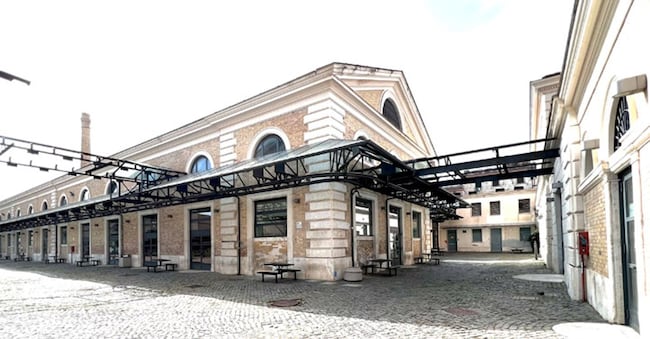
A former abattoir turned into a university. It is hard to imagine a more fitting venue for discussing urban regeneration through spaces originally designed for something entirely different. And it is precisely there, at the former Testaccio Slaughterhouse – home to the Department of Architecture at Roma Tre University – that ‘Ri-generare con creatività’ (Regenerating with Creativity), the first national forum on culture-led urban regeneration, will take place from 23 to 27 November. Over the course of five days, at the initiative of the Ministry of Culture’s Directorate-General for Contemporary Creativity, led by Costantino D’Orazio, institutions, academics, architects, artists, curators, administrators and cultural practitioners from all over Italia will gather in Rome.
The thematic scope
The underlying idea centres on the belief that culture is not merely an embellishment of the urban transformation process, but one of its driving forces. For this reason, the Ministry has chosen to organise a national forum for discussion. Not a single conference, but a structured programme comprising meetings, in-depth discussions and working groups. The stated aim is to help define shared tools, guidelines and perspectives. The first three days will take the form of a conference. They are organised into five thematic sessions, featuring around ninety presentations. The list of themes clearly illustrates the breadth of the field, ranging from public policies to tools and governance; from civic, philanthropic and cultural alliances to urban creativity and art in public spaces. And further still: ecologies, sustainability and the commons; ethics, inclusion and territorial justice; training and research; communication, documentation, knowledge transfer and experimentation.
The panels
So the discussion won’t just be about buildings to be restored. It’s about who makes the decisions, who gets involved, who is excluded, and how change is measured and communicated. Then the tone shifts. On 26 and 27 November, the Forum will become a workshop: twelve thematic roundtables, running in parallel sessions, featuring 115 speakers. Here, the discussion will get down to practical matters, starting with urban creativity festivals, which in many cities have become a tool for revitalising neighbourhoods and suburbs. Curation will be explored not only as an exhibition practice but as a genuine tool for regeneration. And ample space will be devoted to museums and cultural institutions, which are increasingly called upon to step outside their own walls and initiate processes of transformation in the local areas surrounding them.
Designing with communities
Then there is the issue of planning in collaboration with communities, in the sense of involving residents before the work is completed. And a question that anyone working in the sector is well aware of: what happens to regenerated areas once the funding runs out? The long-term sustainability of regenerated spaces is one of the topics for discussion, alongside public policies, the skills required to manage these processes, and local initiatives promoted by the MiC itself. The chosen approach is that of multidisciplinary dialogue, as the Forum aims to bring together experiences, practices and visions arising from contexts that may be very different from one another: large cities and small towns, institutional projects and grassroots initiatives, academic research and fieldwork. The underlying premise is that solutions are not to be found in a single model, but in the comparison of different models.
Towards a permanent forum for discussion
This event has not come out of nowhere. It forms part of the numerous activities that the Directorate-General for Contemporary Creativity has long been dedicating to urban regeneration, recognising that culture plays a strategic role in processes of social innovation, social cohesion and sustainability, as well as in improving the quality of public spaces. Now, with the first dedicated forum, that commitment aims to establish a permanent platform for dialogue.


