

From local healthcare to AI: Italia and France join forces
Local healthcare, digital transformation and full collaboration between the public and private sectors: the proposals from Club Santé Italia

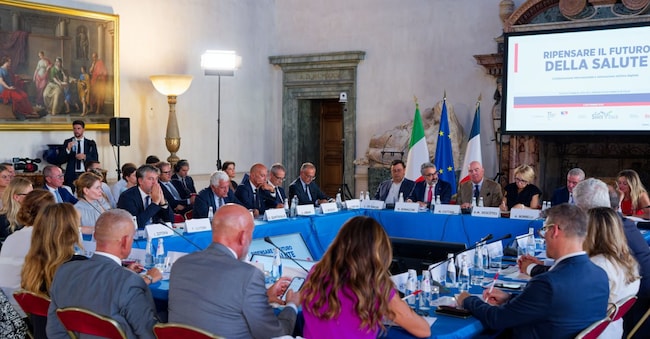
In national contexts increasingly characterised by an ageing population and chronic conditions, the challenge of social and healthcare sustainability cannot be left solely to the search for new funding, but rather requires a comprehensive review of the healthcare system that promotes and strengthens community-based care, innovation through new technologies, driven by artificial intelligence; and – thirdly, but by no means least – collaboration between the various stakeholders within the system. From public institutions to accredited private sector organisations, from businesses to universities and research centres, right through to healthcare professionals and the third sector: the key players in this broad ecosystem are called upon to contribute in a complementary manner towards achieving shared objectives. Within a framework that, wherever possible, transcends national borders and broadens the perspective to encompass the complex European landscape.
This is the proposal set out in the report “A New Agenda for Health: Regions, Innovation and Collaboration”, presented by the PwC Italia Ets Foundation at a meeting organised in Rome at Palazzo Farnese by Club Santé Italie, a partnership between the French Embassy in Italia, Business France and the leading French companies operating in the healthcare sector in Italia, including pharmaceuticals, medical devices, diagnostics, healthcare and social care services, and insurance.
The Italia–France partnership
The agreement between the two countries – which have similar healthcare systems and socio-economic characteristics, and which build on the milestones set in recent years by the Treaty of the Quirinale and the Antibes Intergovernmental Summit last June – therefore also looks to support from the European Union. Sticking to the topic of technology, this includes the AI Act, which aims to combine innovation with clear rules. As France’s Ambassador to Italia Anne-Marie Descotes pointed out, ‘France and Italia share the same ambition: to build innovative, sustainable healthcare systems capable of meeting the challenges of the future’ and ‘intend to strengthen collaboration in the fields of health, industrial sovereignty and therapeutic innovation, serving not only our citizens but all European citizens’.
The Innovation Compass
The data confirm a strong propensity for innovation amongst the companies belonging to Club Santé Italia: almost 80 per cent have collaborated with universities or research centres over the past year, and around two-thirds have increased their investment in research and development. “French healthcare companies are a national asset in terms of economic impact and capacity for innovation,” states Marcello Cattani, President of Club Santé Italia, President of Sanofi Italia and also of Farmindustria, in the Conclusions to the report . “The demographic and healthcare challenges that lie ahead,” he warns, “require the modernisation of our National Health Service (SSN) to make Italia more attractive and capable of competing successfully on a global scale, not least through structured and concrete collaboration between companies and institutions, grounded in evidence. This report moves precisely in this direction. Our common goal is to guarantee all citizens fair and swift access to healthcare services and the most innovative therapeutic solutions, making collaboration between the public and private sectors increasingly one of the pillars of the healthcare system of the future.”
This is a challenge that the EU itself – weighed down by excessive bureaucracy and divisions between Member States – is not always prepared to take on; indeed, the Union now finds itself under threat – for example in the fields of research and innovation – from complex regulations and fierce international competition from giants such as China, India and the United States.

