Between politics and rules

From HomeView to Muse: all the US technology that isn’t making its way to Europe

The new Apple device featuring Siri AI is not the only one to be excluded from the single market. Meta, Google, OpenAI and Amazon have also omitted features or postponed releases

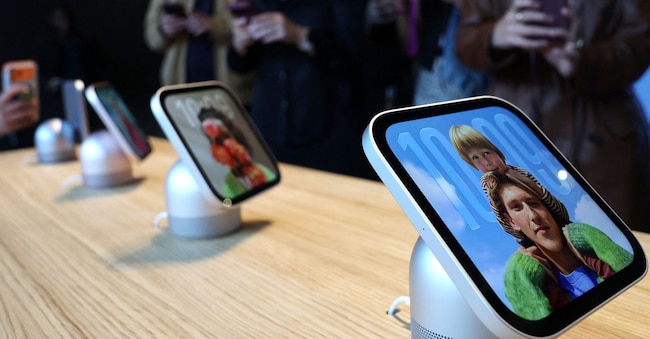
Apple HomeView (Reuters)

4' min read

Translated by AI
Versione italiana

4' min read

Translated by AI
Versione italiana

Apple’s announcement of its new home automation display HomeView has sparked enthusiasm but also raised concerns about developments in the European technology market. The device will not be launched in the single market, but this is not an isolated case. The reasons lie in corporate policies and strategies, but also in the EU’s current rules on competition and privacy.

In the case of Homeview, in fact, the Digital Markets Act (DMA) poses a problem for Apple. The regulation had been an obstacle since June, when Apple unveiled Siri AI – the assistant now built into Homeview – which was launched in the single market only on Mac and Vision Pro, but not on iPhone, iPad and Apple Watch because these devices are considered ‘gatekeepers’ by the EU.

Loading...

The company had been engaged in lengthy discussions – so far to no avail – with the Commission to ask how it could introduce its own assistant without breaching the rules of the DMA. Apple had even gone so far as to request exemptions from the DMA because opening up to competition would have meant that all third-party models authorised by the user would have access to personal data – a move which, according to Apple itself, would have created ‘security loopholes’. Following the announcement of Siri AI, the Commission revisited the issue, stating that ‘nothing in the DMA prevents Apple from launching new products in the EU’.

Gemini is different in the EU

Google, too, is firmly opposed to the DMA, but with a different strategy. Without any prior consultation, Google had already launched Gemini – its artificial intelligence service – on Android phones back in June 2024. The Commission then ruled last July against the exclusion of other models, requiring the operating system to be opened up to rival assistants as well. Google subsequently responded with an appeal to the General Court of the European Union, made public on 29 September; however, in the meantime, the features of its Gemini service have changed, and not all of them have been rolled out in the EU.

Personal Intelligence, announced in January, is Gemini’s tool that links data from various Google services, including Gmail, Google Photos, YouTube and Google Search; this integration enables it to provide tailored responses by retrieving personal information. The system was launched last January and was extended in March to all users with free accounts, though it remains unavailable in Europe.

Gemini Spark, which was launched in the United States last May and allows the AI to manage scheduled tasks even when the computer is switched off, has also been excluded. Auto Browse, the feature that allows Google’s model to browse the web via Chrome – which was introduced to the North American market last January – has also been excluded.

Meta’s Tamagotchi

The new Muse Charm, the small wearable device unveiled by Mark Zuckerberg at Meta Connect 2026, does not yet have an official release date in any market. Its unveiling had generated enthusiasm and interest within the industry as it marks another step for the company into the market for hardware incorporating artificial intelligence, following the launch of the Ray-Ban Meta.

However, Muse Charm features Muse, the device launched on 8 September for the North American market, for which there has been no mention yet of a European release. It is therefore difficult to imagine that the physical device will be released when the internal software still has no release date.

The delay in Meta’s state-of-the-art AI models

Meta has historically been responsible for delays in the release of language models in Europe. In fact, research by GovAI into 375 releases found that 89 per cent of these were launched in the EU at the same time as in the United States.

That 11 per cent difference between the two markets is largely down to Zuckerberg’s company, which had already introduced regional restrictions on its most advanced models as early as 2024.

Loading...

The image-processing versions of Llama 3.2 excluded European individuals and businesses due to the ‘unpredictable nature of the European regulatory framework’. During the same period, Meta was attempting to use public content from Facebook and Instagram users to train its artificial intelligence, but was blocked by the Irish Data Protection Commissioner.

New healthcare services

During 2026, several technology companies went on to launch features relating to the healthcare sector, and these too are not making their way onto the European market.

‘Health in ChatGPT’ is the feature that links Apple Health and digital health records to OpenAI’s service to provide context for medical-related responses. It has been available to adults in the US since July, but there are currently no plans for a European launch.

Amazon Health AI, on the other hand, is a healthcare assistant that uses artificial intelligence to provide support and information about users’ health. It is designed to provide a range of different responses and utilises One Medical, Amazon’s service that offers subscription-based healthcare to individuals and businesses. The AI can also access healthcare purchases made via the e-commerce platform, such as vitamins and blood pressure monitors.

Bringing the service to Italia would also require access to health data, which European regulations permit to be processed under specific conditions; however, for the time being, the companies involved have shown no interest in extending these products to Europe.

Copyright reserved ©

Brand connect

Loading...

Newsletter

Notizie e approfondimenti sugli avvenimenti politici, economici e finanziari.

Iscriviti