

From housing to work: how Casa di Davide supports the families of young cancer patients
The disease is a complex, long and very often painful course of treatment, to which a series of additional side difficulties are added

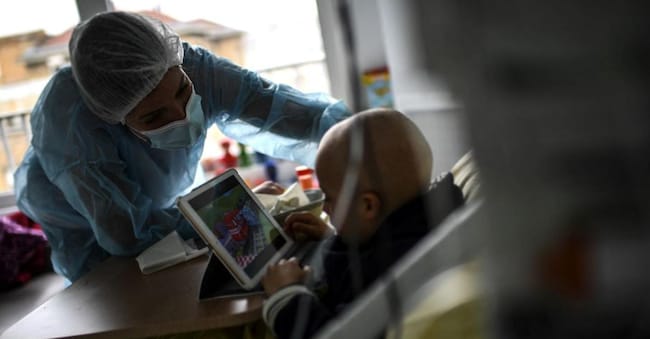
The Casa di Davide Foundation for the Research and Treatment of Children's Tumours and Leukaemia - ETS is the evolution of the Davide Ciavattini Association for the Research and Treatment of Children's Tumours and Leukaemia Onlus, founded by Luigi Ciavattini and his wife Margherita, parents of Davide Ciavattini, to whom it is dedicated, and by health worker Italo Ciaralli, now Vice President. As often happens in the Non-Profit world, these forms of associationism are born thanks to the experiences that some people go through and that lead them to want to ensure that those who in turn have to deal with them, can do so benefiting on the one hand from that experience and on the other being able to receive that support and backing without which everything would be more difficult.
This is what prompted Luigi and Margherita to set up the Davide Ciavattini Association, now the Casa di Davide Foundation, aware of the fact that by dealing with all the problems of young oncohaematological patients and their families, together with doctors, health workers, psychologists, educationalists, and other professionals working in the field of paediatric and adolescent cancers, it may be possible to improve treatment and the likelihood of recovery. Since I have been involved with the Association, I have been able to see how this model is absolutely successful and is therefore the one to follow, even if it is not easy to apply because commitment and availability are required. It is only through close and integrated cooperation between doctors and non-profit organisations that it is possible to meet all the needs of these patients and their families towards the ultimate goal, which is recovery, which, however, often requires enormous difficulties to achieve.
Oncohaematological disease in itself presents a complex, long and very often painful course of treatment, to which a series of additional difficulties are added. A first widespread issue is the concentration of oncohaematology centres of excellence for children and adolescents in Italy in a few large cities, which is why we are increasingly witnessing entire families moving away, a necessary condition for the child to be able to receive the treatment appropriate to the disease that will increase the likelihood of recovery. This migration from one's place of residence entails inconveniences proportional to the distance and the type of city where one will receive treatment. If we take Rome as an example, where one of the most important paediatric hospital centres, the Bambino Gesù Hospital, operates, and in particular the excellence in Europe in paediatric oncohaematology, it is easy to understand how difficult it is for a family coming from the south of Italy to face the inconveniences of such a move.
Firstly, the difficulty of living for the family both during the patient's hospitalisation and in the post-hospital period when frequent, sometimes even daily, check-ups are necessary to deal with which you must necessarily reside near the hospital. Our Association was one of the first in Rome to understand this need and to set up an accommodation facility for all oncohaematological patients being treated at the Bambino Gesù Paediatric Hospital in Rome, which can accommodate up to 12 families, free of charge, offering them accommodation but not only.
In addition to the issue of accommodation, there is also the issue of schooling, which the patient must leave behind during the transfer to the big city, even though almost all hospitals have now organised themselves to offer schooling to all patients during hospitalisation. The issue, however, arises for the period after hospitalisation and until the completion of follow-up and recovery. During this phase, patients who are at the host facility in order to benefit from hospital care would have to travel to the hospital with obvious inconvenience for the patients themselves and their caregivers. On this issue too, we have organised ourselves to be able to support patients both by offering them the possibility of distance learning with a connection to their home school and in addition by offering them, again free of charge, external support through the work of volunteer teachers.

