
From the Langhe to Puglia acquisitions and takeovers among Italian wineries
There are many operations on the launch pad or rumours about wineries in some of Italy's most prestigious wine-growing areas

3' min read
3' min read
The waltz of acquisitions among Italian wineries begins again. While wine is showing some signs ofdifficulty in consumption, especially for still wines in the mid-range, sparkling wines and bottles from appellations and areas with a precise identity and medium-high positioning are not experiencing any crisis. And so the appeal of Italian wineries whose products fall into these categories does not decline either. And so, from North to South, also thanks to the recent reductions in the cost of money that is certainly favouring investment, a new acquisition campaign is underway.
Among the areas of great value are certainlythe Langhe, and so the rumours surrounding Castello di Neive, a historic Barbaresco estate, are back in full swing. Already in recent months there had been talk of an interest by the Montalcino winery, Argiano. More recently, it seems that there are also other suitors. The problem is not demand but supply. These days, in fact, news is rebounding from Piedmont of a split ownership structure. Carolina Stupino, the founder's heir, seems determined to sell. But her will clashes with that of a significant shareholder (with a stake of around 30%), the Greek financier Giorgio Psacharopulo. It will be seen in the coming weeks whether the current owners will reach an agreement on the future of the company.
From a great appellation with an identity and positioning such as the Langhe to another, the Valpolicella, and to a winery that reinforces territorial identity and product positioning a strong and recognisable brand: Zenato. An agreement on management seemed to have been reached between the owners, leading in recent months to the liquidator appointed by the Court of Venice, the accountant Lorenzo Miollo, becoming administrator. But, under the radar, meetings with possible suitors continue, and in recent months enquiries have come from important groups in the made-in-Italy wine sector: from Santa Margherita Gruppo Vinicolo to Ferrari Spumanti to Fantini Group. It is no mystery that a brand as famous as Zenato, whose product portfolio includes Amarone, Ripasso della Valpolicella and Lugana (for years the Italian white wine with the best performance in terms of profitability), could appeal to many.
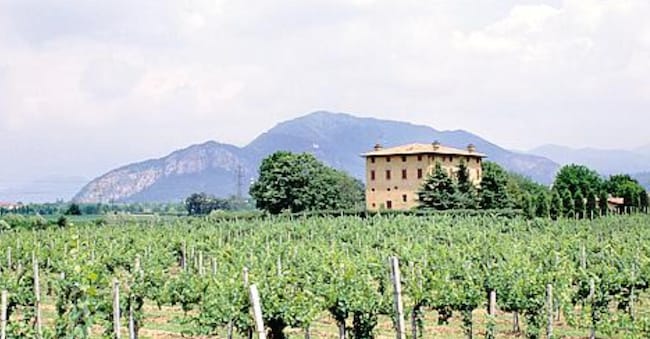
The big appellations and sparkling wines are pulling in the market. And in factthe other area where some merger operations are maturing is Franciacorta. Among the reasons that often push a winery into the market are the difficulties in the generational transition. This is the case, for example, with the Quadra label, which is on the market because there is no one in the family who is ready to take over the reins from the founder, Ugo Ghezzi, after the departure of former managing director Mario Falcetti. Among the suitors would be the Unipol Group, which already boasts a presence in the wine business with Fattorie del Cerro, La Poderina and Monterufoli in Tuscany and Colpetrone in Umbria. Still in Franciacorta, another company that could end up on the market is Mirabella, where the main shareholder Giuseppe Chitarra (holding 24%) wants to leave and the family is opposed. The founding Schiavi family with Alberto (10%) and Alessandro (15%) actually holds 25%. Other significant shares are held by Il Dosso (22%) and Francesco Bracchi (18%). It would certainly not be the first case in which a contrast in the corporate structure would lead to a sale.
The South is not excluded from this new wave of acquisitions. Two transactions are on track in Apulia. The Apulian Varvaglione family is close to buying the three wineries of Salento winemaker Claudio Quarta, two wineries are in Salento and one in Irpinia. The Campania-Puglia axis is reversed in the case of the winery and the vineyards in the Castel del Monte area (Bari) belonging to Count Onofrio Spagnoletti Zeuli could soon end up in the hands of an old acquaintance of the agri-food sector: negotiations are with the Casillo family, that of the already well-known wheat king, Pasquale.


