
From airline flights to laptops in bars, brands rewrite social etiquette
Companies determine what can and cannot be done to ensure a new social coexistence but also to improve the customer experience

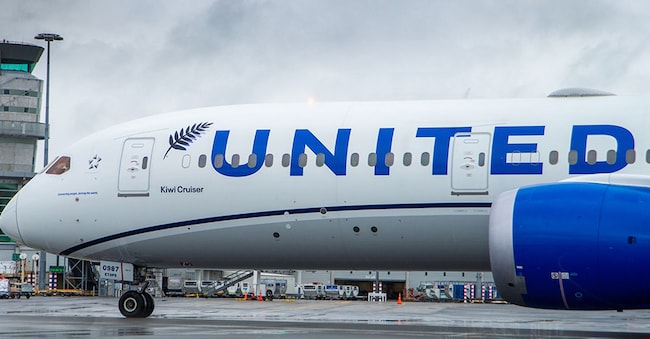
First they take the Internet to the skies, investing billions in connections even at ten thousand metres altitude. Then they rewrite the etiquette of coexistence on board. This is the case with United Airlines: during the last Superbowl they celebrated the new satellite wi-fi "in the launch phase" - this is the title of the campaign, to stay with the metaphor - with a commercial built around a simple idea: stay connected anytime and anywhere, even in flight. In the video, passengers watch streaming sports or play online games as the plane crosses the Atlantic. But while the technology promises permanent connection, the carrier decides to address an unexpected side effect: the behaviour of people in the shared spaces of the cabin. That is why it has introduced new rules on board by updating its contract of carriage, as Cbs also reported: those who listen to music or watch videos in flight must use headphones or earphones. If a passenger refuses, the crew can intervene and even ask them to leave. This is not just an optional rule but a sign of something deeper. Today, brands no longer just design services but define social environments, becoming architects of collective behaviour. So when technological innovation makes quantum leaps, new rules of coexistence have to be redefined. It is as if United Airlines' staff were once again embodying the superhero role of the commercial for the Olympics eight years ago, sanctioning or turning away the connected and harassing customer.
The New Social Etiquette
Forget the mere sale of products or services. At stake here is the definition of contemporary social codes. A 21st century etiquette for everyday life. This is not an isolated episode. Airbnb has made permanent the ban on parties in homes booked on the platform to avoid disturbance to neighbours and damage to property, even introducing algorithmic systems to block risky bookings. In US cinemas of the Alamo Drafthouse chain, smartphones are banned during the film and those who text or phone are escorted out of the theatre. In the coworking facilities of the US giant Wework, rules have been established on the use of common spaces in the time of hybrid work. Starbucks has introduced the 'Coffeehouse Code of Conduct' also displayed in the premises: it lays down rules on the use of space, safety and respect between customers. Those who violate the code can be asked to leave the premises. Mobility platforms such as Uber regulate behaviour through mutual rating systems between users and drivers. Patagonia invites customers to repair products instead of replacing them with the 'Don't buy this jacket' campaign, while gym chain Planet Fitness has even created the famous lunk alarm, a siren that sounds when someone lifts weights noisily, violating the club atmosphere. What's more, today even coffee shops and restaurants introduce laptop-free tables to preserve the sociability of the places. In South Korea, Starbucks always asks customers not to bring desktops into the premises to prevent cafés from turning into permanent offices. In a world dominated by smartphones and permanent connections, brands thus become social laboratories and pioneers who create widespread norms of coexistence.
Instructions on behaviour
If historically brand communication served to build reputation and desirability, today an element of value, social, even political positioning emerges. "Today, more than consumption per se, there is a tendency to value the consumption experience, and obviously if consumption is shared - think of an airline flight, a holiday, access to a club, a show, a coworking environment or even the whole sharing economy - the behaviour of everyone has a decisive influence on the experience of each, increasing or reducing its value. In essence, this new focus on behaviour has an economic purpose in itself, projected however into a broader sphere that transcends the intrinsic quality of the offer,' says Annamaria Testa, communications expert and essayist, in bookshops with the updated version of 'La parola immaginata' for Il Saggiatore. But this is not entirely new. "In reality, since the 1990s and in Italia since the early 2000s, major companies have been moving according to the logic of CSR, or rathercorporate social responsibility, which takes note of the impact that corporate choices can have on the reference communities. In essence, companies are moving out of the strictly business-related perimeter and into a broader and more complex sphere such as the environmental and social sphere. We are observing an evolution: from doing well for customers to caring that customers also do well. In short: we are moving from instructions for use to instructions for use behaviour,' Testa points out.
Manage with care
On the other hand, contemporary etiquette is increasingly being written in social places and brands are becoming pioneers of this new grammar of coexistence. "Designing social contexts matters a lot because collective behaviour influences thequality of enjoyment - and therefore of satisfaction - of each individual customer. On the one hand there is the risk of a standardisation of behaviour imposed from above and the exclusion of non-standardised behaviour (and individuals). On the other there is the risk that, in the absence of clear and stringent indications for a fluid, fragmented society, often unaware of limits or unable to impose them, each customer will do as he pleases or suits him, damaging others and the company. In essence: there are advantages and disadvantages to be weighed up, to be decided case by case, to be balanced between strict prescriptions and simple suggestions,' Testa concludes. Once again, brands become mirrors of the times: they function as cultural communities capable of influencing identities and behaviour. But the subject is very delicate and must be handled with extreme caution.

