
Building amnesty on the way: partitions, mezzanines and windows, here's what can be remedied
Intervention by the Ministry of Infrastructure could act on certain typical situations and reform the rules on construction work

3' min read
3' min read
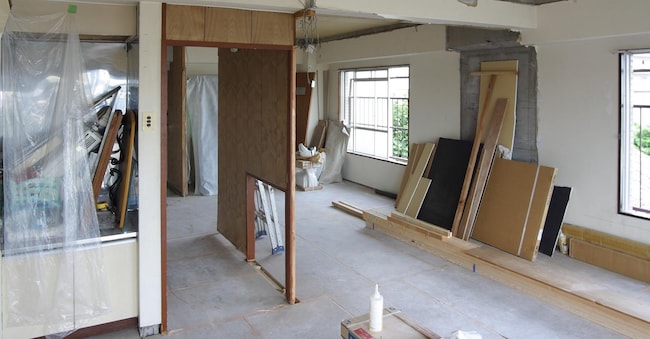
Partitions with a different location, windows that do not appear in the building permits, small portions of buildings, e.g. niches, not present in the documents filed with the municipalities. The amnesty being studied by the Ministry of Infrastructure aims to act mainly on certain typical situations and - as MIT sources have clarified - will only concern irregularities inside dwellings.
The provision was announced by Minister Salvini at the third technical meeting in front of an audience of fifty trade associations and industry bodies. The regulatory train will probably be a decree-law, but on this there is a wait for the green light from Palazzo Chigi. Yesterday evening Prime Minister Meloni made it known that she had not read the regulation but that 'if it is a matter of sanctioning small discrepancies, like raising a partition to make two rooms, if that is what it is, it is reasonable'. Let's see in detail what the norm will intervene on.
Purchases of real estate
.First, there is the very frequent case of those who buy a house on the basis of a plan that does not correspond to the actual state of the organisation of the interior spaces. It would be possible to regularise it if third-party interests are not affected.
The period houses
.Another case that has been brought to the attention of the Ministry's technicians is that of the purchase of a property built before the 1960s, which is to be renovated. If documentation on its legitimate status is missing, it becomes a problem to renovate. In this case too, then, regularisation will be possible.
Double compliance
.From a technical point of view, the first topic for consideration is the elimination of double conformity. Today, in order to sanction elements that have been built without permits or not in compliance with permits, it is necessary that these elements comply both with the rules of the time in which they were materially built and with the rules of the time in which the sanction is requested. This double requirement creates a considerable obstacle and holds back thousands of practices: it could be eliminated and conformity at one of the two times would be sufficient.


