Digital Economy

From Scale AI to Builder.AI: what artificial intelligence start-ups don't say

Meta is about to invest billions - up to more than ten - in Scale AI, an artificial intelligence start-up. Some talk of Ai Washing

by Alessandro Longo

5' min read

5' min read

Meta is about to invest billions - up to more than ten - in artificial intelligence start-up Scale AI. The move - reported by various international sources - would be one of the largest financings in history. And it is certainly the largest investment made by Meta to date. Mark Zuckerberg's company is also now setting up a super lab to achieve artificial 'superintelligence', and among the members would be Scale AI founder Alexandr Wang.

The world of AI always amazes: one day you think the hype is already too much, that the money spent (without an adequate return) is already at an all-time high; the next day you discover new levels of bets. Much has been said about the economic unknowns of these investments. Less well known is a fundamental unknown: how much these start-ups, on which billions are being bet, actually do what they say they do. Their level of transparency on how they operate and how they work, in short; on the quality of their performance.

Loading...

Experts are already talking about 'AI washing', a phenomenon similar to green washing.

The fake AI

.

There are even companies that say they use AI when they do not. They use the concept of AI to raise funds and customers, but operate in a more traditional way.

The most obvious scandal in this regard concerns Builder.ai, founded in 2016 by Sachin Dev Duggal. It positioned itself as a no-code platform that used artificial intelligence to create customised software. But - as has emerged in recent days - behind the eye-catching marketing and billion-dollar valuation, the company relied on 700 Indian engineers to manually write the code, while customers and investors were led to believe that everything was done by an AI assistant.

At its peak, Builder.ai, formerly known as Engineer.ai, claimed to make software development 'as easy as ordering a pizza', thanks to its flagship artificial intelligence tool, Natasha. The startup raised more than $450 million, with a valuation approaching $1.5 billion, backed by tech and financial giants including Microsoft, the Qatar Investment Authority, SoftBank's DeepCore and the IFC.

In short, the secret ingredient of Builder.AI was cheap human labour.

Robert Holdheim, a former executive of the start-up, sued it for $5 million. He claims that he was fired for raising his own internally. Internal documents showed that the apps were advertised as being '80 per cent artificial intelligence', when in fact Natasha's underlying tools were barely functional.

In addition, it emerged that Builder.ai had declared a turnover of USD 220 million for 2024, but an independent audit revealed that the actual figure was closer to USD 50 million.

Financial manipulation prompted Viola Credit, a credit institution, to seize $37 million from Builder.ai's accounts. With only $5 million in restricted funds, the company was no longer able to pay salaries or maintain global operations.

Bankruptcy proceedings were initiated in the jurisdictions where the company operated, including India, the UK and the US. Almost a thousand employees were laid off and several customer projects remain incomplete.

Reports also indicate that Builder.ai owes $85 million to Amazon and $30 million to Microsoft for unpaid cloud services.

Let's call it the other, dark side of the billionaire eldorado of AI start-ups.

Nothing of the sort can yet be suspected with regard to Scale AI, although caution is warranted when billions are flying.

AI scales and labour controversy

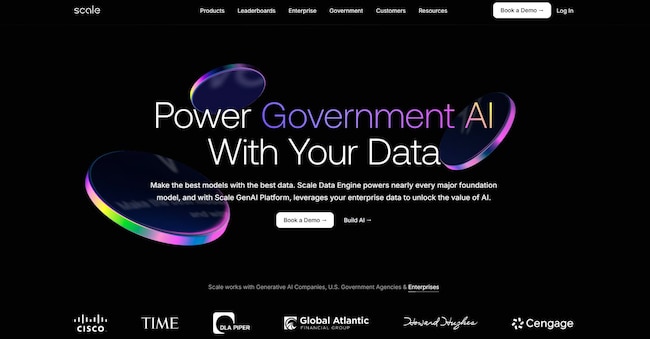
Scale AI, which counts Microsoft and OpenAI among its customers, provides data labelling services to help companies train machine learning models. The startup's last valuation was around $14 billion in 2024, in a funding round that included backing from Meta and Microsoft.

The start-up generated sales of $870 million last year and expects sales to double to $2 billion in 2025, according to Bloomberg.

Scale AI also faced a labour controversy. It relies on a large workforce of outside contractors to do the basic work of labelling the data needed to train artificial intelligence models. The company has been the subject of an investigation by the US Department of Labour for possible violations of the Fair Labor Standards Act, in particular for allegedly improperly classifying workers as contractors instead of employees, thus depriving them of benefits such as holiday and sick leave.

The investigation was recently dropped, but lawsuits by former workers claiming to be underpaid and poorly classified remain.

The Sec moves

.

AI washing can take many forms and it is likely that the cases will increase in the coming months, when the bet on artificial intelligence will have to show its cards.

So far, two companies have been accused by the US financial regulator Sec of making 'false and misleading' claims about their use of artificial intelligence. "We found that Delphia and Global Predictions advertised to their clients and potential clients that they were using AI in certain ways, when in fact they were not," explained chairman Gary Gensler in a statement posted on the SEC's website. Delphia, the first company fined, falsely claimed to "predict which companies and trends are going to succeed and to invest in them before anyone else," according to the SEC. Global Predictions, on the other hand, called itself the 'first AI-based regulated financial advisor' and claimed that its platform provided 'AI-based predictions'. It also made a number of other misleading claims about its AI-related practices, according to the SEC. Rather than be dragged further into court, both companies mentioned above.

AI Benchmark

.

There are other ways in which the game can be rigged. Take for example the famous benchmark data, the data according to which each start-up claims to be the 'best'. But there is no transparency about this data. Some companies, including Meta and xAI, have been accused of manipulating the results of benchmarks by publishing only the most favourable data or by using 'customised' versions of their models during tests, different from those actually released to users. For instance, Meta allegedly presented a special version of its Rama 4 model on LM Arena, obtaining better results than the version actually available to developers. Similar accusations were levelled at xAI for the Grok 3 model, which allegedly omitted certain key indicators in the advertised tests.

The bottom line is that this is an industry where the bombastic claims of start-ups fly under the radar; billions of dollars of investment are then based on those as well.

Sooner or later it is likely that someone will cry 'the King is naked' and a house of cards will collapse, leaving only the real successes standing.

Copyright reserved ©
Loading...

Brand connect

Loading...

Newsletter

Notizie e approfondimenti sugli avvenimenti politici, economici e finanziari.

Iscriviti