Businesses

From villages to the South: the grants most sought after by young people through the Progetto Rete scheme

Boys and girls, including minors, are involved through six hubs (which will increase to 15 in the coming months) across Italia

by Lorenzo Pace
3' min read

Translated by AI
Versione italiana

Key points

3' min read

Translated by AI
Versione italiana

Among the ideas put forward by the young entrepreneurs involved in the Rete project, the majority of the funding requested is for the South and small towns. The applications come directly from the young people themselves – some of whom are still at secondary school, given the age range of 16 to 34 – who have entered the world of business thanks to the initiative promoted by the Minister for Sport and Youth, Andrea Abodi, in partnership with Invitalia as the implementing body.

Among the measures designed to secure financial support, the most common is “Borghi – Linea C”, which aims to launch cultural, tourist, commercial or craft-based activities in small Italian villages at risk of depopulation. Next come requests from the South, specifically those linked to “Resto al Sud”.

Loading...

Network Project

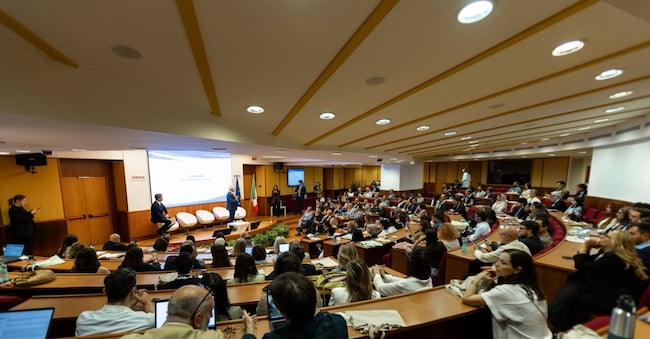
The figures, presented in Rome during the national “Rete Futuro” event, provide an update on the Rete project, which aims to tackle the mismatch between education and employment. To date, it has involved almost 98,000 young people and, it should be noted, 14,108 unemployed people and NEETs (i.e. those not in employment, education or training).

Six hubs (due to open in October 2023) located in Nuoro, Verona, Salerno, Novara, Brindisi and Palermo will play a key role in attracting young people. Each of these focuses on specific sectors: agri-food in Nuoro and Salerno; culture and creative industries in Verona; in Novara, mechatronics, green chemistry and fashion; in Brindisi, tourism, the maritime economy and new technologies; and in Palermo, innovative start-ups. The aim for the coming months is to reach 15 centres, before expanding into the remaining regions.

Abodi: ‘New hubs in less than a year’

Minister Abodi made this clear, stating that the Rete Project ‘will open centres in seven more regions within less than a year. In two and a half years, almost 100,000 young people aged between 16 and 34 have been taking part in an 18-month programme of guidance and training dedicated to employment and self-employment’. And, regarding the event, he added that ‘the presence of so many young people, their testimonies full of enthusiasm and confidence fuelled by the experiences they are gaining, and the corroboration of the testimonials relayed from the hubs, encourage us to continue investing in this initiative, which offers concrete opportunities for growth and prospects, helping to (re)establish a relationship of trust between institutions and the younger generations”.

Mattarella (Invitalia): ‘Let’s reduce the skills mismatch’

The aim of the Rete project – namely, to “help build an ecosystem that nurtures talent, bridges gaps and generates value” – was also highlighted by Invitalia’s CEO, Bernardo Mattarella. “It is further proof,” he added, “of how effective public policy can translate into real opportunities for young people and for regional development. Invitalia is committed to continuing to strengthen this approach, working with the Department for Youth Policies, institutions and local communities to make support tools increasingly accessible and to support young people as they bring their business ideas to fruition.”

From the South to small towns

As mentioned, some of these initiatives have led to projects that have gone all the way, with participants applying for funding to develop their business ideas. As of 15 May 2026, 312 aspiring entrepreneurs had completed the programme and submitted an application for funding.

The distribution of applications reveals a number of trends. On the one hand, there is a clear interest in the opportunities offered by programmes dedicated to Southern Italy. Taking the applications submitted for Resto al Sud and Resto al Sud 2.0 together, the total stands at 116 projects, indicating a strong focus on schemes that support the creation of new businesses in the southern regions.

On the other hand, initiatives linked to regional regeneration are gaining momentum. The 72 applications submitted under the Borghi – Linea C scheme point to a preference for activities that combine economic development, tourism, the promotion of local heritage and community services.

Alongside this, interest in digital initiatives is also growing. The 44 applications submitted under the Tocc Digitale scheme show that some of the projects focus on technological innovation applied to the cultural and creative sectors. In addition to these, there are 10 applications for Tocc Ecologica, which is dedicated to environmental sustainability.

The picture is completed by the 28 applications submitted under the ‘Autoimpiego Centro-Nord’ scheme and the 23 under the ‘Oltre Nuove Imprese a Tasso Zero’ scheme, initiatives designed to support the launch and consolidation of new businesses.

An estimated 530 jobs

According to the programme’s estimates, the 312 projects eligible for funding could generate over 530 jobs among business owners, partners and employees. This figure provides an indication of the expected impact on employment and shows how, for a growing number of young people, entering the labour market also involves choosing to start a business.

Copyright reserved ©
Loading...

Brand connect

Loading...

Newsletter

Notizie e approfondimenti sugli avvenimenti politici, economici e finanziari.

Iscriviti