
From storyboard to clip in minutes: how Ai rewrites video production
Through artificial intelligence models it is now possible to produce entire films without a crew (or almost)
by Jader Liberatore
 Aggiungi Il Sole 24 Ore
ai preferiti su Google
Last March, OpenAI decided to shut down Sora, the artificial intelligence model capable of generating realistic videos from short descriptions. But the news seems to be a paradox as it comes at a time when the field of AI-generated videos is clearly accelerating with more and more credible and widely distributed content.
That of Altman's company, therefore, is a choice that does not depend on technological or qualitative limits but on a combination of pragmatic factors linked above all to the computational cost as well as issues related to copyright and data use. Yet reality tells a different story, namely, that AI-generated videos are not only increasingly widespread but are redefining the way in which content is conceived, created and distributed: the real change, in fact, lies not only in the final products but in the production process.
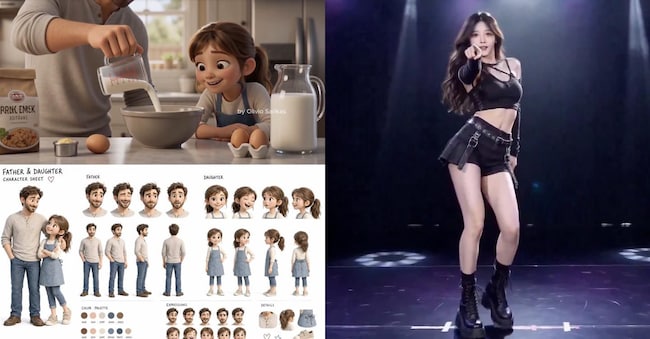
On social networks and particularly on X, a new trend is emerging, namely that of AI videos accompanied by descriptions in which the authors explain how to make them from scratch. And these are not tutorials but a sort of 'behind the scenes' that goes from the drafting of the subject, to the storyboard and the generation of the final video, through simple prompts. The workflow is standardised: starting with a well-described idea, which, with the help of a model such as ChatGPT Images 2.0, is then translated into a detailed storyboard with sequences, shots and scene descriptions; again with the AI, the appearance of the characters and settings is then generated, starting with the description provided by the user.
In the final stage, however, the images produced are fed to video generation platforms such as Seedance 2.0, which are able to cross textual and visual inputs to create coherent and quality animated sequences: it only takes a few minutes, or just a few hours, to do a job that in the past would have required several professionals and days of work. User @OlivioSarikas on X, for example, posted a video in the style reminiscent of a classic Pixar cartoon, featuring a father and daughter preparing breakfast.

