

From telemedicine to AI: why digital technology can help doctors provide better care
Coordination between professionals does not stop at a screen: on the contrary, it is precisely through innovation that it can become more effective

Key points
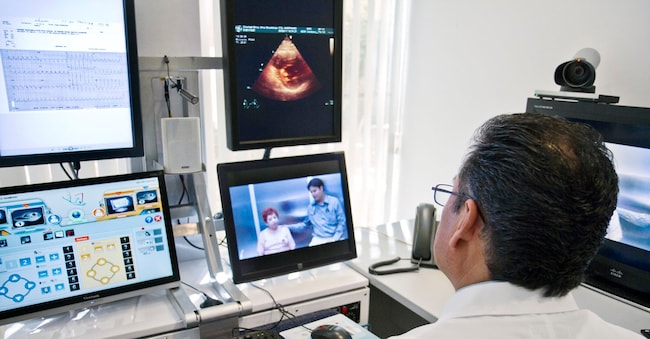
Care is always a team effort: behind every diagnosis and every treatment lies the contribution of several specialists, which must be fitted together like the pieces of a jigsaw puzzle. This is what coordination is all about: fitting the pieces together so that, when combined, they produce a result that no one could achieve on their own. It is a task built on relationships, even more so than on procedures. And right now, as telemedicine, electronic health records and artificial intelligence make their way into hospital wards, there is a widespread fear that technology will undermine these relationships. The research we conducted with nearly 600 Italian medical specialists, published this year in the international scientific journal *Technological Forecasting & Social Change*, suggests the opposite: digital technology does not weaken coordination between professionals and, in many cases, actually strengthens it.
More than just data exchange
It has long been documented in the scientific literature that patient outcomes depend not only on the competence of individual professionals, but also on the quality of their coordination; this has been termed ‘relational coordination’. The idea is simple: a team functions effectively when it communicates frequently, promptly and accurately, and it does so when there are shared objectives, mutual understanding and respect amongst the professionals. The two go hand in hand.
This is becoming an increasingly crucial factor as medicine becomes more specialised and the care of a single patient involves many different professionals. Just consider the care of an elderly person with diabetes, high blood pressure and early-stage dementia: their care revolves around their GP, neurologist, diabetologist, cardiologist and community nurse, each with their own schedule and their own way of communicating. Bringing all these contributions together is complicated, and it is precisely here that the quality of care hinges: after all, the most serious clinical errors often arise not from the inability of an individual, but from a breakdown in coordination and a failure to pass on information between professionals, even highly competent ones.
What role does digital technology play
The question at the heart of our research is simple: does digital technology help or hinder relational coordination? We tested three technologies, and not by chance: telemedicine and electronic health records – in which the National Recovery and Resilience Plan (PNRR) has invested heavily to support the sustainability of the system – and generative artificial intelligence, which has become increasingly established in the healthcare sector in recent years. We did not test the technologies in their own right, but rather the specific ways in which doctors use them, based on the assumption that different uses of the same tool produce different effects.
What the data tells us
We asked each doctor to think of a chronic patient they had treated over the previous two weeks in collaboration with another specialist, and using that real-life case we assessed inter-professional coordination using the standard scale employed in international research, comparing responses whilst controlling for age, digital literacy and the type of healthcare setting in which they work. The results show a clear positive effect for telemedicine, a favourable sign for electronic health records (but subject to specific conditions) and no detectable impact, one way or the other, for generative artificial intelligence.

