
The Italian cyber army: strategy, personnel and objectives of digital defence
Defence Minister Crosetto: 'An initial structure should start with 1,200 to 1,500 units, mostly operational, but the goal is to arrive at a larger, fully autonomous workforce, capable of acting effectively across the entire threat spectrum'

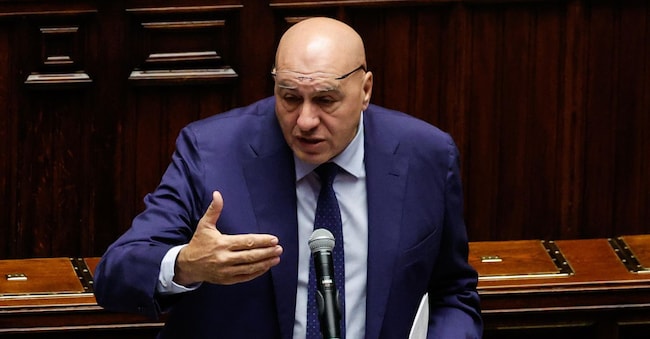
Italy is also preparing to deploy in the cyber trenches of hybrid warfare with the support of external specialists, those capable of confronting hackers or counterattacking them at their own level. In short, it is also trying to respond to hacker attacks, especially from pro-Russian pirates supporting the Moscow government, which have multiplied exponentially since the start of the war in Ukraine. Defence Minister Guido Crosetto recalled that the whole of Europe is continually suffering cyber attacks on its infrastructure without being able to counterattack.
While the European Commission, in lifting the veil on the EUR 6.8 trillion plan over ten years and outlining the defence roadmap, includes in the same area 'air defence, military mobility, artillery systems, cyber, AI and electronic warfare, missiles and munitions, drones and anti-drone measures, land and sea departments, and strategic instruments', Defence Minister Guido Crosetto sets out the Meloni government's strategy against the cyber threat.
Crosetto: "Soon a 1,500-strong cyber army"
In particular, Italy will have a cyber army to defend a domain, the digital one, on a par with land, sea, air, and space. "An initial structure that can count on 1,200-1,500 units, mostly operational, should start up, but the goal - he explained in a video message broadcast at ComoLake - is to arrive at a larger, fully autonomous force, capable of acting effectively across the entire threat spectrum. The cyber dimension - he emphasised - is now the operational domain of security, along with land, sea, air, and space. Defending it requires delicate, constant, and integrated capabilities. This is where the idea of a national cyber army with a civil and military component capable of operating 24 hours a day, seven days a week, 365 days a year takes shape".
Recourse to civil and military expertise
According to the minister, 'this force must combine advanced technical skills, digital intelligence, immediate countermeasures and operational resilience'. For the defence of the cyber dimension, he continued, 'it will also be crucial to ensure functional safeguards, continuous training courses for civilian and military specialists, so as to retain skills and create a national structure of global security. This capability,' he emphasised, 'cannot only be defensive, it must also be a form of deterrence that communicates to the outside world a country's readiness to protect its information sovereignty. Technology is our new line of defence,' Crosetto concluded.

