

'From the Cup an MRI 100km away from home. But is that fair?"
The association for citizen participation and protection answers questions about rights and access to health services.

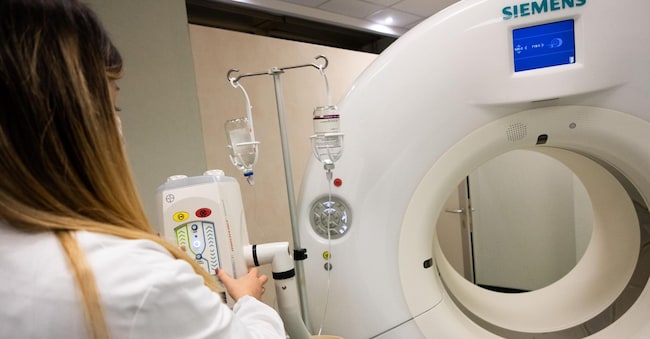
I have a prescription for an Magnetic Resonance Imaging (MRI) scan of my spine with priority code U (Urgent, to be performed within 72 hours). I live in a small mountainous municipality and, when I contacted the CUP, I was offered an availability that was within the time limit, but at a facility over 100 km away from home. Is it right that, in order to have my right guaranteed, I should have to make such a long and costly journey, especially in a precarious state of health? What happens if I refuse this proposal? Luigi S.
The case described touches on a sore point in our National Health Service: the conflict between timeliness of service and territorial proximity.
According to the National Plan Governing Waiting Lists (PNGLA), the regions must guarantee services not only within certain time limits, but also within a guaranteed territorial scope (usually the health district of residence or the entire ASL). However, when it comes to a U-code (72 hours), the first priority is to safeguard the patient's life or organ function. For this reason, the system searches for the first availability in any hospital in the regional network. Is this correct? Formally, the company fulfils its guarantee obligation by finding a place within 72 hours. But for a citizen living in an inland area, 100 km can be an insurmountable barrier.
What happens if the citizen does not accept? It is crucial to pay attention to the consequences of refusal:
Loss of priority: if the person refuses the only available date that respects the timeframe (even if it is far away), the facility is no longer obliged to guarantee the service within 72 hours. The request automatically 'drops' into a lower priority band or ends up in the queue.

