
From programming to do-it-yourself: how 2025 changed prime time television
Deferred viewing is worth up to 9% of the overall audience. Streaming is failing to make up for the TV decline,but social is booming. Mediaset first publisher, Rai 1 the most followed network

For TV in Italy, the figures for 2025 tell of an increasingly profound mutation: the television evening does not begin when the networks decide it does, nor does it end when the credits roll. It lengthens, it slips, it recomposes itself over the following days. An ever-growing audience renounces live broadcasting, not out of disaffection, but by choice.
This is the picture that emerges from Studio Frasi's processing of Auditel data for the whole of 2025 (with numbers as of 15 December). Time-shifting (in the 28 days following the first airing) is no longer the latecomers' room: it has become a choice. The numbers are eloquent: 1.2 million people self-designate their prime time between 8.30 p.m. and 10.30 p.m.; between 9.30 p.m. and 11.30 p.m., the audience rises to 1.4 million, or 9 per cent of the audience. They do not run away from television, they choose for themselves what to watch, always within the offer of the Auditel publishers, and often on a deferred basis.
Delayed viewing
Who cashes in better on this new audience freedom? Sky leads the share of deferred viewers with 12.5%, followed by Rai (11.2%) and Mediaset (9.4%). La7 remains lower, at 2.8%. "This figure," explains Francesco Siliato, media analyst at Studio Frasi, "is due to the low offer of serial fiction. Which in fact is the kind of programme that produces the largest deferred audience'. It is no coincidence that the networks with the most catch-up are Sky Atlantic and Sky Investigation. Among the generalist channels, it is Channel 5 that produces the highest share of time-shifting (15.3%). And when a drama arrives that makes people talk, the tail is seen, as with Sandokan, on Rai 1: after the first broadcast on 1 December, in the following fifteen days 1.2 million people caught up with the adventures of the Malaysian pirate.
The moral is practical and somewhat cynical: schedules can no longer be designed on live broadcasts alone, they must also consider catch-ups on home platforms, such as RaiPlay and Mediaset Infinity.
The 'delay' of prime time
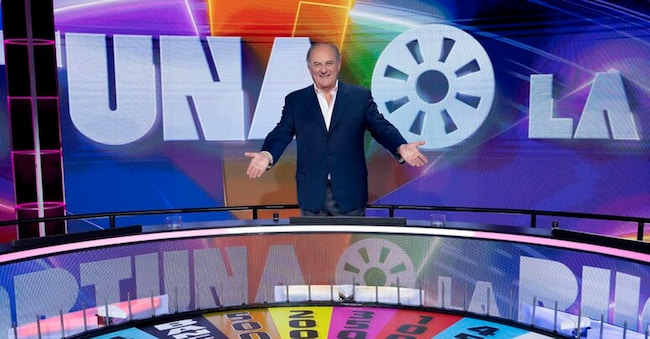
But 2025 sees another indicator light up with increasing vigour: the editorial prime time slips forward. The advertising prime time, in terms of audience density, still remains between 8.30 and 10.30 pm. And in fact the half-hour with the most people in front of the switched-on TV set remains that between 9.00 and 9.30 p.m. (19.1 million). However, the 'real evening', that of the programmes that are supposed to make the big hit, gets longer. Access prime time ends up coinciding with advertising prime time. The phenomenon is not born today, but in 2025 it reaches its most extreme version. 'One of the causes,' explains Siliato, 'is the success of "Wheel of Fortune". Combined with the weakness of Channel 5's classic prime time, this success led to the programme being extended. So Rai, which last year lengthened the access for a similar reason, the success of 'Affari tuoi', finds itself at a crossroads: to decide whether or not to anticipate the prime-time programmes, trusting in their greater appeal and not to see its ratings dwindle as the night progresses'.


