Leading Ladies

Representation achieved: the figures for women in Lombardy politics

Eighty years on from the 1946 election, legislation and the ballot box have brought women to the heart of local institutions in Lombardy. These figures reflect a journey that is not yet over

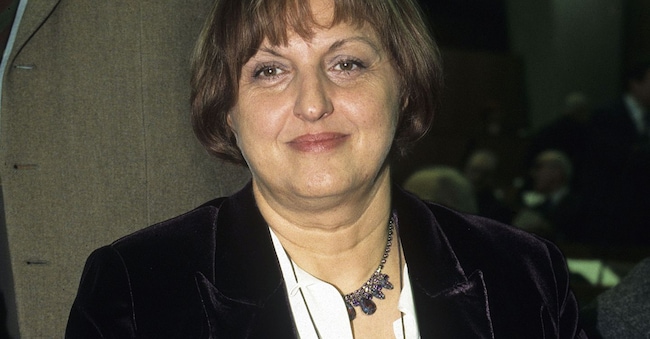
Fiorella Ghilardotti, presidente della Regione Lombardia dal 1992 al 1994 (Imagoeconomica)

5' min read

Translated by AI
Versione italiana

5' min read

Translated by AI
Versione italiana

(Il Sole 24 Ore Radiocor) – Eighty years on from women’s first vote in Italia, the progress made, the complexity and the many facets of women’s presence in political life are particularly evident when looking at local institutions. Women’s increasing involvement in public life, accompanied by gender equality legislation introduced over the last fifteen years, has changed the face of elected assemblies, with varying outcomes at regional level. In Lombardy, women now account for more than a third of local councillors, almost half of the executive councillors and 28 per cent of the Regional Council, a proportion higher than the national average. This journey began a long time ago, with Fiorella Ghilardotti, who in 1992 became the first and only woman to head the Lombardy Regional Executive, and continues with today’s female mayors. Admittedly, the gap is still wide and there is undoubtedly room for improvement, particularly for single-person posts, but the path opened up 80 years ago has been laid out and it is important not to lose sight of it.

Loading...

QUOTA ROSA

Percentuale di donne nei consigli locali/municipali (2022) e nelle assemblee regionali (2023) per Paese europeo

Loading...

The rules: a system that works

Over the years, Italia has developed a comprehensive regulatory framework to ensure equal opportunities for women to enter political life and to bridge the existing gap. At local level, for the regions, Law 165 of 2004 sets out the fundamental principles for promoting equal access to elected office. Law 20 of 2016 reinforced these principles by stipulating, in preferential candidate lists, that neither gender should account for more than 60 per cent of candidates and that dual gender preference should be permitted. Decree-Law 86 of 2020 provided for the State to step in to replace regional legislation in the event of failure to bring regional regulations into line, intervening in particular in Apulia’s electoral law.

Lombardy took action through Regional Law No. 17 of 2012, which introduced gender alternation on electoral lists, and through Regional Law No. 38 of 2017, which introduced the double preference system: voters may select two candidates from the same list, provided they are of different genders.

For municipalities, on the other hand, Laws 215 of 2012 and 56 of 2014 apply. In municipalities with more than 5,000 inhabitants, neither gender may account for more than two-thirds of the candidates on the lists, and a dual gender preference system is in place. In the executive committees of municipalities with more than 3,000 inhabitants, however, neither gender may be represented by less than 40 per cent. In smaller municipalities, the same quotas do not apply to the candidate lists, but the principle of representation of both genders remains.

The results of this regulatory process are encouraging: according to the PoliS-Lombardia report based on 2023 data, in Lombardy’s municipalities with more than 3,000 inhabitants, the proportion of women on local councils reaches at least 40 per cent across all demographic groups considered. A knock-on effect is also evident in smaller towns: in municipalities with up to 3,000 inhabitants, women account for 30.1 per cent of executive committee members and 32.2 per cent of municipal councillors.

Fiorella Ghilardotti, the first woman to lead the Lombardy Region

Whilst the number of women elected at local level is on the rise, there is still much progress to be made when it comes to top-level positions. The Lombardy Region, however, is led by a tenacious woman who is committed to rights: Fiorella Ghilardotti. Born in Castelverde, in the province of Cremona, on 25 June 1946 – the year women were first granted the right to vote – she was a trade unionist with the CISL and later a leading figure in the PDS. She held the office of President of the Lombardy Region from 12 December 1992 to 3 June 1994, leading a centre-left regional government during the fifth legislative term, and was the first – and to date the only – woman to hold this office.

Her term of office, at the height of the Tangentopoli scandal, took place during a period of profound political and institutional crisis, and Ghilardotti paid particular attention to social, health and gender policies, as well as education. Following her time in regional politics, she was elected to the European Parliament for two terms, in 1994 and 1999. Today, she is commemorated by a room in Palazzo Pirelli, an association and scholarships for deserving young women.

If, on the other hand, we look at the figures for the regional assembly, female representation – although still far from parity – stands above the Italian average. According to Senate data updated in February 2024, there were 23 female councillors out of 80 in Lombardy, representing 29 per cent, compared with a national average of 25 per cent. Lombardy also ranks above the Italian average in terms of regional executive committees: there were 5 women out of 16 councillors, or 31 per cent, compared with the national figure of 28 per cent. A comparison with other regions reveals varying results: Emilia-Romagna had 42 per cent women in its Regional Council, whilst Lazio had 39 per cent. The target set by the National Strategy for Gender Equality is to achieve an average female representation of 40 per cent in regional councils.

CONSIGLI REGIONALI

Quota di donne nei Consigli regionali, per regione

Loading...

Local councils: more women in leadership roles

It is at local council level that the effects of the legislation are most evident. In September 2023, there were 8,413 women out of 23,476 local councillors in Lombardy, representing 35.8 per cent. Among councillors, they accounted for 35.5 per cent, compared with the Italian average of 34 per cent, and among executive committee members, 45.5 per cent, approaching parity. In municipalities with between 5,000 and 15,000 inhabitants, women accounted for over 40 per cent of both councillors and executive committee members, reaching 42.1 per cent in both cases and approaching the gender parity threshold. In small municipalities with fewer than 3,000 inhabitants, where the requirements are less stringent, the proportion of women increased between 2019 and 2023: from 31.2 per cent to 32.2 per cent on municipal councils and from 28.2 per cent to 30.1 per cent on executive committees. Among local government officials under the age of 43, women account for 39.2 per cent, with a share of 48 per cent among councillors: a sign that generational renewal is already underway.

Loading...

I SINDACI DONNA

I sindaci donna in carica nei comuni della Lombardia, settembre 2025

Loading...

There has also been a change in the leadership of local councils. According to ANCI-IFEL data for September 2025, female mayors in Lombardy accounted for 18.3 per cent, compared with the Italian average of 15.4 per cent. In 2016, the regional proportion stood at 17.2 per cent. The Metropolitan City of Milan leads the way with 24.1 per cent, followed by Pavia (23 per cent), Brescia (20.6 per cent) and Lecco (20.2 per cent). Female mayors are also on average better educated than their male counterparts: over half hold at least one degree (51.8 per cent, compared with 41.5 per cent of male mayors). In the local elections of May 2026, Carolina Nizzola in Bollate, Manuela Occhipinti in Baranzate and Valentina Bergo in Rovato, amongst others, were elected as mayors.

The next goal is to carry this momentum into the larger towns: in municipalities with more than 50,000 inhabitants, 13.3 per cent of mayors are women, whilst in the province of Cremona this figure drops to 11.5 per cent.

I SINDACI IN CARICA NEI COMUNI DELLA LOMBARDIA

Loading...
Copyright reserved ©
Loading...

Brand connect

Loading...

Newsletter

Notizie e approfondimenti sugli avvenimenti politici, economici e finanziari.

Iscriviti