
The women of Lombardy who drafted the Constitution: when women shaped democracy
Laura Bianchini and Maria Maddalena Rossi: two political philosophies, a shared commitment to women’s rights. And Lina Merlin, a Milanese by adoption

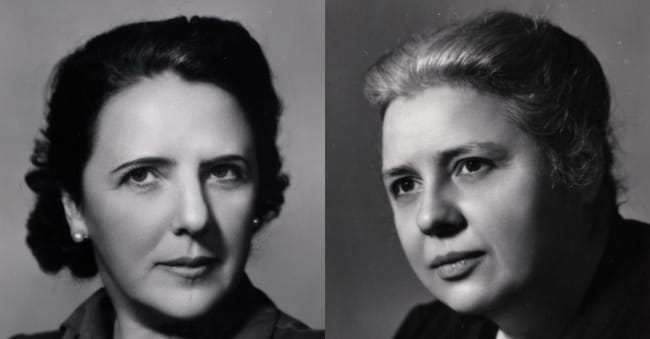
(Il Sole 24 Ore Radiocor) – Twenty-one women out of 556 members of parliament. A small number by today’s standards, but a historic figure when viewed through the lens of that era. There were 21 ‘Constituent Mothers’, the women elected on 2 June 1946 to the Constituent Assembly, who were called upon to draft the principles that would govern the newly founded Italian Republic. Nine were Christian Democrats, nine Communists, two Socialists, and one from the ‘Uomo Qualunque’ party. Two of them were from Lombardy, whilst one had strong ties to Lombardy: Laura Bianchini, a Catholic, born in Castenedolo, in the province of Brescia; Maria Maddalena Rossi, a Communist, born in Codevilla, in the Oltrepò Pavese area; and Lina Merlin, a Socialist, Venetian by birth but Milanese by adoption. Three life stories and three political cultures that would often find themselves at odds in republican Italia, yet united by a common commitment: to enshrine equality between women and men as a principle of the Constitution.
Twenty-one women out of 556 elected representatives
The Assembly met for the first time on 25 June 1946. As recounted in the biographical profiles collected in the book *Le donne della Costituente* (The Women of the Constituent Assembly), edited by Maria Teresa Antonia Morelli and published in 2007, the twenty-one female members of parliament had very different personal and political backgrounds. Among them were teachers, university graduates, trade unionists and leading figures in the Resistance; some had experienced imprisonment, internment or exile during the Fascist era. Elected from the lists of different parties, they also brought to the Assembly’s proceedings the aspirations for the emancipation of Italian women, who were admitted for the first time to participate in national political life both as voters and as representatives.
Only five women were appointed to the Commission of 75, tasked with drafting the Constitution: Maria Federici, Angela Gotelli, Nilde Iotti, Lina Merlin and Teresa Noce. The other elected members, including Laura Bianchini and Maria Maddalena Rossi, contributed to the constitutional process through their speeches in the Chamber and their parliamentary activities.
Laura Bianchini, the teacher who broke down ‘worlds reserved for men alone’
Two degrees during the Fascist era and a prolific career in publishing: Laura Bianchini broke down the barriers of ‘worlds reserved for men alone’. The university, where she graduated twice – in Philosophy in 1928 and in Education in 1932 – during the Fascist era, and the publishing world, where she worked as an editor. The story of her journey is told by Daria Gabusi in the book *Bianchini. Education in the Resistance and the Constitution’ (Scholé, 2023) and in an article by the author in the *Giornale di Brescia*.
Born in Castenedolo on 23 August 1903 into a modest family, Laura Bianchini studied with great sacrifice, first obtaining her teaching diploma and then her two degrees at the Catholic University. She taught at the Gambara Teacher Training College and then at the Arnaldo Classical Grammar School in Brescia, whilst actively collaborating with the publishing house La Scuola, for which she wrote reading books for primary schools and anthologies for secondary schools, and with Morcelliana, founded in Brescia, for which she also worked as a translator and editorial consultant. Bianchini had grown up within the Catholic associational movement: for seven years she was president of the women’s section of the FUCI and led the Graduates’ Movement at diocesan level, a milieu that would contribute to the formation of part of the post-war Catholic leadership. It was also within this context that her gradual shift from pro-fascism to active anti-fascism took shape.


