Technology

From AI triple boost to inland areas

Artificial intelligence agent systems make it possible to develop virtual public administration offices by managing services remotely, create work-sharing networks and activate monitoring and data analysis tools for the prevention of environmental risks

by Ennio Bilancini*

Claudio Colombo - stock.adobe.com

3' min read

Translated by AI
Versione italiana

3' min read

Translated by AI
Versione italiana

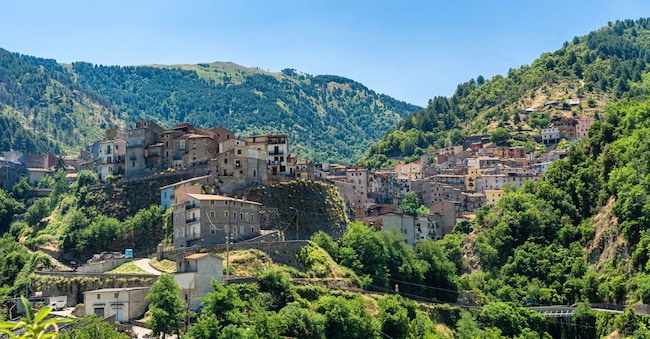
There is an inland Italia that for years has been fighting against depopulation, lack of services and a progressive economic marginalisation. There is no simple solution to the problem, nor is there a strategy that allows individual communities to save themselves.

The solution must be sought in the involvement of the academic, productive, professional, social and institutional worlds. In order to revitalise the inland areas, it is crucial to trigger the synergetic mechanisms that act as drivers for an element that is often evoked but not always applied: innovation, both technological and social.

Loading...

It is not, however, a generic digitalisation or innovative enterprise. The point is to identify ways of using advanced technologies and artificial intelligence (Ai) to provide a structural answer to two of the main causes of problems for inland areas: the rising cost of labour-intensive activities and depopulation due to lack of services and opportunities.

Automising Processes

To reduce the cost of labour-intensive activities, it is necessary to automate processes, optimise service management and reduce inefficiency margins. In this sense, innovation does not replace work, but transforms it, freeing up resources and creating new opportunities with greater added value. A quantum leap can come from the use of generative Ai, particularly in its agentic evolution. These are not just tools capable of producing content, but systems capable of performing complex tasks autonomously, coordinating processes, analysing local data and supporting operational decisions.

These systems can act as capacity multipliers: virtual assistants for the public administration, intelligent platforms for the management of health and social services, support tools for SMEs for marketing, logistics and market access. Agentics Ai can integrate real-time spatial data - environmental, infrastructural, demographic - enabling predictive models useful for planning and risk prevention. In perspective, it is configured as a 'diffuse cognitive infrastructure', capable of compensating for the scarcity of specialised human resources.

Interior areas and remote services

The other challenge is to make inland areas more attractive. Here the role of technology and Ai is even more decisive. Remote working, made more effective through the use of Ai and advanced automation and control tools, can radically change the geography of production. Living indoors no longer has to mean being cut off from professional opportunities or growth opportunities. On the contrary, it can become a sustainable choice, capable of combining quality of life and contribution to the country's development. It is in this perspective that technological innovation also becomes social and helps to defend local communities.

Similarly, the ability to deliver services at a distance is a crucial step. From telemedicine to digital social services to the intelligent management of goods distribution, the use of advanced digital technologies and Ai can reduce distances without having to physically bridge them. In territories where reaching a hospital or a public office can take a long time, digitisation becomes a factor of accessibility, and thus equity, and efficiency.

Creating Networks

A not secondary objective, facilitated by technological and social innovations, is the creation of networks. Inland areas also suffer from organisational isolation. Connecting resources, skills and activities means building a system capable of functioning in an integrated manner, even between distant territories. Thus, digital technologies make it possible to overcome infrastructure limits, favouring synergies and reorganisation of social relations that were unthinkable a few years ago.

Finally, there is the issue of territory in the narrower sense. The use of sensors, monitoring systems and data analysis can improve environmental control, risk prevention and natural resource management. But it can also open up new prospects for valorisation, sustainable tourism and industrial supply chains linked to local heritage, it can make possible new ways of experiencing the community spread over an impervious territory. In Italia, where environmental wealth is a fundamental asset, this aspect takes on strategic value.

Technological and social innovation, if well directed, has the potential to reduce territorial inequalities instead of exacerbating them. And from the internal areas can come the stimulus for a renewed development of the country.

Brand connect

Loading...

Newsletter

Notizie e approfondimenti sugli avvenimenti politici, economici e finanziari.

Iscriviti