

From therapies to hope journeys: inequalities in care begin in the cradle
Differences between regions and the North-South gap, barriers in access to therapies including the 'end of life' and a fate conditioned by the fragility of families: the 'j'accuse' of the Accademia dei Lincei

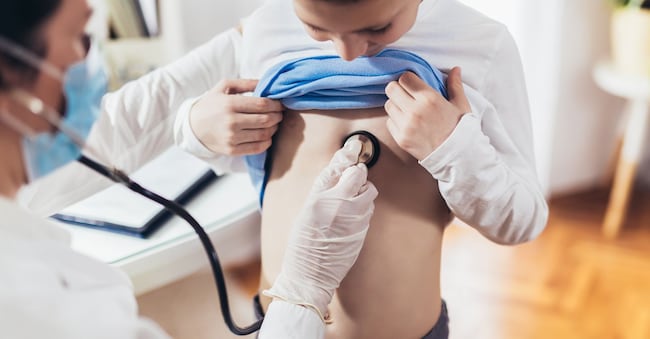
Increasingly empty cradles with just 355,000 births and fertility rates plummeting to 1.14 children per woman. And yet, the Italia that cries out for demographic frost and studies policies to support the birth rate, cares little and badly about equal access to health - current and future - for those who are about to be born or are taking their first steps. Nor does it effectively run for cover in the face of the many gaps that send constitutional protections to the wall. Launching a "j'accuse" - pointing the finger at the planning, governance and organisation of paediatric care by the National Health Service - is the Accademia dei Lincei, which in the document of the Health and Bioethics Commissions on "Inequalities in access to paediatric care" reviews the macroscopic criticalities of the treatment reserved for our children and - with worse consequences - for foreign minors.
"The territorial differences in health outcomes, the higher infant mortality in Southern Italy, paediatric health migration, the difficulties in accessing palliative care, the fragmentation of networks for rare diseases, the lack of homogeneity in neonatal screening, the barriers to access to orphan drugs and advanced therapies - the essays write - continue to unacceptably influence treatment opportunities". A question of resources, certainly, but above all a question of organisation of care, so much so that place of birth, socio-economic condition and family resources are among the litmus tests of the structural fragility of our health and social system. It is precisely the extreme fragmentation of care that children suffer most - especially in the South and in critical economic and cultural contexts - starting with premature births (6-7% of births), which both in terms of frequency and negative consequences are higher in disadvantaged families. One figure above all - that of those who have to travel for treatment - gives the pulse: in the South, where higher rates of neonatal and infant mortality are recorded, the health migration of children and young people to hospitals in the Centre-North is 5% higher, with a rate of 11.9% compared to 6.9% in the North. In 2019, paediatric healthcare mobility from the South absorbed more than 15% of the total expenditure for children's hospitalisations and in some southern regions the impact covers almost half of the expenditure for paediatric hospitalisations. Funds that "could be invested locally to strengthen structures, services and professionalism", the experts stress. But today we are far from the targets set years ago, such as the minimum threshold of 500 deliveries per year, which is not met by a quarter of maternity hospitals.
Closing the gaps is not only 'an ethical and institutional responsibility that measures the degree of civilisation of a country' in the face of the incompressible right to health, but would be a strategic move in terms of sustainability. "Disadvantages in the early years of life tend to accumulate, increasing the risk of chronic diseases, disability and premature mortality. Care and prevention from the earliest stages of life are therefore essential,' stresses Mario de Curtis, former professor of paediatrics at La Sapienza University and one of the authors of the Lincei document. Text underlying the motion tabled by Senator Sandra Zampa, who urges the Government to provide adequate answers by addressing, among other things, the shortage of personnel. And it is precisely the specialists of the Italian Society of Paediatrics (Sip) who are organising the first National Day on the subject at the Ministry of Health on Tuesday 5 May, "an opportunity to bring childhood back into the public and health debate, which today is strongly unbalanced towards adulthood and the management of chronicity". The Sip notes that today one child in 200 lives with a chronic disease and one in five has a neuropsychiatric disorder; risk behaviour and social fragility are spreading among adolescents, but the organisation of services is struggling to adapt. In Italia, for example, the basic paediatrician often stops at the age of 14, while the transition to adult pathways takes place unevenly, so much so that between the ages of 15 and 18 up to 70% of admissions are to adult wards. The reform of territorial medicine announced by Minister Schillaci, in the part that envisages the extension of the family paediatrician up to the age of 18, is welcome, but, warns the president of paediatricians Sip Rino Agostiniani, "it is unthinkable to extend the care of the territory up to the age of majority if the situation in hospitals then changes from region to region. The rules must be standardised to ensure that the system works consistently'.

