
The measures in the new security decree come into force today
Up to 12 years’ imprisonment for those who organise violent groups online. The provision on the criminal responsibility of minors aged between 14 and 18 is also now in force

Key points
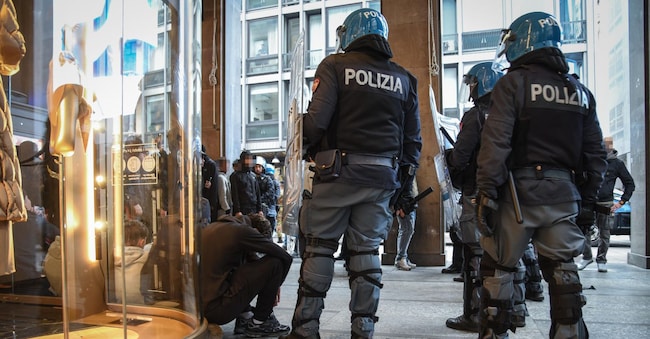
In a Saturday that promises to be complicated for public order in several cities, the emergency measures set out by the Government in yet another security decree are already likely to be put to the test. The regulations have in fact been in force since yesterday, following the publication of Decree-Law 190 in the ‘Gazzetta’. The text contains a wide range of provisions of various kinds, ranging from substantive criminal law measures to procedural ones and administrative measures.
A sneak preview
Furthermore, measures that had previously been included in draft bills and set aside for a more measured parliamentary debate are now already in force. A prime example is the measure concerning the criminal responsibility of minors aged between 14 and 18: whereas until Thursday it was the capacity to understand and form intent – and with it, criminal responsibility, albeit within the juvenile criminal justice system – that had to be proven, since yesterday the presumption has been reversed and it is now the inability to understand and form intent that must be proven. This change has already been contested during parliamentary hearings by both the judiciary (ANM) and the bar, the Criminal Chambers, and is in any case of dubious practical effectiveness, given that, out of the total number of cases concluded by juvenile criminal justice, acquittals on grounds of immaturity account for less than one per cent.
The same mechanism for the immediate implementation of measures that take effect straight away, relating to police escort and preventative detention, as well as verbal warnings accompanied by a ban on assembly.
New offences
This also marks the end of one of the golden rules – albeit unwritten – of criminal policy: the inappropriateness of introducing new offences by decree-law. In fact, the text immediately introduces two such offences: organised violence at public demonstrations and criminal damage committed by an organised group. The first is far more detailed, with punishment (two to five years’ imprisonment and a fine of 10,000 to 20,000 euros) being imposed on anyone who, during demonstrations, forms part of groups of at least five people who endanger public safety with instruments such as sticks, clubs or blunt objects.
The penalty is then increased (from one-third to one-half) if the offence is committed by masked individuals or if the actions are directed against public services, such as transport or energy supply.


