

From vaccines to screening: prevention, like energy and defence, is seeking flexibility from the EU
The Health Minister: ‘We are working towards this goal; preventing the disease is an investment.’ The exclusion from the deficit is worth 1–1.5 billion

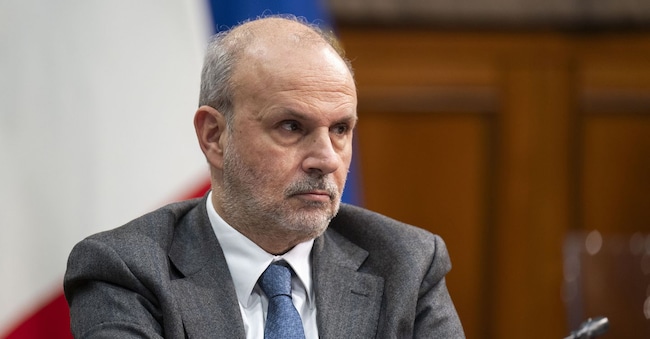
From vaccines to cancer screening and campaigns to promote healthier lifestyles: these are the most valuable investments in Italians’ health – those focused on prevention – which, just as is currently the case for investments in defence and the energy transition, could, in a future that we hope will be very near, take advantage of EU flexibility and be excluded from the deficit calculation, thereby securing a safe passage free from any risk of cuts. These investments, which amount to around 1–1.5 billion in Italia alone each year, would – should they secure this coveted European flexibility – be calculated outside the National Health Fund, on which they currently have an impact, thereby also ensuring some additional resources for the National Health Service.
The project is very close to the heart of Health Minister Orazio Schillaci, who has been working on it for about a year and has emphasised on several occasions just how strategic these initiatives are, as they – like all major investments – offer the greatest return: in this case, not only in terms of years of life gained, diseases prevented or treated in time, but also in terms of the resources the National Health Service can save on future hospital admissions and treatments that are no longer necessary. For Schillaci, an ‘important part of the reform agenda’ for the National Health Service – as he reiterated yesterday – is precisely prevention, ‘which we are now prioritising above all our other objectives: it has become a strategic lever, supported by significant investments that strengthen the system’s ability to anticipate illness, identify risk factors and diagnose conditions before it is too late. This is another reason why I remain convinced that expenditure on prevention should be excluded from the deficit calculation for the purposes of the Stability Pact’. According to the minister, ‘prevention should not be regarded as a mere item of expenditure, but as a genuine investment’ and for this reason it should be separated from other expenditure and ‘included in a specific category at European level as well’. “We are working with the Ministry of the Economy,” he emphasised again in recent days, “to achieve this objective. I was among the first to raise this issue and I will continue to work on this matter for as long as I remain Minister of Health.” This is a cause that has also been taken up by Assolombarda and, in particular, by its vice-president Nicoletta Luppi, who is also President of Vaccines Europe, and who has brought this priority – namely, viewing ‘prevention as an investment’ – to the European Parliament.
Whilst the objective is clear, the path to achieving it is not an easy one and is an uphill struggle because – as the Ministry of Economy and Finance (MEF) also explains – the final say on this matter lies with Brussels: but the course for the future is charted not only by Schillaci’s pressure but also by the Government’s official documents, where the first seeds have been sown, starting with the latest Public Finance Document, which devotes specific attention to assessing the value of preventive healthcare, including for the purposes of utilising fiscal flexibility within the new European framework (the New Economic Governance Framework). The timeframe is obviously not tight, and the outcome could be postponed until the next parliamentary term, but the stakes are high and this is certainly not a political issue. After all, the figures speak for themselves: several studies suggest that every euro spent on prevention generates a return of 14 euros for the health economy; and, with regard to immunisations in particular, a recent report showed that vaccinating adults can yield a return of up to 19 times the initial investment to society and the economy. However, at present, only a small percentage of national health budgets is spent on prevention, and even less on immunisation, which accounts on average for no more than 0.5 per cent of resources allocated to healthcare. The latest figures available in Italia for 2024 show that around 750 million euros were invested in vaccinations, plus around 300 million for screening, the latter figure being on the rise, thanks in particular to investments from last year’s budget, which allocated around 500 million from 2026 onwards.


