

Fruit and vegetables? At the supermarket entrance they convince customers to consume more of them
If healthier foods such as vegetables are prominently displayed at the beginning of the route, it helps consumer choice with possible repercussions on well-being

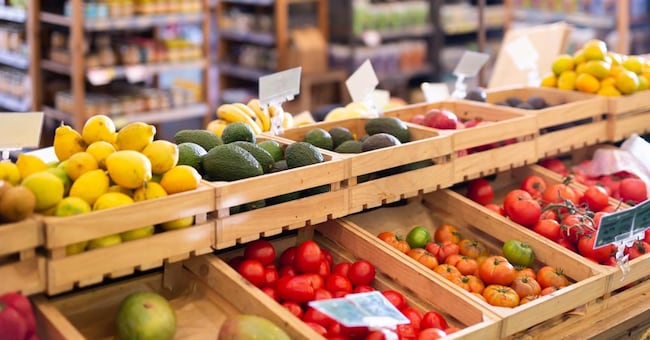
The starting point is simple, almost intuitive. If you increase your consumption of fruit and vegetables by about 50 grams per day, you can see a significant drop in mortality over time. The problem is that changing inveterate habits, also driven by economic motives, is likely to prove a titanic undertaking. In practice, convincing people to increase their vegetable intake is really not easy, despite all the reminders about the value of the Mediterranean diet, the importance of fibre, and weight control.
What can be done to change food purchasing (and thus consumption) trends in a positive direction, shifting choices towards healthier opportunities such as those offered by vegetables? It is probably worth trying by acting on the topography of the fruit and vegetable counters in supermarkets. Or better yet, making sure that vegetable counters are prominently displayed at the entrance of large food stores. This simple 'nudge' technique, without additional costs or special promotions, could become an effective public health strategy, as it alone would lead to an increase in the quantity of fruit and vegetables purchased by consumers and thus lead to an improvement in food quality. Proposing this gender-sensitive solution - the study was conducted on women - is research supported by the National Institute for Health and Care Research (NIHR) in the UK, which appeared in PLOS Medicine.
What the study reveals
The study was conducted by researchers from the Centre for Food Policy at the City St George's, University of London and the MRC Lifecourse Epidemiology Centre at the University of Southampton, in collaboration with other researchers from the University of Southampton, the University of Leeds and Deakin University, Australia. Thirty-six outlets (18 intervention and 18 control) of a discount supermarket chain in England were analysed and 560 women aged between 18 and 60 participated in the study (280 in the intervention group and 300 in the control group). The female target group was selected because of the impact that healthy eating can have on the women themselves as well as on their children, in addition to the fact that women themselves are the main shoppers for the family. What has changed with the optimal positioning of the fruit and vegetable counters? In the intervention group there was an increase of approximately 2,525 more portions of fruit and vegetables per shop per week. Not only that, according to these results, after six months of exposure to the intervention, there was an improvement in the quality of nutrition in the women who 'got' the gentle nudge related to the positioning of the vegetables.
Beware of positioning
Given that the survey was conducted between 2018 and 2022, including the Covid period, the study confirms how much and how marketing strategies can impact consumer choice. In a note from City St. George's University of London, the lead author of the study Christina Vogel points out how important choices that encourage the consumption of healthy food are: 'our study shows that placing fruit and vegetables at the entrance of discount supermarkets has increased sales of fresh fruit and vegetables,' is the expert's comment. The survey therefore reiterates how important it is to encourage the placement of fresh produce departments near the entrances of all large supermarkets in order to increase sales of fruit and vegetables and improve the diet of the population.
The value of nudge
The warning that emerges from the research is simple. If we are accustomed to thinking in terms of price, convenience, point collections, images and word of mouth, perhaps we need to think about the value of 'nudge' in terms of health as well, to guide consumers' choices towards a particular product. This is also confirmed by research recently published in Appetite, conducted by experts from the University of Bonn and the Munich Polytechnic. In this case, the aim was to make consumers think about the health of animals entering the production chain in a virtual supermarket. The researchers used two digital supermarkets in the form of 3D simulations with graphics based on modern video games. Customers saw the shelves first hand and were able to pick up and examine products from all sides, place them in their shopping carts and finally purchase them. The test subjects were divided The researchers divided the test subjects into two groups. One group was asked to shop in a conventional supermarket, while the other group visited a supermarket that offered 'gentle nudging' techniques such as 'footprints' that guided them to ad hoc displays with a focus on animal welfare. Consumers in this group were able to find meat, milk and eggs produced to high animal welfare standards in a central location on an additional shelf. Not only that: the additional shelf was also presented through banners. Well: these simple psychological persuasion techniques succeeded in making the 'treated' group choose almost twice as many animal welfare products as the control group.

