Dear Energy

Fuel prices still under pressure: diesel is nearing 2.3 euros per litre on the motorway

The average self-service price of diesel has risen slightly compared with Friday 16 October on the motorway network. Appeal from metropolitan mayors: tension is mounting in the regions; postponing a response is a risk we cannot afford to take. In Reggio Calabria, the local council is launching an initiative offering free bus travel for eight days

ANSA/MASSIMO PERCOSSI ANSA

4' min read

Translated by AI
Versione italiana

4' min read

Translated by AI
Versione italiana

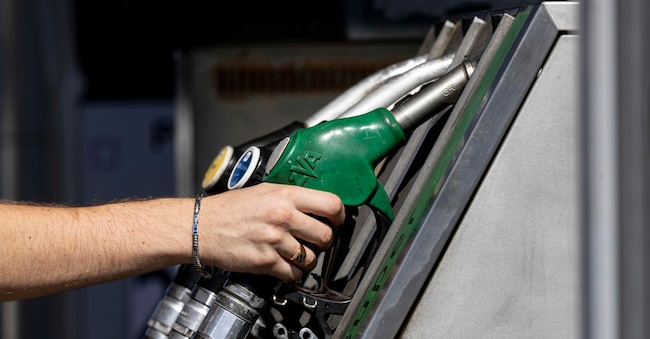
The average price of diesel at self-service petrol stations on the motorway network is just under 2.3 euros per litre. This figure emerges from the survey published by the Ministry of Infrastructure and Transport (MIMIT) based on the latest data collected by the Price Observatory, which indicates an average self-service price of 2.296 euros per litre for diesel on the motorway network, up from 2.278 the previous day. Petrol, also on the motorway, is instead at an average price of 2.050 euros per litre (2.248 euros on Friday 16 October).

Traffic conditions on the road network

The average price of self-service fuel across the national road network, on the other hand, is 2.030 euros per litre for petrol and 2.257 euros per litre for diesel.

Loading...

Metropolitan mayors: tension is mounting in the regions – do not delay your responses

‘In our cities and along the road networks from north to south – with the situation being particularly acute in the southern regions and now spreading to the rest of the country – we are witnessing first-hand the strain on the social and economic fabric: hauliers, farmers, fishermen and logistics operators are at their wits’ end due to fuel prices that have now become unsustainable, with diesel reaching prices far above market levels.” This was stated in a press release by the metropolitan mayors of the ANCI Coordination Committee.

‘As mayors and local councillors, we are the first to hear the alarm bells ringing from our communities, with queues at petrol stations, uncertain supplies for large retailers, construction sites operating at a snail’s pace and strategic transport hubs under pressure. Faced with the prospect of a country that risks grinding to a halt, political affiliations take a back seat: we are all, without exception, on the side of the workers, families and businesses that keep the day-to-day economy going.”

For the mayors, ‘in this context, the Ministry’s initiative to set up a round-table discussion is a necessary step. What is clearly cause for concern, however, is the timing: scheduling the meeting for 27 October amounts to expecting reality to conform to timetables that take no account of the emergency. Unfortunately, an eleven-day wait – for those who have to refuel every morning in order to work and ensure essential services for their towns – represents, the statement adds, an eternity that does not bend to the rituals of bureaucracy’.

“Managing complexity requires good timing and a practical approach – qualities that those who run local authorities demonstrate every day. There is no need for power struggles or a wait-and-see attitude, but rather an awareness that crises must be managed before their costs are passed on in full to the public,” the metropolitan mayors continue.

“For these reasons, we are calling for the round-table discussion to be brought forward to the coming hours and for immediate consideration to be given to an extraordinary measure involving a temporary reduction in excise duties – the only tool capable of providing immediate relief to workers and to the entire manufacturing and services sector.”

“To stall means choosing not to make a decision, at a time when the regions, workers and our communities deserve respect,” the statement concludes.

Free buses in Reggio Calabria for eight days

Meanwhile, the mayor of Reggio Calabria, Francesco Cannizzaro, has chosen to respond with “a concrete gesture of support for the community: eight days of completely free urban and suburban public transport, starting on Saturday, thanks to a resolution approved on Friday afternoon”.

The statement issued by the local council emphasises that Reggio Calabria ‘is the very first local authority in Italia to adopt a measure of this kind at such a delicate time, establishing itself as a national trailblazer with an initiative that stems from an awareness of how much the increase in day-to-day difficulties can weigh on household budgets, on freedom of movement, on the organisation of people’s lives, and from the aim of alleviating people’s hardship’. Cannizzaro starts from the conviction that ‘a mayor can do little in the face of a crisis affecting the whole country, but there is still something he can do’.

Loading...

For eight days, ATAM buses will be free for young people, workers, professionals, parents and anyone who needs to travel, without distinction. The measure also looks beyond the emergency, promoting the use of public transport, reducing reliance on private cars and contributing to more sustainable mobility. An opportunity to turn a difficult period into a chance for collective responsibility. ‘It is a sign,’ the statement reads, ‘of an administration that chooses to be there, because even a temporary measure can make a difference.’

The lorry drivers’ protest continues

Meanwhile, the lorry drivers’ protest continues. As reported by the Ansa news agency, picket lines set up by Fedralog lorry drivers along the SS 18 Tirrena Inferiore on the Cosenza stretch of the Tyrrhenian coast continued throughout the night; they are protesting against high fuel prices until 20 October. From Tortora to San Lucio, via Santa Maria del Cedro and Acquappesa-Guardia Piemontese, vehicles were able to travel along the state road during the night without having to take the diversions. The protesters did, however, cause traffic delays lasting a few minutes. These were opportunities to have brief exchanges with motorists and explain the reasons behind the protest.

In the towns along the Tyrrhenian coast, there are currently no reports of any particular disruption caused by fuel shortages or empty supermarket shelves. However, according to forecasts, these issues could arise in the coming days, particularly as it is likely that families will rush to fill up with fuel and stock up on food over the weekend.

Protesta dei Tir in Calabria, presidio sulla Statale 18 a Santa Maria del Cedro

CNA: 2026 bill could exceed 200 billion for businesses and households

For businesses and households, the cost of petrol, diesel, electricity and gas could exceed 200 billion euros in 2026, according to the scenario drawn up by the CNA, which extrapolates trends in consumption and expenditure on fuel, electricity and gas in a scenario where average retail prices are 20 per cent higher than in 2025. Under these conditions, expenditure would reach around 206 billion, over 33 billion more than the 172.5 billion estimated for last year. This is even higher than in 2022, when energy expenditure for households and businesses reached 202 billion. For Italian households, this represents an average annual increase in expenditure of over 500 euros, whilst for the business sector as a whole, the increase amounts to over 4,500 euros.

Copyright reserved ©
Loading...

Brand connect

Loading...

Newsletter

Notizie e approfondimenti sugli avvenimenti politici, economici e finanziari.

Iscriviti