
Fuels: prices rise again. But the bonus for lower incomes remains on hold
Petrol and diesel price rises continue, never so expensive for six months, but the relief sought by the executive at the beginning of the year is awaiting renewal

3' min read
Key points
3' min read
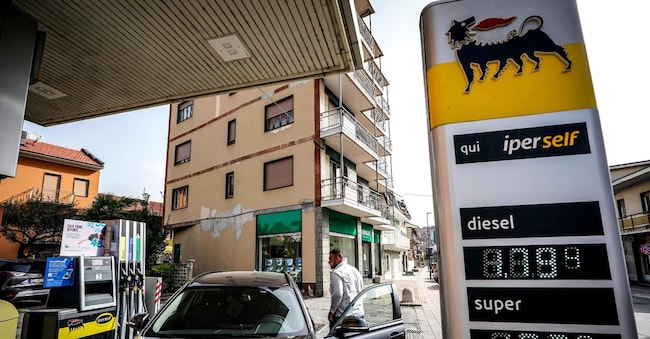
Prices of petrol and diesel have been rising again for days, never so expensive in the last six months. A combination of factors, first and foremost geopolitical, from the escalation of the crisis in the Middle East and the Russian-Ukrainian conflict to the cuts imposed by the Opec+ cartel in the face of sustained demand, have caused the rises. Thus the national average price for petrol in self-service mode travels, according to the latest survey by the Mimit Price Observatory, at 1.916 euro/litre (1.915 the previous value), while for diesel, again in self-service mode, it is 1.813 euro/litre (compared to 1.814). For petrol, the average price is 2.053 euro/litre (2.051 in the previous survey), while for diesel the bar is stable at 1.954 euro/litre.
The causes of rises
.In short, the curve has turned again, with Brent prices rising by more than 15 dollars since the beginning of the year, reaching over 90 dollars per barrel, of which only 9 in the last month. "The increase in the price of crude oil,' Unen president Gianni Murano pointed out in the columns of Il Sole 24 Ore, 'was followed by increases in the prices of refined products on the international markets, which are affected, especially for petrol, by the crisis of the Russian refineries damaged in the conflict and the consequent blockade of exports imposed by Moscow even towards those countries that have not placed embargoes. And to these rises are added, Murano recalled, those of the Platts Cif Med quotations of petrol - the international fuel market - which have risen by over 11 eurocents/litre (returning very close to the maximum values of 2022), of which about 7 in the last month alone. With inevitable repercussions, therefore, on the cost at the pump.
No excise cut for now
Prices are on the rise again, but far from the peaks of 2.3o euro that, as you may recall, prompted the Draghi government to intervene with a cut in excise duties. A hypothesis that, instead, at least for now, has been ruled out by the current executive, as reiterated in a question time at the Chamber of Deputies a few days ago by the Minister for Enterprise and Made in Italy, Adolfo Urso. And even earlier it was the Economy Minister, Giancarlo Giorgetti, who explained that the government has no ad hoc intervention in the pipeline for now.
The Fuel Decree
.The counter-measure, as is well known, exists and is the rule on mobile excise duties, included in the January 2023 fuel decree, which opens the way for a cut in excise duties on diesel and petrol when certain conditions are met: in particular, the reduction in excise duty would be triggered when the price of fuel exceeds the average price of the previous two months with respect to the reference value, expressed in euro.
The bonus for lower incomes
.For now, therefore, there will be no calming down. But another knot remains to be unravelled on this front, which concerns the fuel bonus, introduced, as will be recalled, at the beginning of the year thanks to an agreement signed at the end of January by Unem and the other sector associations with the Ministry of Enterprise and Made in Italy. Thanks to that agreement, the members undertook to promote the application of a discount on the prices charged to the holders of the 'Dedicata a te' social card, the electronic card for the purchase of essential foodstuffs for people with an Isee up to 15,000 euros.


