
Fuel, record price transparency violations
The Guardia di Finanza ascertained 73 per cent violations on the interventions carried out between 12 and 25 March. Under the lens of the antitrust squad 247 investigations along the entire supply chain

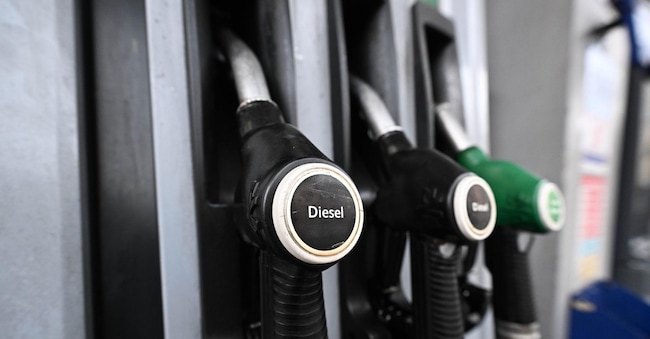
On price transparency and combating speculation along the fuel supply chain the Guardia di Finanza further intensified its controls. The upward pressure on fuel prices, which has prompted the government to intervene twice already to cut excise duties on diesel and petrol, is also accompanied by a strengthening of supervision along the entire fuel supply chain.
A set-up revised and enhanced by the first excise cut decree (Decree 33/2026), which exploits the potential of already available databases such as the fuel dashboard that cross-references the information declared daily by fuel distributors to the Ministry of Enterprise and Made in Italy (Mimit) with that of the Customs' excise registry. Above all, it outlined a system centred around the figure of the Price Supervisor but involving the Antitrust Authority and relying on the operation of the Guardia di Finanza.
An operation based on the know-how acquired over the years in the field of checking the transparency of prices charged by car fuel distributors. The war in the Middle East led to the issuing of directives to the departments to launch, from the 12th of March, a line of action to guarantee a garrison of legality along the entire distribution chain, intensifying controls on the transparency of prices and monitoring the dynamics of the formation of the value of the oil sector. Thus, in the period between 12 and 25 March, the Guardia di Finanza carried out 1,089 interventions, resulting in 795 violations, which, on balance, means 73% of the total number of inspections found to be in breach of the law. Looking further into the details, then, the 159 irregularities detected for failure to display or discrepancies in the prices charged compared to those indicated and the 636 omissions relating to the obligations of communication to the portal 'Osservaprezzi carburanti' of the Ministry of Enterprise and Industry stand out.
An additional crackdown
With Decree 33/2026, as anticipated, there has been a further tightening of the screws. According to the regulation in force since 19 March, in fact, if the Price Supervisor detects sudden and anomalous increases in pump prices, he is required to provide the Guardia di Finanza with a detailed list of the operators and oil companies concerned. On this basis, the Corps is called upon to carry out the necessary accounting investigations to verify anomalies in costs and daily purchase prices, tracing the entire distribution chain up to the cost of crude oil and refined products incurred by the holders of oil licences. An inspection action that therefore aims to reconstruct the entire value chain. And it is precisely in the wake of the new guidelines that the special antitrust nucleus of the Italian Finance Police has launched 247 investigations, activating the relevant departments and sending out fact-finding questionnaires to economic operators positioned in the segments of the chain upstream from the final distribution.
The discourse, however, is broader
This is demonstrated by the numbers of the Guardia di Finanza's results in the fight against fraud and thus in the protection of tax revenues. Results obtained over time and which are the fruit, on the one hand, of excise tax inspections at production plants, depots, roadside distributors and other operators, aimed at detecting possible tax evasion and, on the other hand, checks on the movement of fuels and the development of judicial police investigations. The latter are aimed at combating illicit international trafficking of petroleum products (so-called designer fuels), the unauthorised blending of energy products and the allocation of exempt or reduced-rate energy products to more heavily taxed uses by operators who are not entitled to do so. And demonstrating how insidious these phenomena are are the operations carried out between 1 January and 25 March. A total of 625 operations were carried out that resulted in 87 subjects being reported to the judicial authorities, with seizures exceeding 357 thousand kilograms of products and fraudulent consumption of 4,135 tonnes. In short, it is not just a problem of lack of transparency and speculation.


