
Galaxy S26 Ultra: how is the smartphone trying to hide itself from view?
We tested the Samsung mobile phone introducing the Privacy Display: a screen designed to protect messages and documents from prying eyes

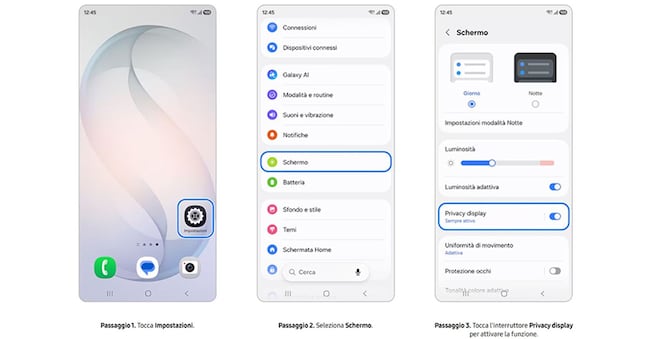
The smartphone is an always-on personal memory. Samsung seems to have understood this well and with the Galaxy S26 Ultra tries to start there: with privacy. The most interesting new feature is the Privacy Display. A marketing name, but with a concrete idea behind it. The screen reduces the viewing angle to the side: those looking to the side see almost nothing, while those holding the phone in front continue to read normally. It is like having a privacy film built into the screen, but smart: you can only activate it on certain apps, e.g. bank, mail or chat. In the underground, on the train, in the airport - places where the seat neighbour suddenly becomes curious - it is a function that makes sense.
It's one of those innovations that doesn't make noise but tells a good story about where the smartphone is going. Not just more powerful. More protected.
It is not perfect. Some reviewers report that when the technology kicks in, the text may seem slightly less sharp and that it can strain the eyes in the long run. It is the classic technological compromise: more security, some small visual sacrifice.
Apart from this interesting experiment, the Galaxy S26 Ultra is a concentrate of the usual Samsung engineering. The phone runs on one of the fastest chips available in the Android world, the latest generation Snapdragon, and effortlessly moves a huge almost seven-inch screen with 120 Hz refresh rate. It is a screen that looks like an open window to the web: bright, fluid, almost hypnotic.
Photography remains one of the areas where Samsung plays to win. The 200 megapixel main sensor works in conjunction with the periscopic telephoto lens to bring subjects closer without destroying detail. At night, the phone acts like a small portable photo lab: light, stabilisation, algorithms. Basically a steadycam and a compact camera in a pocket.


