
Gas and hydrogen, the EU countries' race for Africa's energy
More than two years after the outbreak of war in Ukraine, European governments remain in search of energy supplies. For some, Rome in the lead, the first choice is on the Continent
by Alberto Magnani (Il Sole 24 Ore, Italy) and Marcos Lema (El Confidencial)
 Aggiungi Il Sole 24 Ore
ai preferiti su Google
4' min read
4' min read
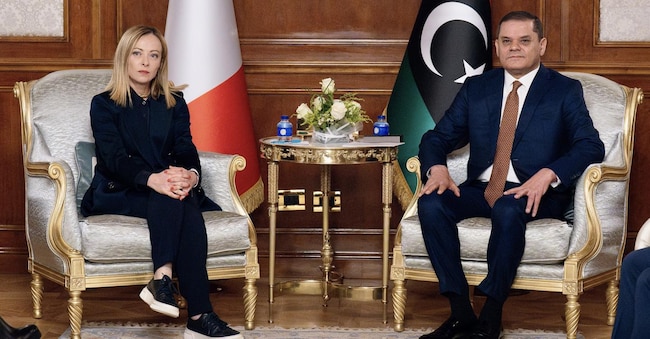
The ambition of the Mattei Plan, one of the clou policies for Giorgia Meloni's government, is to 'change the paradigm' of relations with African countries. In theory, the collaboration should extend over the five pillars of education, health, agriculture, water and energy. In fact, it is no mystery that the attention and the initiatives signed focus mainly on the last item: energy supplies, a need that has become an increasing priority after the break in relations with Vladimir Putin's Russia and the search for partners outside the old axis with Moscow.
The Italian choice is far from isolated. The aftermath of the conflict in Ukraine and the urgent need for ever greater and more differentiated supplies have fuelled a race for agreements between EU countries and African governments, in a range of interlocutors and production lines that goes from gas imported from Libya to Italy to investments by Germany or the Netherlands in the green hydrogen potential offered by countries such as South Africa and Namibia in southern Africa or Mauritania in western Africa. All this while the same EU summits are attempting to strengthen the ties between the European Union and the African Union, always on the footing of an 'equal' relationship that rests on the global gateway: the maxi-response plan to China's Silk Road, the Belt and Road initiative, with a package of 150 of the total 300 billion euro earmarked for Africa alone.
From Italy to Germany, the African energy race
.Frans Timmermans, at the time Vice-President of the European Commission, referred to Africa as 'probably' the biggest energy partner for the EU. Timmermans was only referring to the renewables segment, but the scenario seems to apply also - or especially - to hydrocarbons. One of the bridgeheads is Italy, even before the governmental advent of Meloni's right-wing majority. The rift with Putin's Russia, a crucial energy supplier for Rome, gave the go-ahead for a series of diplomatic missions led first by the tandem of then-Foreign Minister Luigi Di Maio and Eni Group CEO Claudio Descalzi and then by representatives of the Meloni executive.
The results are tangible: at the beginning of 2024, '71% of Italian imports from the African continent were energy products and Africa was Italy's leading energy partner in 2023,' reads a note from Ecco, an Italian think tank. The flow has strengthened with the outbreak of war in Ukraine and the search for a new supplier country. According to estimates by the European council of foreign relations (Ecfr), a think tank, Italy signed 21 bilateral agreements between March 2022 and October 2023 alone. Those signed with African counterparts number 12, divided between Benin, Egypt, the Republic of Congo, Mozambique (one agreement each), Angola (two). Algeria and Libya (three each, including the $8 billion maxi-agreement with Tripoli). In eight cases, natural gas deals are mentioned, even some agreements include some 'clean energy' component in the structure.
Other European countries are also moving along the trajectory consecrated by Timmermans, with some 35 agreements signed in Africa out of the 180 surveyed by Ecfr from 2022 to date. The most visible - or declared - interest of other EU governments is on hydrogen and green energy in general. Olaf Scholz's Germany has announced the equivalent of EUR 4 billion in 'green energy' investments, as well as securing specific deals such as a hydrogen agreement with South Africa and or a EUR 500 million 'pact' on renewables with Nigeria, a giant best known for its crude oil production. The Netherlands signed an intergovernmental agreement with South Africa, again on the development of the hydrogen industry.


